

The worst, it seems, has happened in Ukraine. It's a dark moment for Russia, for Ukraine, for Europe. It is also a point of no return for Russia's leader, and one with lasting consequences for the world.
Vladimir Putin has fallen into the autocrats' trap. Isolated, he is no longer able to weigh reality as it is, seeing only his fears instead. He is obsessed with what he perceives as the threat from Ukraine's westward drift, and with turning back the clock to reset the post-Cold World order.
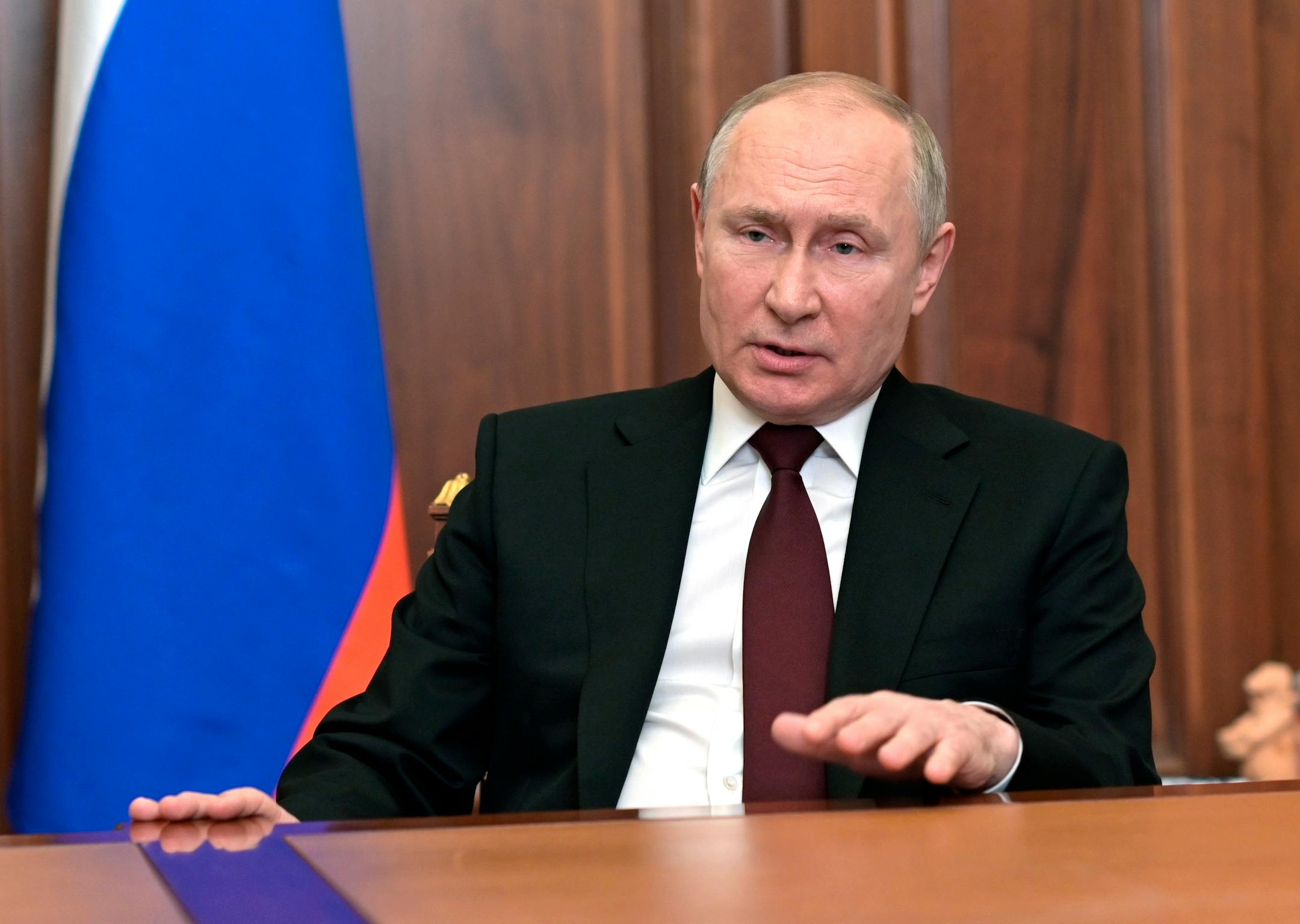
His speech Thursday — ranging from Russia's weakness at the time of the collapse of the Soviet Union, to Iraq, Yugoslavia and a chilling warning against Western intervention — was hardly the product of a cool, rational mind. It could not have contrasted more sharply with Ukrainian President Volodymyr Zelenskyy's earlier moving appeals for peace, made directly to ordinary Russians.
Hubris, paranoia, military adventurism — a heady combination, and one that has been fatal for dictators and their regimes. Putin is starting a war Russians do not want, for which they will pay the cost.
Political scientist Daniel Treisman, in his study of autocrats' last acts, found that most regimes come to an end through mistakes, whether because they ignored change or, like Argentina's Leopoldo Galtieri, embarked on an ill-advised war. Galtieri invaded the Falklands in 1982, assuming Britain would not fight and that his population would unite behind him. He was misguided, and the blunder was terminal.
Russia is not Argentina, and there will be no such immediate repercussion for Putin, whatever happens. Increased repression at home is in fact the most likely consequence from this show of force abroad — either because the Kremlin can, or because it must.
But consequences also play out over time, and the Russian president appears to be unraveling. Even by the standards of a repressive authoritarian regime with a history of false-flag operations and fabricated pretexts for war — and for an autocrat with a penchant for macho, reckless military pursuits and for rewriting the past — the last few days have been hard to comprehend.
A rambling, hourlong speech on Monday laced with wild accusations, portraying Ukraine as Vladimir Lenin's invention. Then a staged Security Council meeting with senior officials being made to publicly support Putin and the recognition of the separatist republics. Now, a war that, stretching credulity to the limit, Putin says will "denazify" Ukraine — a country that suffered brutally in World War II.


