These 3 Twin Cities theater shows have beloved songs — but troubling storylines

Theater pros updated parts of “Purple Rain,” “My Fair Lady” and “Phantom of the Opera” for contemporary audiences.

The Minnesota Star Tribune
November 23, 2025 at 12:00PM
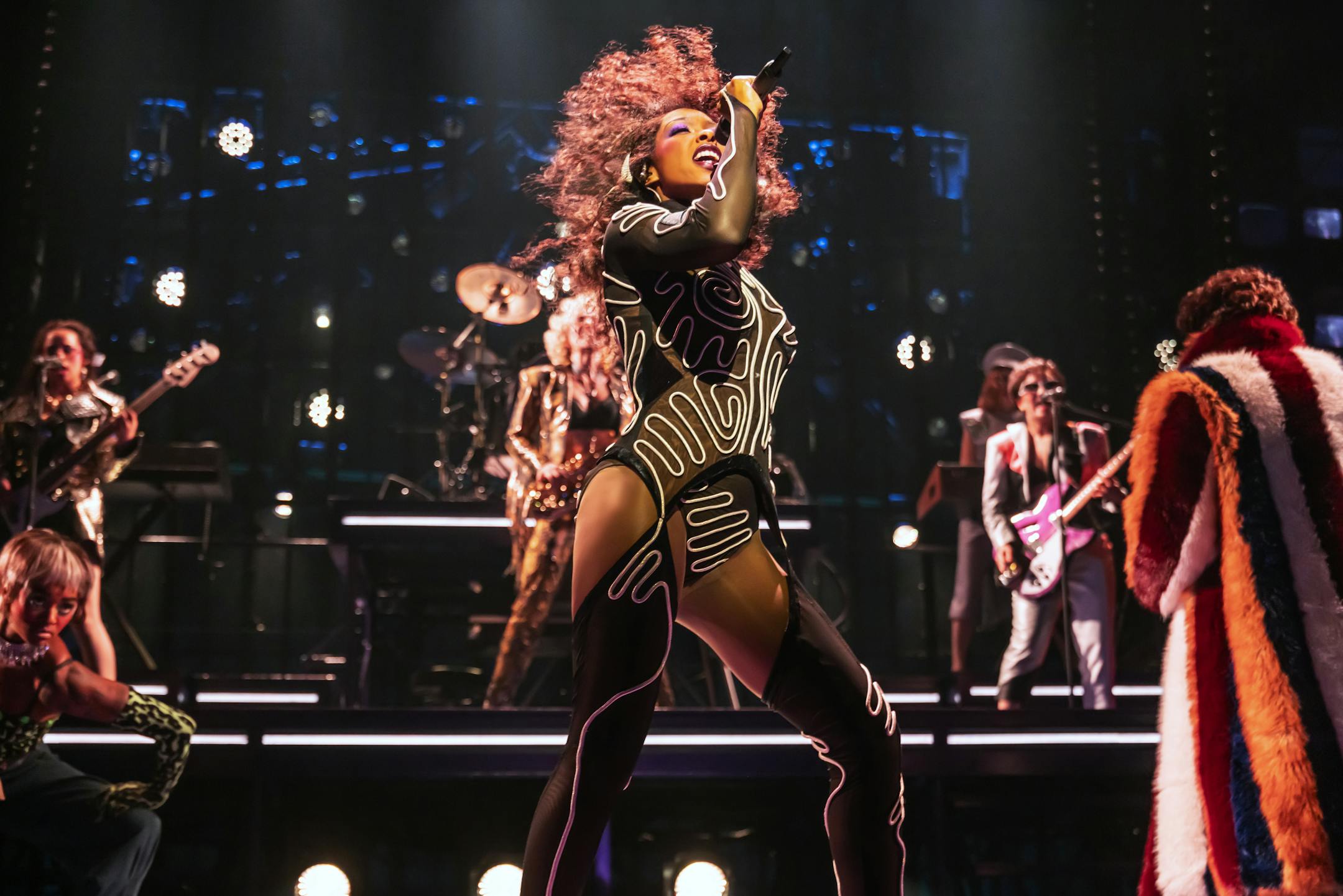
Rachel Webb stars as Apollonia in the pre-Broadway debut of "Purple Rain." (Matthew Murphy)

They are among the best loved shows now onstage in Minneapolis, with beautiful, indelible songs drawing eager fans. Yet even as they enchant audiences, the pre-Broadway world premiere of “Purple Rain,” the national tour of “The Phantom of the Opera,” and Theater Latté Da’s “My Fair Lady” all grapple with problematic or dated elements in their storylines.

The 1984 “Purple Rain” film, for example, had scenes and dialogue that make contemporary audiences cringe.

“It’s very much of its time in terms of gender politics, and to make a Xerox copy of that 40 years later would be a joke,” said playwright Branden Jacobs-Jenkins, the Pulitzer and Tony winner who adapted the script.

Here’s a look at how each show reckons with its challenges.

‘Purple Rain’

Beloved because of its music. The nine numbers in its 1984 soundtrack are almost all classics, including the title song, “Let’s Go Crazy,” “The Beautiful Ones,” “I Would Die 4 U” and “When Doves Cry.” The film, about a cocky young artist’s struggles with the music industry and family in Minneapolis, launched Prince into international stardom.

In its six-week pre-Broadway tryout at the State Theatre, the world premiere has showcased the triple threat theatrical talents of Rachel Webb, who plays Apollonia, and Jared Howelton, a flamboyant and fantastic show-stealer as Morris. The musical also has showcased the Prince-like song and dance prowess of Kris Kollins as The Kid in his stage debut.

Questionable elements: The original source material was suffused with a casual misogyny. At the top of the film, a female character is thrown into a trash bin. The show’s skimpy and tawdry female costumes have been called prostitute-chic.

How they handled the challenges: Playwright Jacobs-Jenkins, director Lileana Blain-Cruz and costume designer Montana Levi Blancofleshed out female characters, including Apollonia. The women have more agency and creative power as co-writers of Prince songs, for example.

“We also made a big swing at what it means to break open the character of Apollonia,” Jacobs-Jenkins said. “What does it mean for Apollonia to be a singer who’s a real threat to The Kid in a way that’s only implied in the film?”

“Purple Rain” also resurfaces and subverts some of film’s classic images. The trash bin is still in the show, for example, but it’s now a cheeky hiding place for Morris.

Takeaway: “We say Prince evolved during his lifetime, and I believe that if he were to make this movie today, he wouldn’t have had those things,” Jacobs-Jenkins said.

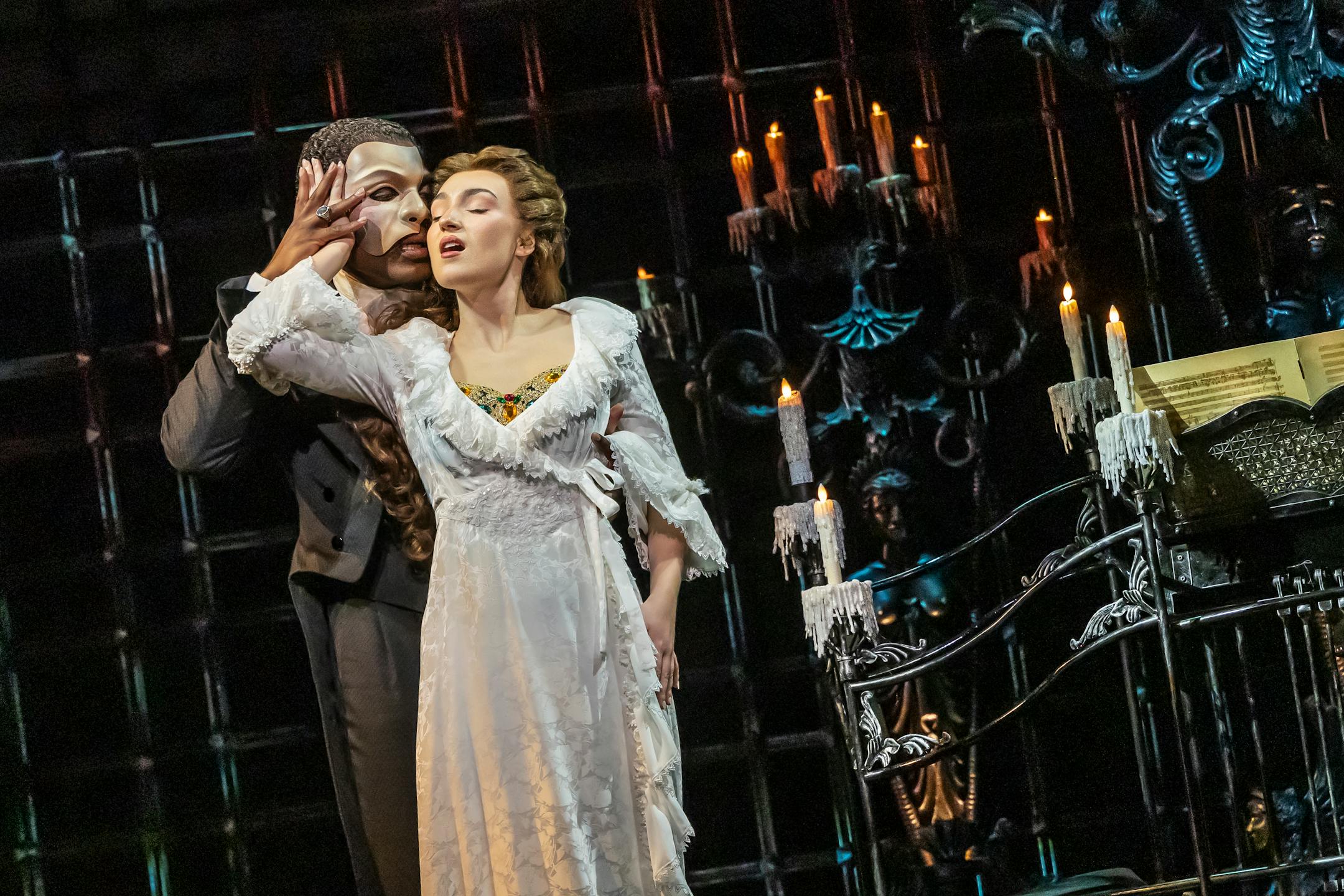
Isaiah Bailey is The Phantom and Jordan Lee Gilbert as Christine Daaé in the 2025 tour of "The Phantom of the Opera." (Matthew Murphy)

‘The Phantom of the Opera’

Beloved because of its immersive score and arresting songs, including “The Music of the Night,” “Masquerade,” and “Think of Me.” Andrew Lloyd Webber’s blockbuster musical has enchanted audiences for 40 years with its extravagant costumes and lavish sets, including a chandelier that drops dramatically.

The story, too, is archetypal in its yoking of opposites — pretty princess-like singer Christine and the disfigured, mask-wearing Phantom with his own creative powers.

Questionable elements: This show has been criticized for romanticizing stalker-ish behavior.

How they handled the challenges: By leaning into the notion that this is Christine’s story, the whole show is seen from her perspective. “The journey she takes is her choice,” said director Seth Sklar-Heyn, who has staged the all-new production that updates design elements and increases the production’s wow factor. “She goes through the mirror [and into the story] because she’s led by some desire to go further, to connect and find something that’s missing.”

In the production that’s playing at the Orpheum Theatre through Dec. 7, there’s also a clear shift in agency.

In this updated staging that uses Maria Björnson’s original design, the characters are more natural extensions of the actors playing the roles. The prime example is the title character, played by Isaiah Bailey. “He’s literally the definition of a majestic leading man and unbelievably gorgeous,” said Sklar-Heyn. “As a Black performer he cannot wear the phantom wig or traditional Phantom mask as it’s been sculpted or painted before. So we do something that works with his bone structure and that goes with all of our performers, so everybody’s now represented wholly and authentically.”

Takeaway: “The show is still a gothic romance with this masked figure drawing this woman into his world and exposing her to a form of beauty and understanding that she’s not yet experienced,” Sklar-Heyn said.

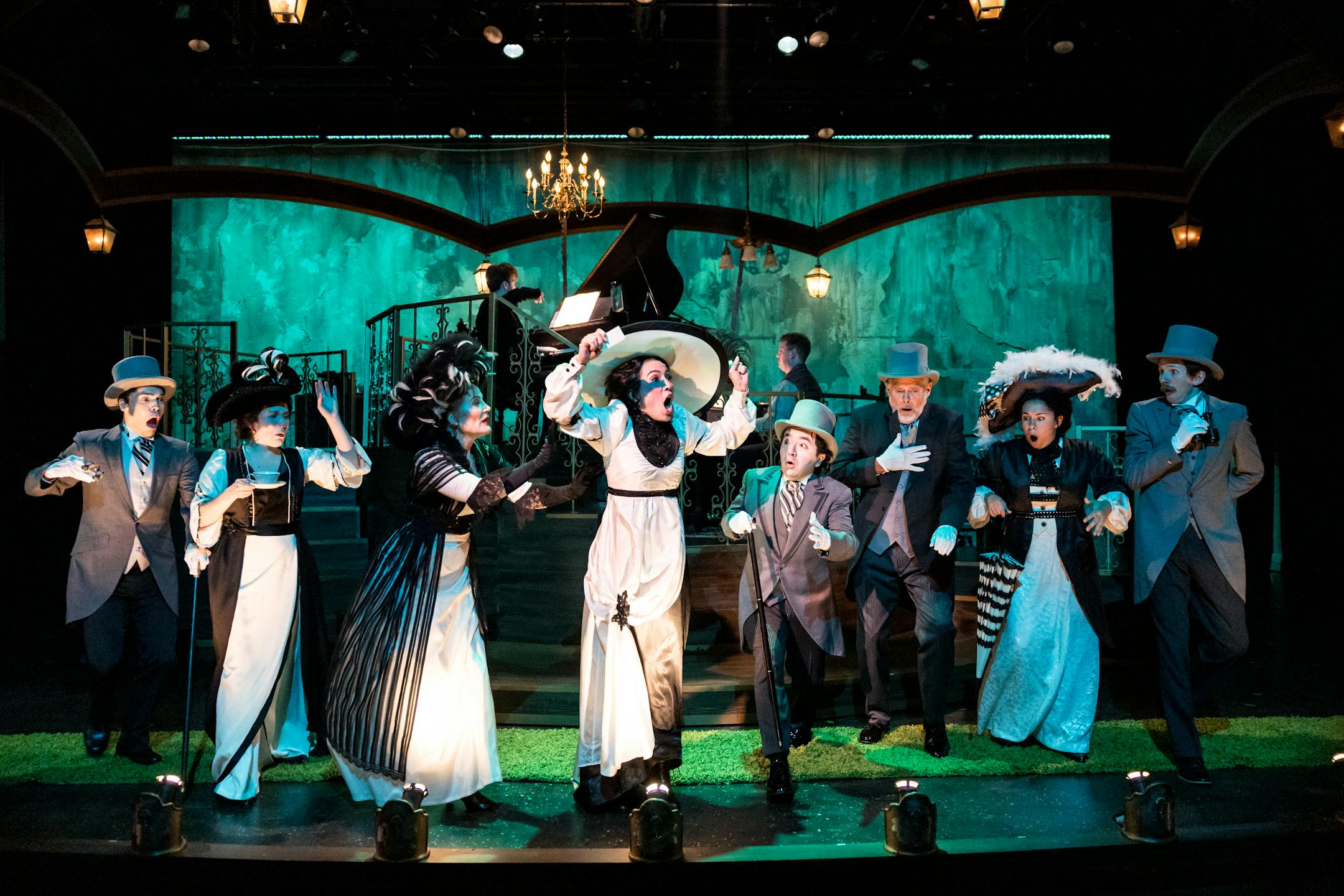
"My Fair Lady" boasts sumptuous costumes, design and performances at Theater Latté Da. (Dan Norman Photography )

‘My Fair Lady’

Beloved because of clever and charming songs that meld deft rhymes and enchanting melodies that are embedded in our cultural DNA. Productions usually highlight the fun, frivolity and energy of numbers such as “I Could Have Danced All Night,” “Just You Wait,” “Why Can’t the English?,” “With a Little Bit of Luck” and “Wouldn’t It Be Loverly?”

“Because shows like these are so beloved and they are so embedded as fond memories, we misremember them,” said Latté Da artistic director Justin Lucero. “This is an opportunity to see them for what they were, and what they say to us today.”

Questionable elements: Based on George Bernard Shaw’s “Pygmalion” about flower girl Eliza Doolittle, who receives elocution lessons from Prof. Henry Higgins that can help her change her class status, “Fair Lady” was way ahead of its time. It sought to show that class was a matter of educational opportunity, not something fixed by birth. But Higgins often sounds like an abusive boor as he berates Eliza.

How they handled the challenges: The ending of the show, in which Higgins condescendingly asks Eliza about the location of his slippers, has vexed directors far and wide. In a recent Broadway production, Eliza famously leaves. At Latté Da, Higgins is framed as a man listening to his own recordings and finally hearing how he sounds.

Lucero tapped Minnesota phenom Anna Hashizume and Broadway actor Jon-Michael Reese — she’s of Japanese heritage, he’s Black — in the title roles. “This wasn’t colorblind casting — Higgins’ mother is a white woman and Eliza’s father is a Latino," Lucero said. “This was more to give people in the audience a chance to hear people grappling with what it means to strip oneself of a core aspect to fit in.”

Takeaway: “We’re living in a time when there’s a push to make English the official language and people who have heavy Latin accents or speak Spanish are being targeted, so it’s not that far-fetched to have people contorting themselves so that they don’t sound like people who’re considered problems,” Lucero said.

‘Purple Rain’

When: 1 & 6:30 p.m. Sun.

Where: State Theatre, 805 Hennepin Av. S., Minneapolis

Tickets: $49 and up, ticketmaster.com

‘The Phantom of the Opera’

When: 7:30 p.m. Fri. & Sat., 1 & 6:30 p.m. Sun., 7:30 Mon.-Wed. Ends Dec. 7.

Where: Orpheum Theatre, 910 Hennepin Av. S., Minneapolis.

Tickets: $71 and up, ticketmaster.com.

‘My Fair Lady’

When: 7:30 p.m. Tue., Wed. & Fri., 2 & 7:30 p.m. Sat., 2 p.m. Sun. Ends Dec. 28.

Where: Ritz Theater, 345 13th Av. NE., Mpls.

Tickets: $24.75-$92.75, 612-339-3003 or latteda.org.

about the writer

about the writer

Rohan Preston

Critic / Reporter

Rohan Preston covers theater for the Minnesota Star Tribune.

See Moreicon

More from Stage & Arts

See More
card image
Jerry Holt/The Minnesota Star Tribune

From skiing and snow tubing in metro parks to museums, theater and movie releases, we’ve got you covered.