
Rash: Public media cuts may hit rural America the hardest

Stations like KAXE-FM in Grand Rapids are “a glue that connects” communities.

Columnist Icon
The Minnesota Star Tribune
July 28, 2025 at 11:00AM
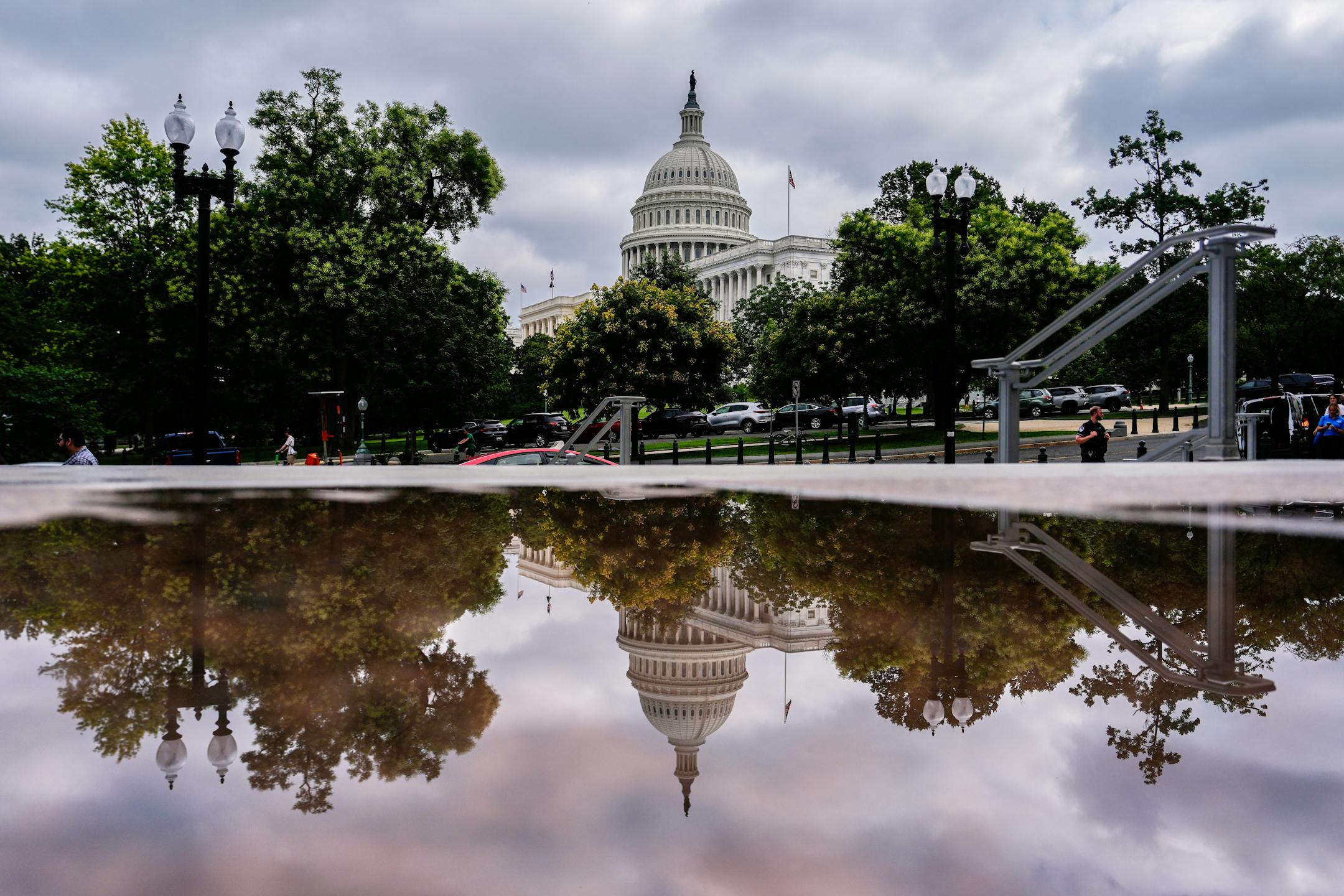
The U.S. Capitol is reflected in a puddle outside of the Rayburn House Office Building on July 16 on Capitol Hill in Washington.
The U.S. Capitol is reflected in a puddle outside of the Rayburn House Office Building on July 16 on Capitol Hill in Washington. (Julia Demaree Nikhinson/The Associated Press)

Opinion editor’s note: Strib Voices publishes a mix of commentary online and in print each day. To contribute, click here.

•••

Prodded by President Donald Trump, Republicans in Congress clawed back $1.1 billion in funds for the Corporation for Public Broadcasting in a process known as rescission.

The term sounds surgical. But the cut was less scalpel and more ax.

That ax fell hard in Paul Bunyan country, on stations KAXE-FM in Grand Rapids and KBXE-FM in Bemidji. Just like it might on similar stations across the nation, many of which are in districts represented by lawmakers who voted for the cuts. (No Democrats voted for the bill, which also took back about $8 billion in foreign aid.)

KAXE’s homegrown, locally focused programming belies the Beltway rhetoric about public media, which since its inception has educated, enlightened and entertained the nation in a media model commercial broadcast, cable, satellite and streaming stations can’t and won’t sustain.

“The whole narrative around this whole rescission has been off from Day 1,” said Sarah Bignall, KAXE’s CEO and general manager. “We, as the small rural stations, were the ones that were going to take the largest hit from this and for whatever reason PBS and NPR had been at the center of the entire conversation, when in reality 70% of those funds go to stations like KAXE, and we are the ones that are there providing the [local programming].”

Programs like “Phenology,” which Bignall said often features northern Minnesota classrooms calling in nature observations. “It’s connecting people, how they can get outside and explore their natural world. Through that we’ve built a community of folks who are more engaged not only with the natural environment but with the arts and culture programming that we have.”

Music shows like “Headwaters,” “On the River” and “Minnesota Mixtape” are hosted by KAXE staff and volunteers alike.

“In the last three years, we have really doubled down and committed into making sure that we are doing as much local content as possible,” said Bignall, citing the build-out of the station’s first dedicated newsroom, with reporters based in Bemidji and Grand Rapids, a news director in Brainerd and an intern from the University of Minnesota.

We’re “covering anything from city council issues, anything that’s happening with school boards; we’ve done updates on the wildfires and the windstorm that went through Bemidji,” said Bignall, who added that “I can tell you that here at KAXE, we take our role and responsibility as a newsroom seriously; our journalists have a very strong code of ethics they follow and we do things to provide fact-based information to people.”

So do public radio and TV stations across the country. Which is why it’s been so striking to see some of the same Republican representatives respectfully interviewed on the “PBS NewsHour” turn around and allege bias when speaking on media outlets that actually are, including some that have a financial incentive to weaken a news alternative.

And for many, the “NewsHour” isn’t an alternative, but an essential. Especially those interested in international issues, including diplomats, scholars and analysts at globally respected think tanks. Having had the privilege of interviewing many in this cohort during my years covering foreign affairs, this observation can be offered: All of them, whether they have served in or are aligned with Republican or Democratic administrations, are aware of the influence of Fox News, MSNBC and other right- and left-leaning networks. Few, however, base any analysis on them. Conversely, nearly all of them watch — and many even often appear on — “NewsHour.”

Other PBS programming is not only unique but belies the bias and “woke” claims of congressional and cable critics, including an upcoming six-part Ken Burns documentary, “The American Revolution” — the type of ambitious, public-service journalism rarely seen anymore in the commercial media ecosystem.

PBS and NPR aren’t going away. But the threat to their member stations, especially in rural areas, is profound and will ripple across the system. KAXE has to chop over $200,000, or 13%, of its budget, Bignall said. And this week both Twin Cities Public Television and Minnesota Public Radio’s parent company announced layoffs.

Cuts could be deep elsewhere, too. That is, if there are any journalists around. Nationwide there are more than 1,000 counties — about one in three — without an equivalent of a full-time journalist, according to a report by Rebuild Local News and Muck Rack, an aggregator of journalism bylines.

Citing an analysis from advisory firm Public Media Company, the New York Times reported in the wake of rescission that “more than 100 combined TV and radio stations that serve millions of Americans in rural pockets of the country will be at risk of going dark.”

Darkness won’t descend on KAXE, a station that’s especially essential when the days shorten in the northland. “We’re spread out,” said Bignall. “We maybe live miles apart from our next neighbor. Winters can get really, really cold and lonely up here. And you know, it’s oftentimes the radio that is connecting people.” The station, she said, “is a glue that connects our community together.”

Bignall said she’s tried to share this thought with key leaders. “I have reached out to the elected officials numerous times, hoping to have conversations, to introduce them to our station and the work we’re doing, and those calls were never returned.”

Radio, stressed Bignall, “is really one of the only ways that people can consistently get information, especially in times of crisis.”

Amid a time of crisis for public media, Bignall was asked about an email her representative, Pete Stauber, sent an Eighth District constituent regarding rescissions. “Unfortunately,” he wrote, NPR and PBS, “which receive taxpayer funding through the CPB, have been inappropriately subsidizing politically biased content.”

“I have a feeling,” said Bignall, that he hasn’t “tuned into KAXE.”

If not, he should. Maybe then he’d realize the virtue of public media is no tall tale.

about the writer

about the writer

John Rash

Editorial Columnist

John Rash is an editorial writer and columnist. His Rash Report column analyzes media and politics, and his focus on foreign policy has taken him on international reporting trips to China, Japan, Rwanda, Kazakhstan, Turkey, Lithuania, Kuwait and Canada.

See Moreicon