

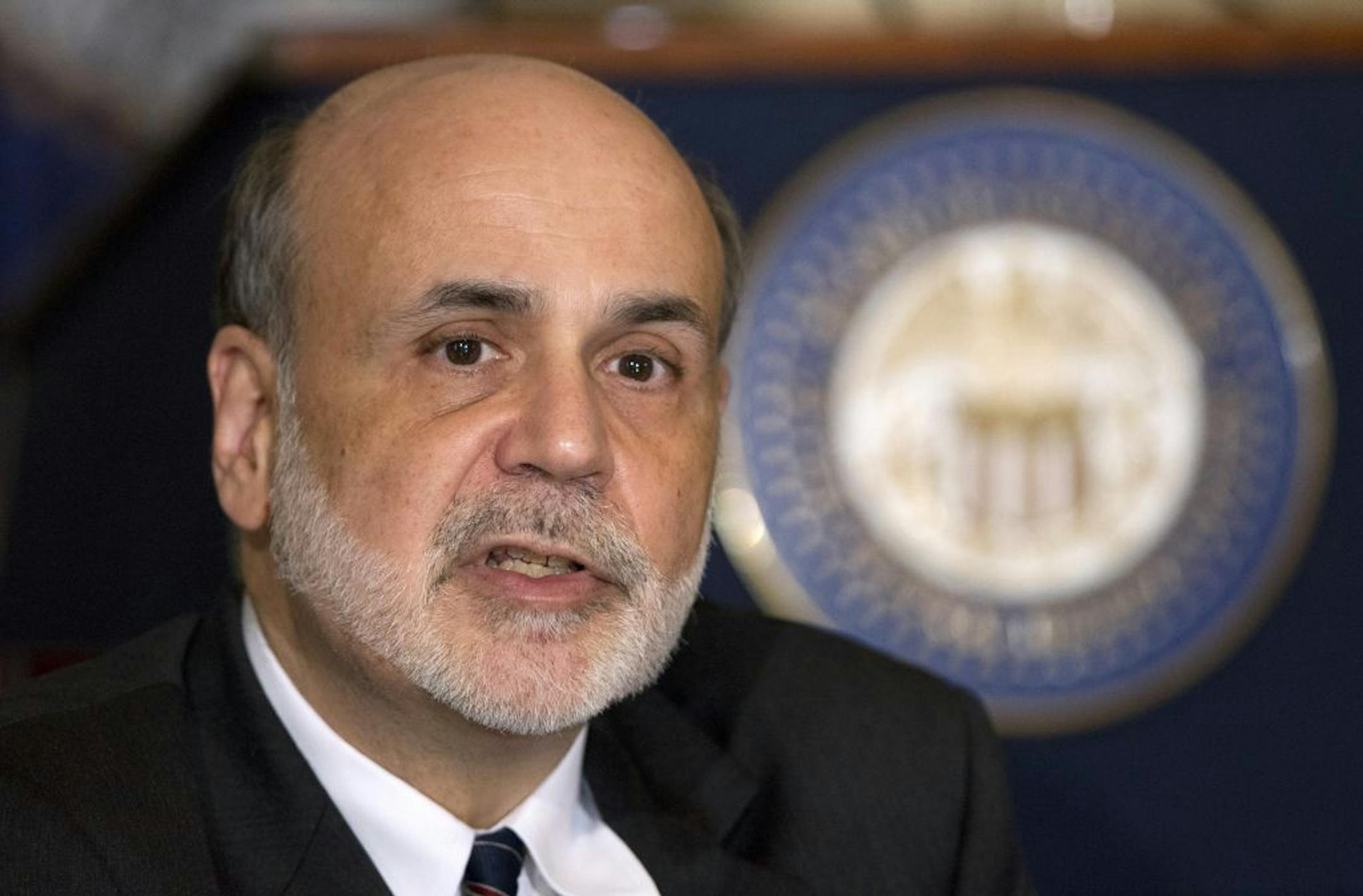
Analysts expect Ben Bernanke to say Thursday that the Federal Reserve will take new action to stimulate the U.S. economy.
So what?
Aside from the stock market's likely approval, economists say the impact may be difficult to see. Business leaders in Minnesota say Fed action would boost business confidence, ideally spurring investment and job creation. But casual onlookers can be forgiven for failing to see what all the fuss is about.
"This is more of an emotional deal than a substantive deal," said Bill Blazar, an executive at the Minnesota Chamber of Commerce. "The actual impact may be very difficult to measure, but at this stage of the recovery, the psychology of it may be more important than the substance."
The economy has been stuck in some summer doldrums. Growth has been slow, Congress has failed to settle the federal budget, a presidential election is coming up, Europe's financial crisis is ongoing and the August jobs report was a disappointment.
Pressure is on Federal Reserve Chairman Bernanke to do something, but his options have winnowed. The most likely one is a move known as quantitative easing.
Usually the Fed tries to stimulate the economy by lowering interest rates on bank-to-bank lending, which pushes down rates on everything else -- from car payments to lines of credit for factories. The idea is that low interest rates encourage lending, borrowing and economic activity.
But the bank-to-bank interest rate -- or federal funds rate -- is already near zero.



