

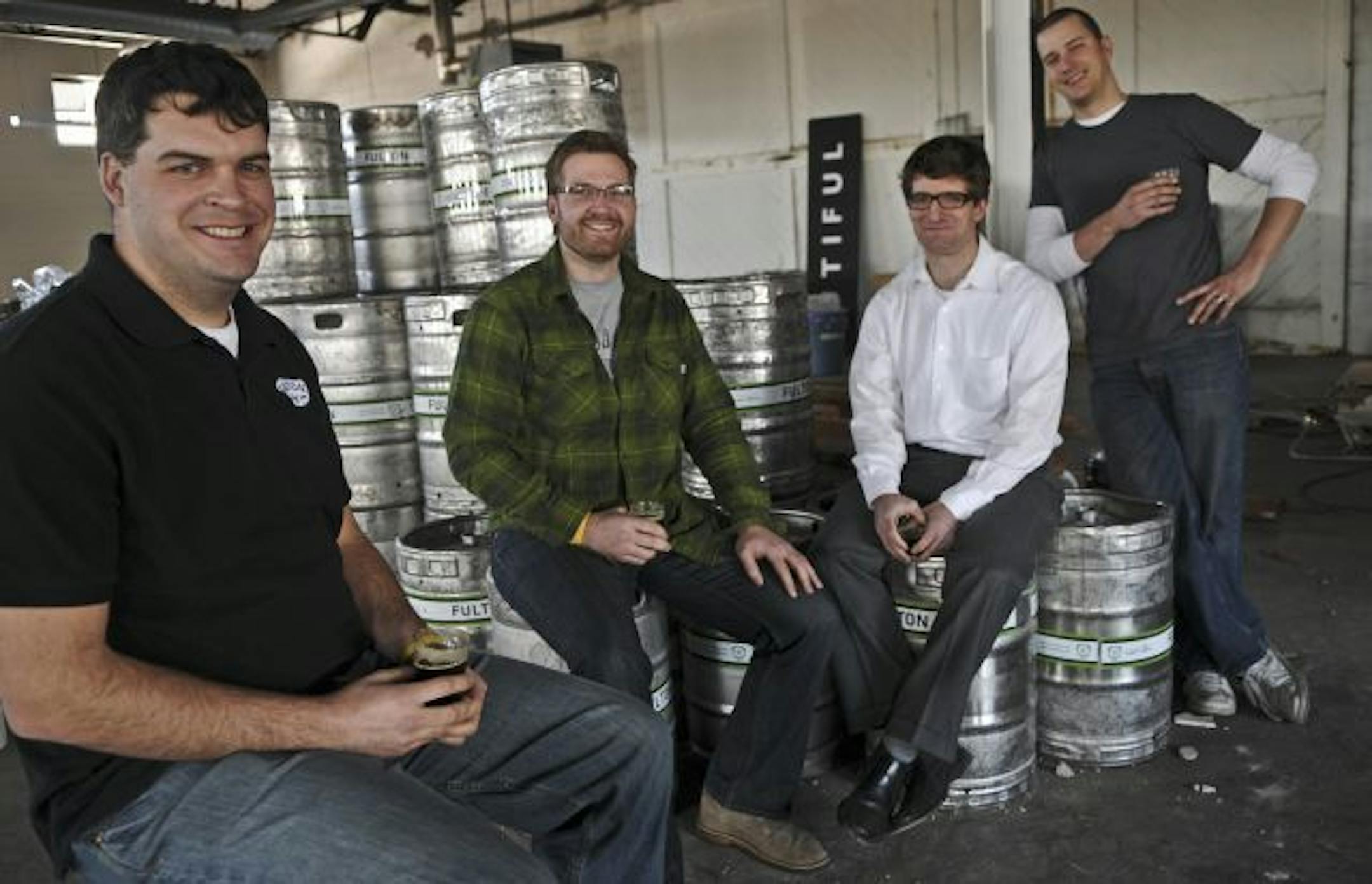
Anybody touring Fulton Brewing Co. the other morning would have noticed the big guy working up a sweat on the top of the brew kettle.
He turned out to be the president, Ryan Petz. And it was just another Thursday at the brewery.
"You wouldn't believe how many times people come up to us and say, 'You guys are living the dream,' " Petz said later. And while he and his partner Jim Diley mostly agree it's great fun running a brewery, Petz said, "I certainly don't find it easy."
Of course it isn't. Brewing is a capital-intensive, highly regulated business dependent upon third-party distribution and fickle consumer tastes.
People tempted to call the recent expansion of craft brewing a boom need to understand that booms happen when early entrants in a market get outsized returns on capital, and more capital then floods into the niche. That's what is happening in craft brewing — except, of course, for the outsized returns part.
"It is not now and never has been a traditional path to wealth creation," said Tom Acitelli, author of "The Audacity of Hops," a well-regarded book on the craft brewing segment. "It is easier to start up, easier probably than it ever has been. To stay in business is a whole another matter, and we are going to find that out in the next few years."
Fulton is one of a handful of popular and growing upstart brewers in the region. And the granddad of the locals, Summit Brewing Co., has expanded this year, too. Summit got going in 1986, and will by year-end have $40 million invested at its brewery in St. Paul. Asked about returns on that capital investment, founder Mark Stutrud said, "From what gets published in the media and how this industry is presented and polished, it seems much more lucrative than it really is. The amount of capital it takes to put a plant together well is phenomenal. It's certainly a long-term proposition."
Acitelli said there has already been one big wave of craft brewing washouts — entrepreneurs who took a look at Boston Beer Co. and Pete's Brewing Co. 15 or 20 years ago and thought beermaking looked easy. "A lot of people jumped into it and they were not interested in the craft," he said. "They just wanted to make a quick buck," and the early 2000s recession did many of them in.



