

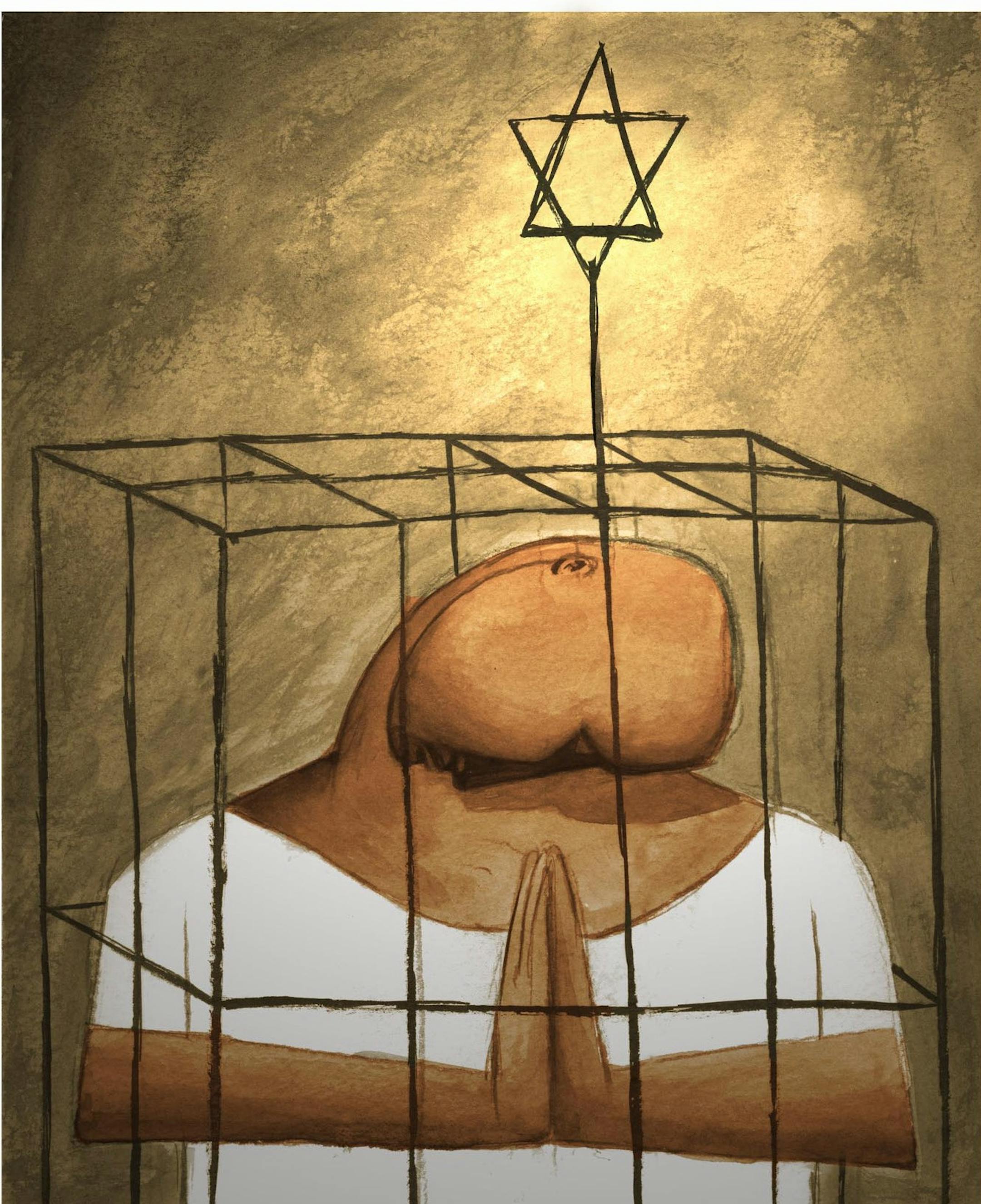
When I entered New York state's prison system in 2004 to serve 10 years, I was shaved, given a number and told to check the box next to my religion. Prison guards handed me a long list of faiths: In addition to the regulars, there were Odinism, Rastafarianism, and the Nation of Gods and Earths. (The latter was once considered a gang, but years of lawsuits had turned it into a viable religious option.) Had I been honest, I would have checked the box next to "atheist." Instead, I marked "Jewish," reflecting my father's heritage.
My motivation wasn't the access to kosher meals or a desire to belong to a clan in prison, though both drive convicts' religious affiliations behind bars. I opted in because I wanted to work for rabbis, a job that would put me in the company of educated thinkers whom I could relate to during the lonely decade I had stretching before me. Ultimately, it did more than that. It showed me the dishonest ways religion is spread in prison. The evangelists I saw used prisoners' desperation to add to their faiths' numbers.
The first thing I noticed after beginning my sentence — for five counts of armed robbery, a consequence of heroin addiction — was how many faiths were represented. During my decade behind bars, I met thousands of prisoners in 12 of New York's joints, both maximum- and medium-security. I spoke with agents of Opus Dei, Fez-wearing Moorish Science Temple members, a few Druids and a surprisingly nice Satanist. I encountered Wiccans (warlocks, never witches), Odinists (worshipers of the Norse pantheon and almost exclusively white supremacists, though one Colombian was brought in), Nation of Islam men in bow ties (Farrakhan's Muslims), Hebrew Israelites (black Jews), Zen Buddhists (meditation pushers), one Sikh (a Kashmiri cabbie who killed his passenger but fed me curry) and one Jedi (charming fellow, heinous murder). No one but me believed in nothing.
One reason a thousand flowers have bloomed is that the evangelism typical of mainstream faiths such as Catholicism and Protestantism has spread to newer players who place a greater value on the souls of convicts. At most, there are 20,000 followers of the pagan religion Asatru, sometimes referred to as Odinism, in the United States, while Catholics number 78.2 million. Hardly any Catholic missionaries came to the 12 facilities where I was housed, but I saw many evangelists from outsider faiths visit. Winning one new convert to a tiny corps is far more significant than winning 10 new converts to a horde.
Judaism and Islam also have their fringes, and I saw the same trend among them. A nontraditional Jewish sect — it argues that the messiah has already come — courted my allegiance in a way the establishment did not. And the Nation of Islam tried harder with my neighbors than regular Sunni Islam. These groups offer personal attention and loyalty (scarce resources in prison) from support networks that clergy of the established religions, especially those employed by the state prison system, cannot provide.
The incarcerated world is one where leaps of faith are taken with ease. The educational level is low (nationwide, 68 percent of state prisoners don't have a high school diploma) and wishful thinking high. Jailhouse "common knowledge" holds that ghosts are real and the moon landing was not. I knew men who couldn't identify the actors of World War II but were familiar with the sins of the Bilderberg Group and the Trilateral Commission, clans that are alleged to secretly control the world. Convicts who quit school in the fifth grade cited the Merovingian dynasty to demonstrate that Jimmy Hoffa simply had to go. (It's said he learned that unions are run by Masons and became a liability. He knew too much.) In prison, where hope is limited, people are looking for answers, even wrong ones.
Religions often depend on the vulnerable to grow their numbers. Jehovah's Witnesses are willing to drive for hours to do a Bible study with a convict, even if their doctrine promises only 144,000 slots in heaven. (This belief is not emphasized in their prison pamphlets.) The visiting rooms are where the shepherds meet their flocks and the faithful ply their craft. I saw Franciscan monks visit one incarcerated brother, carrying lox, pomegranates and pricey Latin texts, despite his conviction for child abuse. They believed his victims lied because he said they did — all three times.
There are two approaches to jailhouse religion: There are clergy hired by the state — Catholic priests, Protestant ministers, Sunni imams and Orthodox rabbis. The fringe groups have their own leaders, who work outside of the prison bureaucracy, winning converts by bucking the establishment. During my time, I clerked for several state-hired rabbis; all but one were Orthodox. Part of my job was to work with the Jewish program Reaching Out, which issues a newsletter and provides support to incarcerated Jews. Its leader, Rabbi Shmuel Spritzer, comes from a fringe sect of Lubavitcher Hasids who think the messiah was Menachem Mendel Schneerson, a charismatic rabbi who died in 1994. (They say he is simply concealed for now and will re-emerge soon.)


