

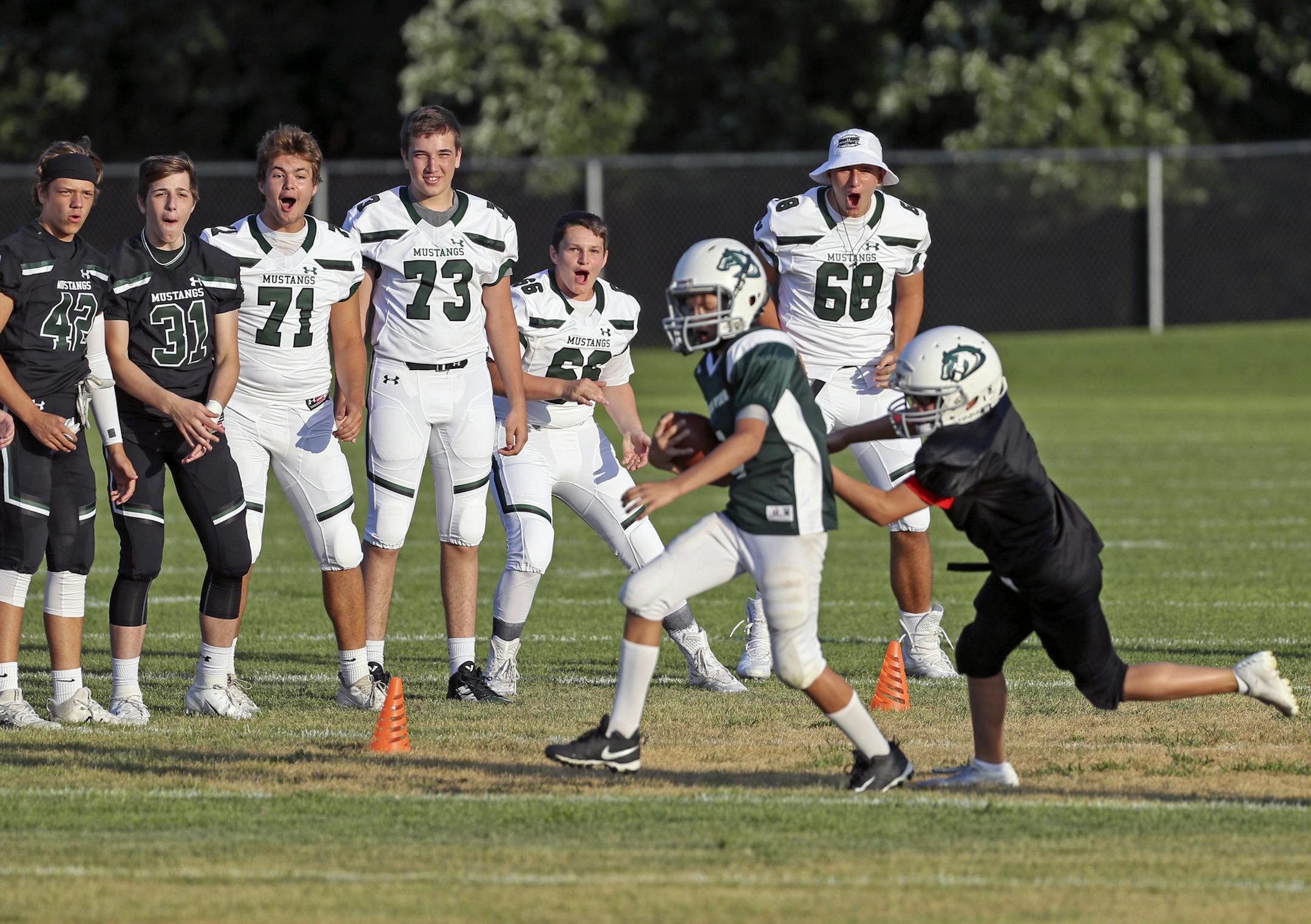
About 300 players representing Mounds View football's present and future, from high school seniors to third-graders, smiled for a group photo last week at midfield of Mustang Stadium to punctuate the first Green and White Night.
Afterward, many youngsters sprinted through the north end zone toward a row of tables, to be among the first in line to get varsity team posters and trading cards signed. Varsity players, clad in white or black jerseys with green numbers, jogged behind, smiling. Once at the tables, some shared fist-bumps to help make the kids' night even more special.
Parents looked on from the sidelines or from the bleachers, some munching on dinner purchased from one of the four food trucks brought in for the occasion.
These are small ways, coaches throughout Minnesota believe, to regain ground in the battle to improve lagging turnout for the state's marquee fall high school sport. No longer taking participation for granted, coaches are fighting back against safety concerns and sports specialization, the two biggest factors sapping away would-be players before they get to freshman year.
Mixing social media branding with community events such as Mounds View's Green and White Night, plus greater involvement in youth organizations and ramped-up game-night hoopla, varsity coaches are more intentional than ever about recruiting and retaining players.
"There is a sense of pride," said Mustangs coach Aaron Moberg, who graduated from Mounds View in 2003. "This is our sport and we have to defend it."
A closer look at the program's feeder system showed what Moberg called a "three-year consecutive lull" in participation numbers. That lull now affects the varsity ranks at the suburban Ramsey County school, which appeared in seven state tournaments from 2000 to 2010. The Mustangs will dress about 132 players in grades nine through 12 this season, down from 153 last fall.
"It's not as predictable as it once was," said Bob Madison, former Mounds View activities director who now oversees football as a Minnesota State High School League associate director. "You can have a healthy program, but one or two classes with lower numbers can change that."


