Potash cartel collapse sends Mosaic shares down 17%

The collapse of a Russian cartel sent potash prices plunging; Mosaic's CFO says investor perceptions have been "upended."

July 31, 2013 at 2:39AM
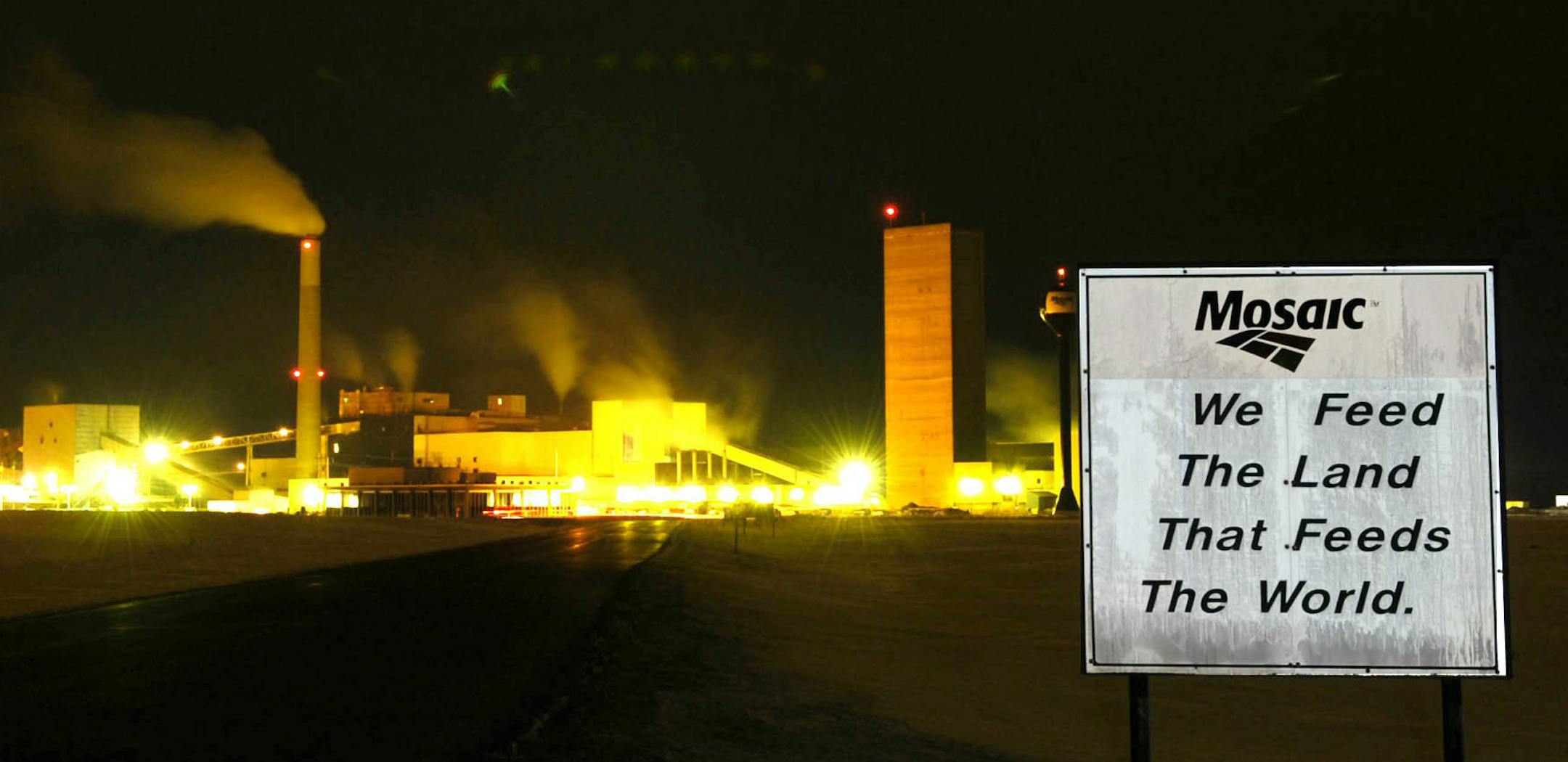
The K2 Postash Mine site near Esterhazy, Saskatchewan is seen late Sunday night Jan. 29, 2006. Fire broke out Sunday in the K2 Potash mine operated by the Minneapolis-based firm Mosaic Company in central Canada, forcing some 70 miners trapped underground to retreat to emergency refuge rooms stocked with oxygen and supplies, a mine official said. (AP Photo/Troy Fleece, CP) ORG XMIT: MIN2013073015515196
Plymouth-based Mosaic operates the K2 Potash Mine near Esterhazy, Saskatchewan. (The Minnesota Star Tribune)

The world's fertilizer business was upended Tuesday by the collapse of a Russian potash marketing cartel, pounding big producers that include Plymouth-based Mosaic Co.

Shares of potash fertilizer producers everywhere took a significant hit — Mosaic's stock fell 17 percent — as fear spread that prices would fall due to the cartel's demise. Mosaic is one of the globe's biggest producers of potash, the key ingredient in potassium-based fertilizer.

Of course, falling potash prices would be welcomed by fertilizer-hungry farmers in Minnesota and most everywhere else.

The potash industry is known for agreements between producers that set sales targets and affect prices. Two such groups, one in Russia and one in Canada that includes Mosaic, account for up to 70 percent of global potash shipments.

But the world's potash kingpin, Russia's OAO Uralkali, on Tuesday backed out of a marketing agreement with its Belarusian partner, Belaruskali. Uralkali exited the venture after Belaruskali made a number of deliveries outside of the agreement, Uralkali said in a statement on its website.

"Unfortunately, we should state that our cooperation with our Belarusian partners … has come to a deadlock," Uralkali stated.

In a research note, Piper Jaffray analyst Michael Cox wrote that Uralkali "did what many investors thought was unthinkable by breaking up the Eastern European potash cartel. In doing so, Uralkali has brought instability to the potash market, which is leading to a sharp sell-off in fertilizer stocks."

Mosaic closed at $43.81, down $9.15, hitting a 52-week low of $39.95 along the way. Potash Corp. of Saskatchewan, another industry giant, also closed down 17 percent and hit a 52-week low, too.
Uralkali's move "upended at least the perception of the potash world," Larry Stranghoener, Mosaic's chief financial officer, told the Star Tribune. "But it's way too early to say what will happen in potash markets."

It's not clear that the Russia-Belarus split is permanent, he said. "They have had a bit of a feud in the past few months, and it has escalated."

Mosaic has $10 billion in annual revenue and is one of Minnesota's 10 largest companies by market capitalization, even with Tuesday's stock sell-off. It employs about 300 here and has about 8,000 more workers worldwide, particularly at its large mining operations in Canada and Florida.

The company has extensive potash mining operations in Saskatchewan, which is one of the world's largest repositories of the mineral. Mosaic, Potash Corp. and Agrium are themselves in an export group — Canpotex — that functions similarly to the Russia-Belarus partnership.

Charles Neivert, a stock analyst with Cowen and Co., asked in a report Wednesday, "is a Canpotex break-up next?" He notes the Russian situation could possibly affect Canpotex because the group's structure "is not necessarily beneficial to all."

But Stranghoener said the Eastern European group's breakup does not portend Canpotex's unwinding. "We don't see that at all."

Canpotex is more than just a marketing group. It's also a logistics and delivery system that owns assets such as rail cars, he said. "Our customers like the ability of Canpotex to deliver the product," he said. "It is not just a selling organization."

Uralkali's CEO Vladislav Baumgertner said he expects potash prices to fall below $300 per ton after the company's announcement, a 25 percent reduction from current contract prices with China and the lowest since January 2010, according to Bloomberg News.

Mosaic had been expecting potash prices of $330 to $360 per ton for its quarter ending in late September, company executives recently told stock analysts. In a "downside scenario, in which global potash prices do fall well below $300 (per ton), Mosaic's potash segment would see earnings drop sharply," Cox wrote.

Still, Mosaic has extensive operations in phosphate-based fertilizer, which is unaffected by the potash turmoil. And Mosaic is robust financially, Stranghoener said. "We have a very strong balance sheet, the strongest in the industry," he said.

Farmers would likely react favorably to falling potash prices, which could help the industry. "At significantly lower prices, this equation will tilt more in favor of the farmer, which in turn could bolster demand globally," Cox wrote.

Mike Hughlett • 612-673-7003


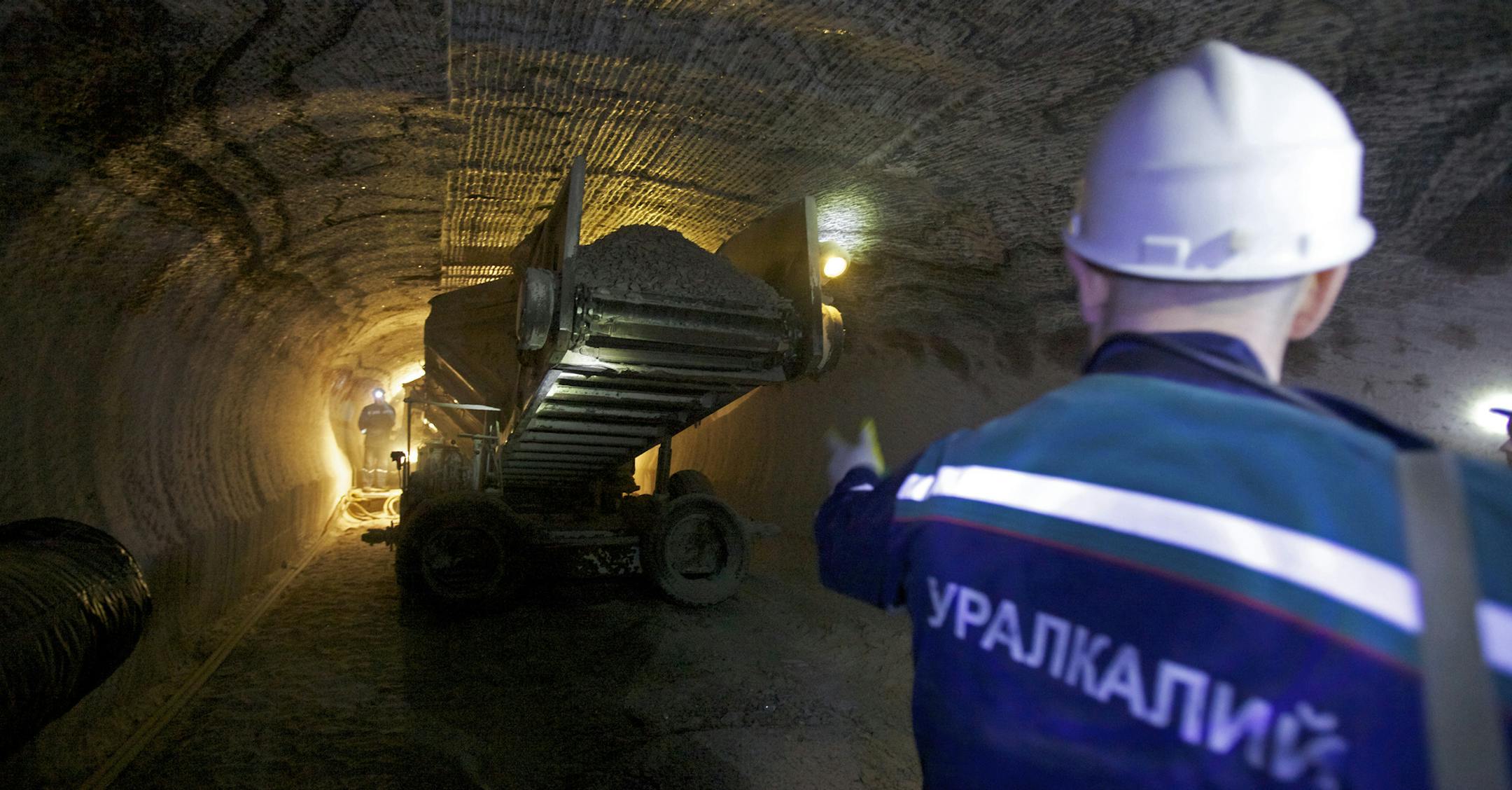
An employee watches a machine transporting potash ore in the OAO Uralkali potash mine in Berezniki, Russia, on Thursday, March 17, 2011. Uralkali plans to merge with domestic rival OAO Silvinit to overtake Potash Corp. of Saskatchewan Inc. as the largest producer. Photographer: Alexander Zemlianichenko Jr/Bloomberg ORG XMIT: 110400510
The world’s potash kingpin is OAO Uralkali. Above is its potash mine in Berezniki, Russia. (The Minnesota Star Tribune)
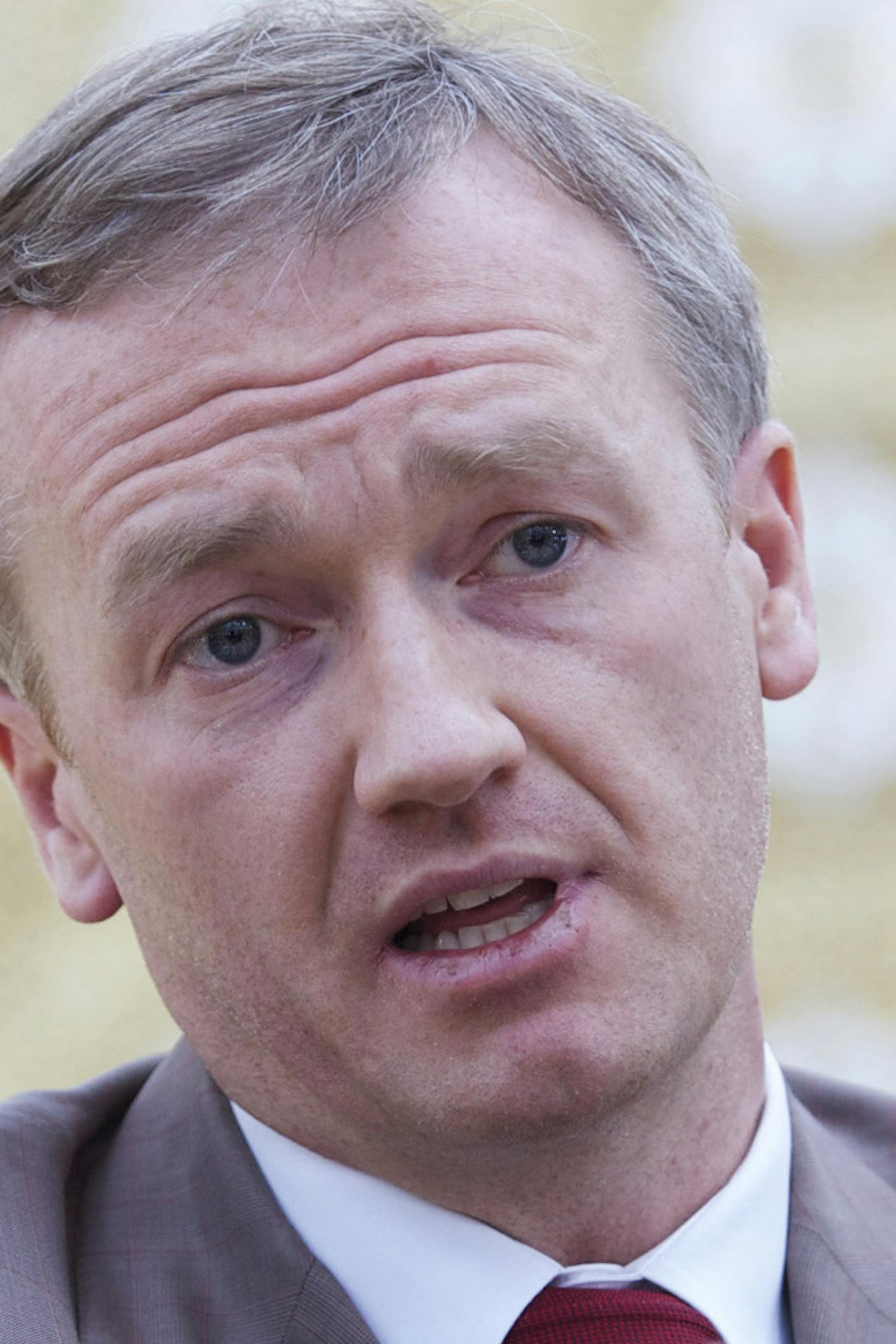
Vladislav Baumgertner
Vladislav Baumgertner (The Minnesota Star Tribune)
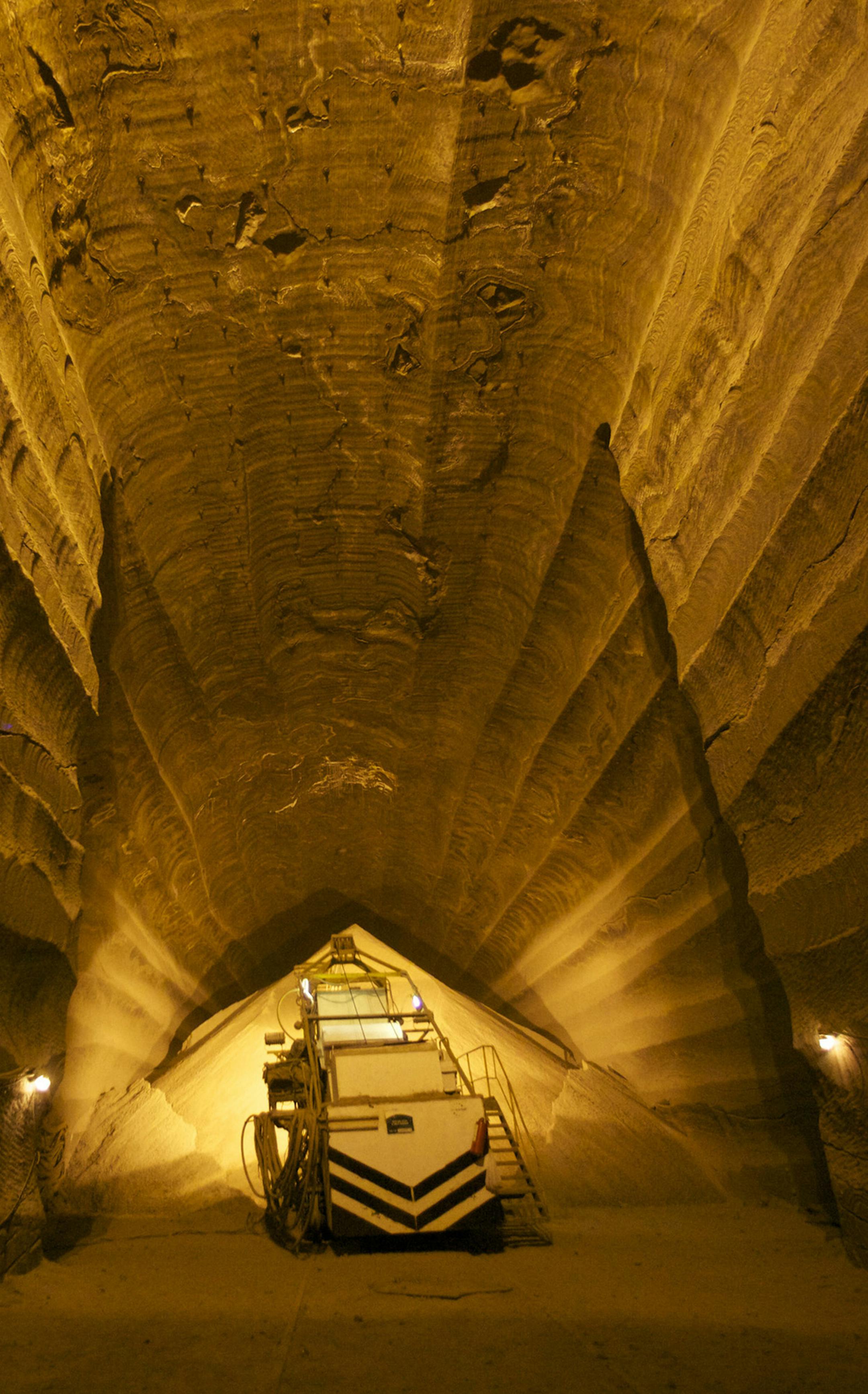
A machine moves a store of recently excavated potash ore in the OAO Uralkali mines in Berezniki, Russia, on Thursday, March 17, 2011. Uralkali plans to merge with domestic rival OAO Silvinit to overtake Potash Corp. of Saskatchewan Inc. as the largest producer. Photographer: Alexander Zemlianichenko Jr/Bloomberg ORG XMIT: 110400510
Russia’s OAO Uralkali shook the global potash market by breaking with Belaruskali on Tuesday. (The Minnesota Star Tribune)
about the writer

about the writer

Mike Hughlett

Reporter

Mike Hughlett covers energy and other topics for the Minnesota Star Tribune, where he has worked since 2010. Before that he was a reporter at newspapers in Chicago, St. Paul, New Orleans and Duluth.

See Moreicon

More from Business

See More
card image
Blaze Credit Union

Blaze Credit Union is Minnesota’s fourth-largest by assets. First notices of the Aug. 14 cybersecurity incident went out in early December.

card image
card image