

Opinion editor's note: Star Tribune Opinion publishes a mix of national and local commentaries online and in print each day. To contribute, click here.
•••
Since someone leaked a draft of the Supreme Court's opinion in this year's big abortion case, two questions have emerged about the scope of conservative policy goals. Will Republicans try to ban abortion by federal statute if Roe v. Wade is overruled, or leave the issue to the states? And will the Republican appointees on the Supreme Court overturn other precedents with a family resemblance to the 1973 abortion-rights ruling?
In both cases, there are reasons to expect circumstances to block conservative ambitions.
Many Republicans in Congress are saying that abortion after Roe will be a state matter, but they do not really believe it. Republicans overwhelmingly voted to ban partial-birth abortion at the federal level during the George W. Bush administration. More recently, they have sought a federal ban on abortion after 20 weeks of pregnancy. They succeeded in the first project and have failed in the second. Now that Roe appears to be on its way out, some Republicans are talking about a nationwide ban on abortion after six weeks.
But they do not appear to have the votes for the six-week ban, given that they haven't had them for the 20-week ban, or even for federal protections for babies who survive abortions. They will not have a veto-proof majority for any such federal law so long as a Democrat is in the White House.
Even if a Republican wins in 2024, a federal ban would require either 60 votes in the Senate or the effective end of the filibuster. Almost all Democrats would presumably oppose the bans. There would also be a few Republicans who either favor legal abortion or think the federal government has no constitutional power to prohibit it. (I think it does have that power and that the question of whether to seek its exercise is one of prudence.) The main legislative action, then, will probably remain in the states, at least for several years.
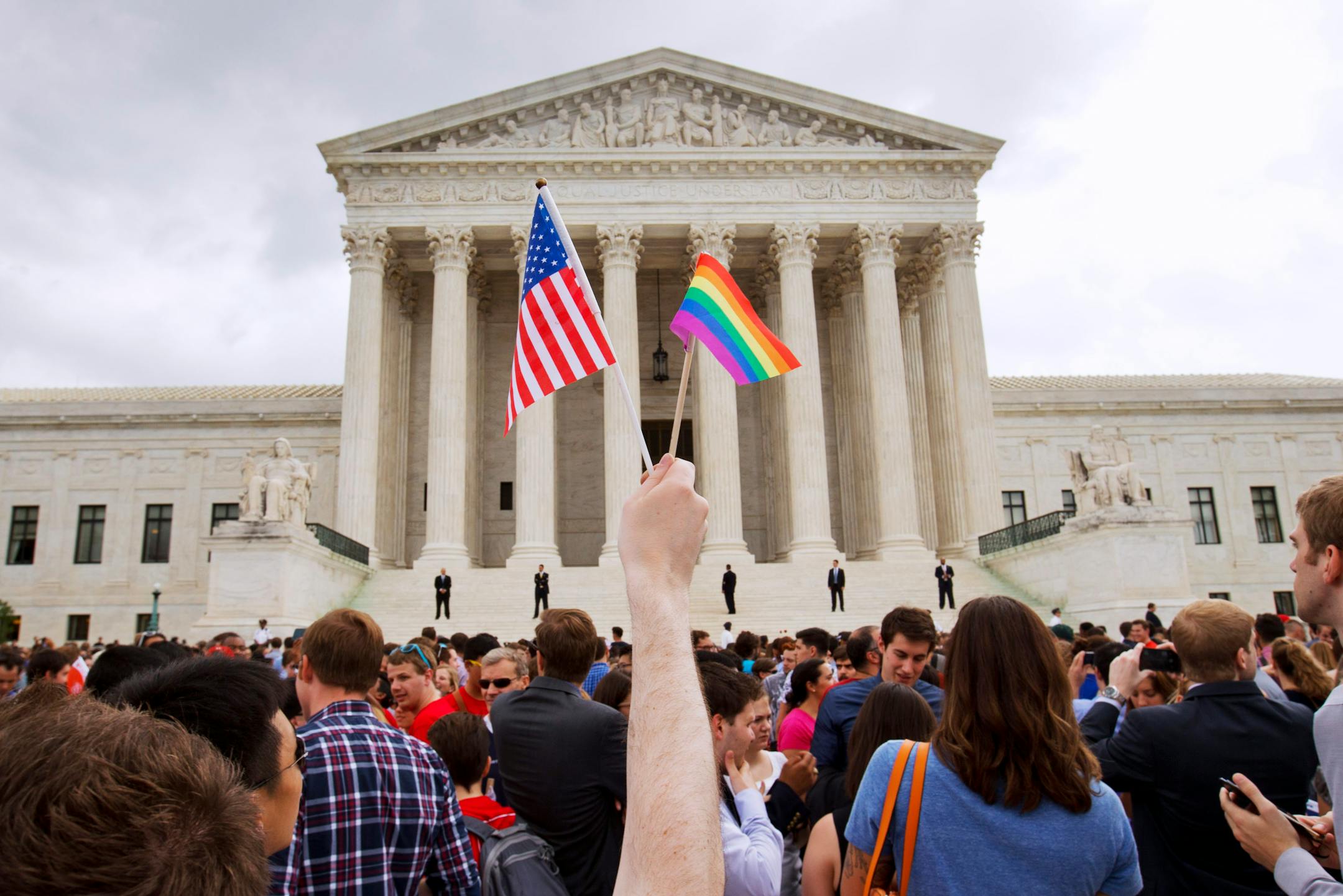
The question about the Supreme Court's trajectory arises because some of Roe's premises also serve as foundations for other major decisions. The court has held for more than 50 years that the 14th Amendment, by prohibiting any state from denying any person liberty without due process of law, protects privacy. It invoked that privacy right to strike down laws against contraception in Griswold v. Connecticut (1965) and against sodomy in Lawrence v. Texas (2003). It relied on Lawrence, in turn, to rule in Obergefell v. Hodges (2015) that governments must recognize same-sex marriages.


