

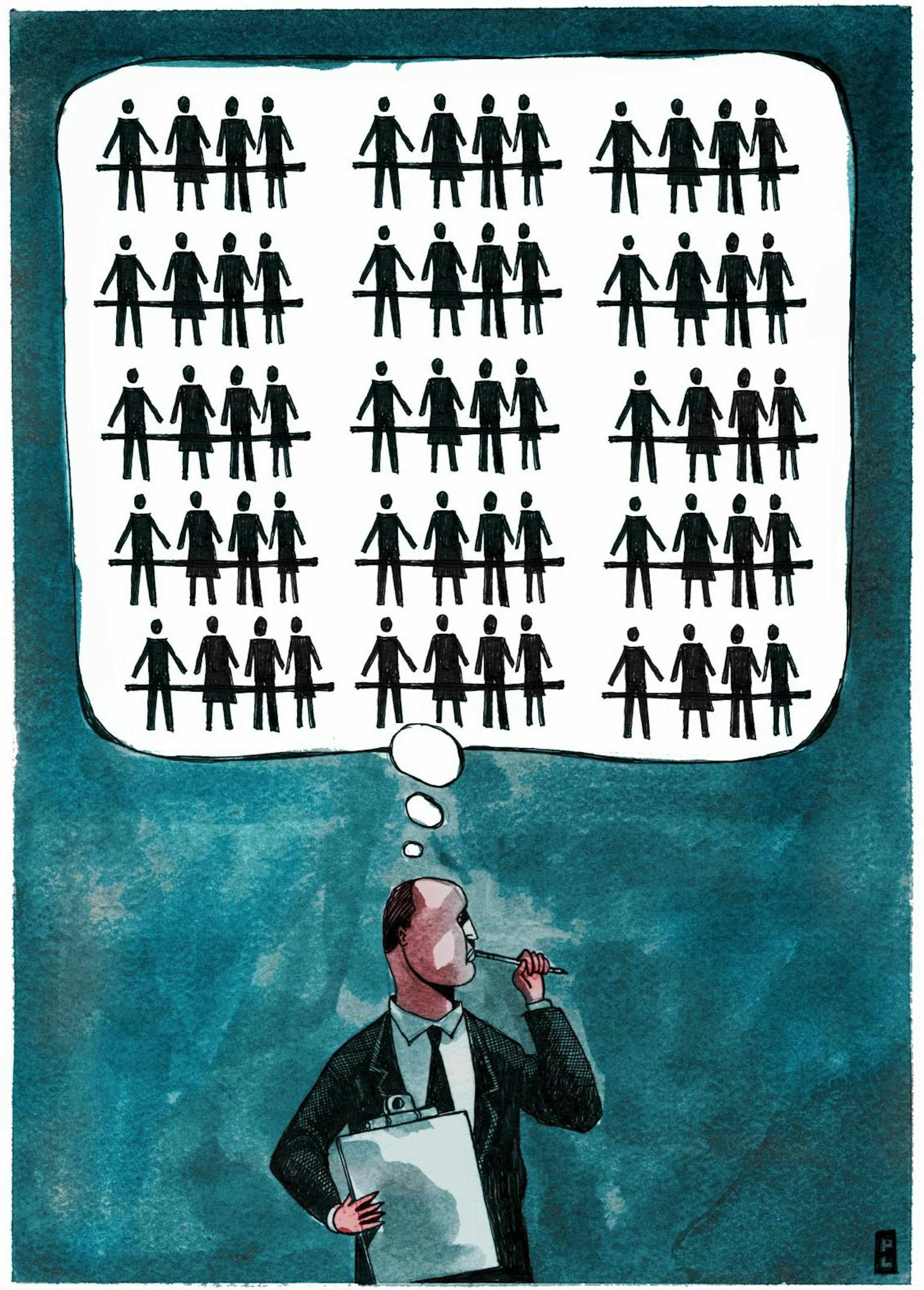
Shortly before Christmas, the U.S. Census Bureau released data highlighting a worrisome trend: The population grew a subdued 0.7 percent last year, the lowest rate of growth since the Great Depression years of 1936 and 1937. Declines in the birthrate and the slowing pace of immigration are to blame.
Ask an economist why this matters and you'll get a welter of contradictory answers, since the relationship between population growth and economic expansion is a vexed and controversial subject. But if you sift through the historical data on the subject, it's hard to deny that the demographic slowdown, should it continue, likely puts a damper on future economic growth.
Declines in the rate of population growth are nothing new. It has been in decline throughout the West for several decades. In some countries in Europe, the rate of growth is below replacement levels: The population, in other words, is set to decline in absolute numbers.
But the U.S. has also been on a downward trajectory since the 1990s, though the pace has been less steep. The latest figures for the rate of population growth compare with 1.4 percent in 1994 and more than 2 percent at the height of the baby boom.
If you take the really long view, these declines are nothing more than a continuation — with some episodic, if anomalous, baby booms — of patterns that are two centuries old and counting. After all, birthrates dropped dramatically over the course of the Industrial Revolution in Europe and the U.S. This was particularly true for the middle classes, where declines in fertility were especially pronounced.
Unlike farm families, middle-class families living in cities no longer needed as many children, and the demands of industrial society encouraged them to invest more resources — money, time, calories, education — in fewer offspring.
But these declines in the birthrate — and the larger rate of population growth — weren't bad news in and of themselves; if anything, they seem to have been quite positive, going hand in hand with dramatic economic growth.
But is there a point when declines in the rate of population growth intensify to the point where they can start to drag down the economy?


