

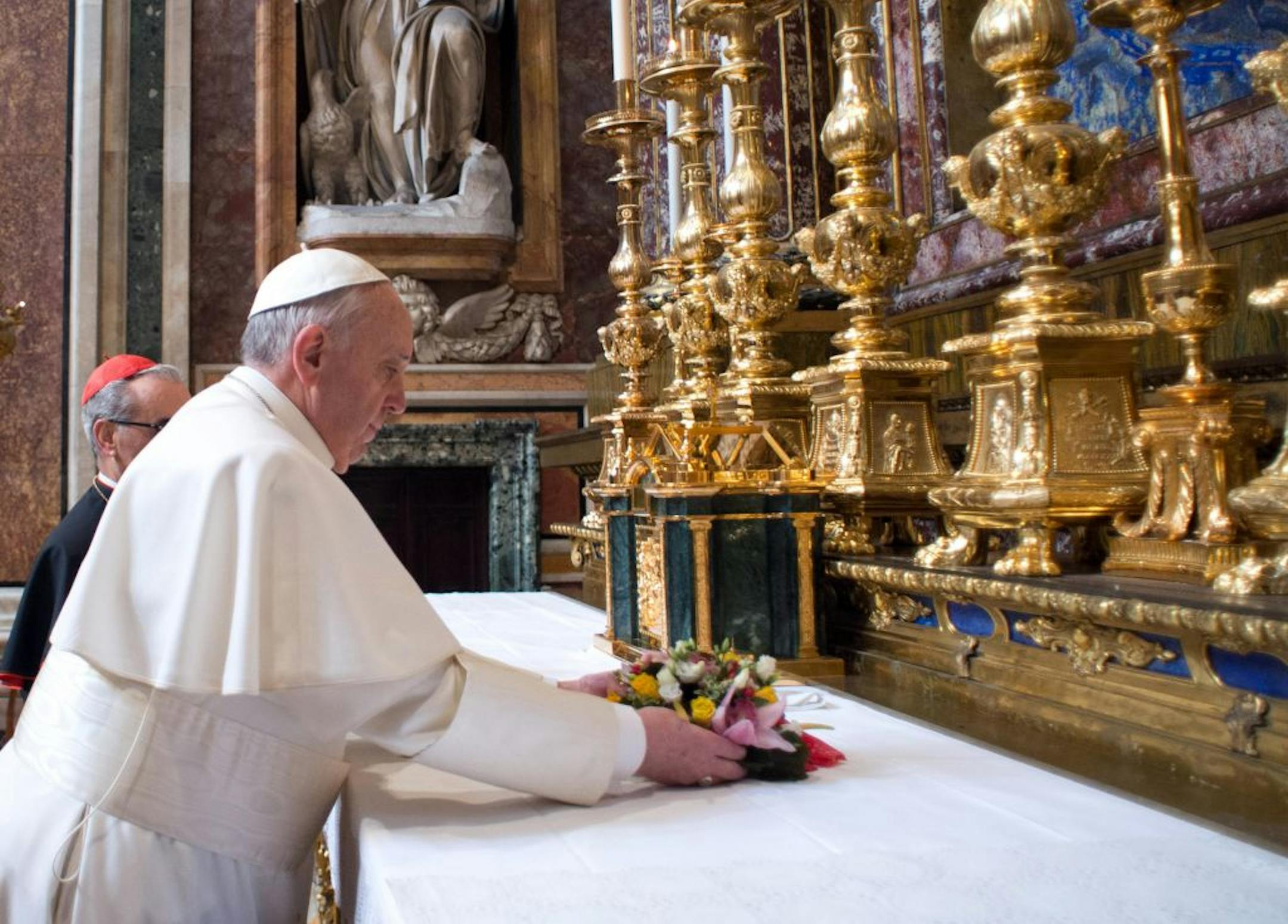
Shortly after the proclamation of the new pope, a television reporter told his audience that the Catholics of Latin America "have waited 20 centuries for a pope to come from this region."
Well.
There were, of course, no Catholics in Latin America until about 500 years ago. We all make mistakes, but in this case the error is probably explained less by exuberance over a new pontiff than by the inexorable demand of the medium for gab unceasing.
Contrast the endless and largely pointless chatter of the modern world with the minutes Pope Francis spent standing silently on the balcony before addressing the thousands in St. Peter's Square and the hundreds of millions around the world.
The silence was beautiful, eloquent, projecting both a sense of peace and a sense of occasion. An even longer silence followed, when Francis asked the faithful to pray for him — a silence, evidently, that was mimicked in Catholic households and schools around the world.
We live in a loud time. Anything above 85 decibels can damage the ear if we listen long enough. Manhattan traffic alone creates a good 79 decibels. And according to the National Institutes of Health, the sound of music through headphones often runs — wait for it — about 110 decibels.
This loudness can harm our physical health. The larger challenge, however, isn't so much the noise as its constancy. Silences are increasingly difficult to find. The endless chatter and clack and beep and blat is going to destroy democracy. Seriously.
Francis's predecessor, Benedict XVI, was eloquent on silence: "In silence, we are better able to listen to and understand ourselves; ideas come to birth and acquire depth … . By remaining silent we allow the other person to speak, to express him or herself; and we avoid being tied simply to our own words and ideas without them being adequately tested. In this way, space is created for mutual listening, and deeper human relationships become possible."


