
Law enforcement leaders: Preventing the next tragedy requires levels of reform — including for guns

Regulating AR-15-style weapons, strengthening our mental health care system and adding school resource officers are all pieces of the puzzle.

September 8, 2025 at 9:14PM
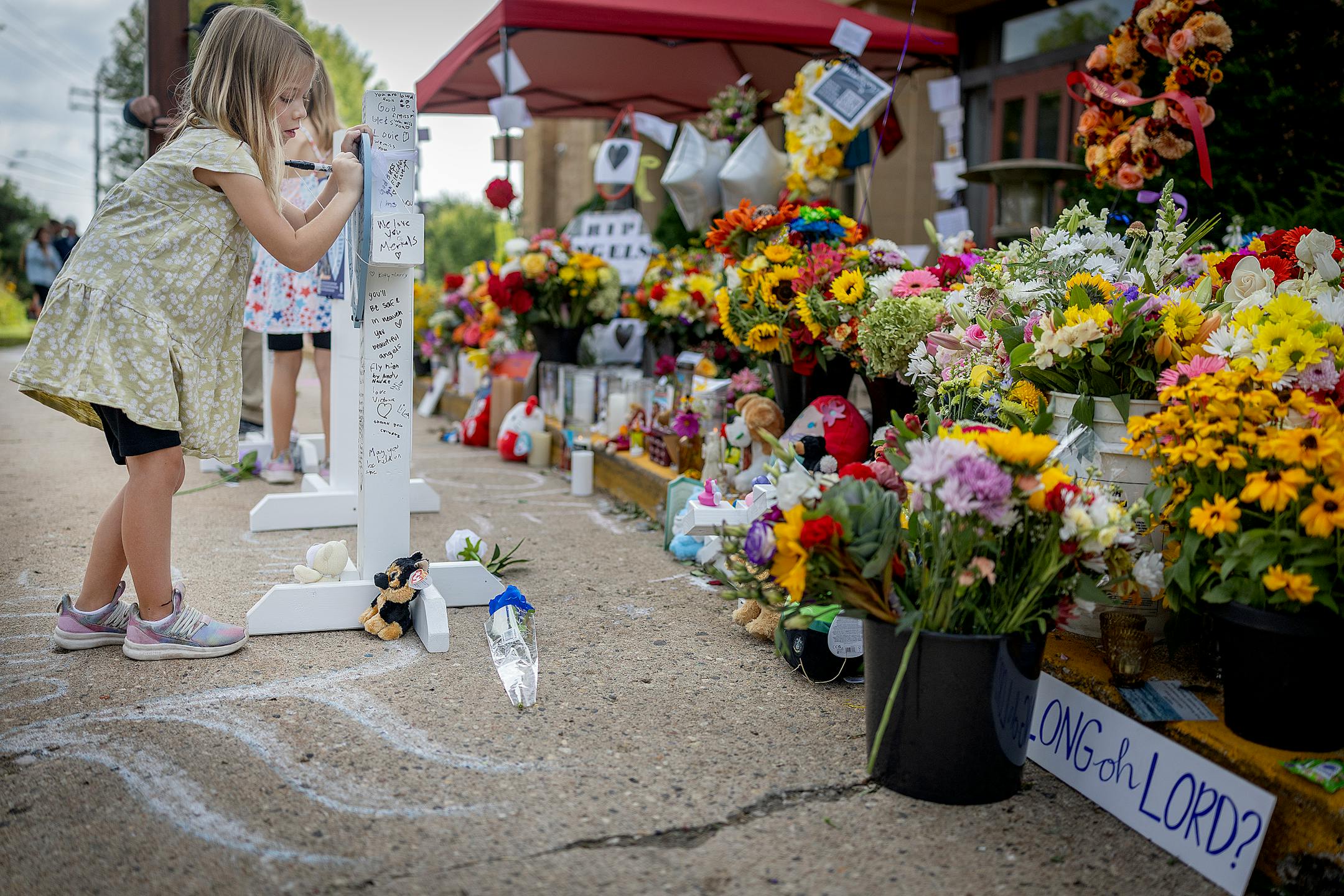
Annunciation student first grader Olive Holin, 6, writes a message on crosses for her schoolmates in front of Annunciation Church on Aug. 29. (Elizabeth Flores/The Minnesota Star Tribune)

Opinion editor’s note: Strib Voices publishes a mix of guest commentaries online and in print each day. To contribute, click here.

•••

In the wake of the deadly shooting at Annunciation Catholic Church and School in south Minneapolis, our community is once again left asking: What could we have done to stop this?

We must begin by recognizing the heroism already shown. A Minneapolis police lieutenant rushed into the church alone within moments of the first 911 call. Other officers soon arrived, and they managed to rescue injured children, provide them with first aid and get them all loaded into EMS ambulances within minutes of that first officer arriving on scene, undoubtedly saving lives in the process. This happened all while other officers searched the scene for any other gunmen or improvised explosive devices. Their collective bravery is a testament to what law enforcement in Minnesota does at its best: run toward danger to protect others. But we cannot ask bravery alone to be our safety plan.

In 1934, Congress enacted the National Firearms Act after a wave of Prohibition-era mob violence. The law strictly regulated “dangerous and unusual weapons” like sawed-off shotguns and automatic firearms. Nearly a century later, it remains a federal crime to possess a short-barreled shotgun. Yet semi-automatic rifles like the AR-15 — lighter, faster, more accurate and far more lethal than those old shotguns — are widely available and inexpensive.

These are the same weapons used to kill first responders in Burnsville in 2024. They were used again in the Annunciation shooting last week. The bullets fired from AR-style rifles travel at high velocities, pierce soft body armor, and their large-capacity magazines make reloading unnecessary for long stretches. We banned sawed-off shotguns nearly a century ago. Why do we still allow such easy access to firearms that are orders of magnitude more destructive?

Regulating or banning AR-style rifles will not end gun violence, but it will temper it. Time and again, mass shootings involving these rifles and large-capacity magazines result in higher body counts. When a shooter can fire dozens of rounds without pausing, the carnage multiplies. For families spared by a moment to escape or intervene, the difference between 10 shots and 30 shots is everything.

This is not the only reform we need, but it is a common-sense step to reduce the prevalence and lethality of mass shootings.

Law enforcement sees the gaps in our mental health system every day. Families call 911 when a loved one is in crisis because they have nowhere else to turn. Judges cite having limited options when defendants are found incompetent. There are not enough facilities to meet the demand in Minnesota.

The result is predictable: Untreated crises escalate until lives are put at risk. We fear it is a matter of time before a person who has been, or should have been, civilly committed commits an act of mass violence.

Here’s another hard truth: The Minneapolis Public School District made a shortsighted decision when they removed school resource officers. These trained professionals are not simply security guards, they are mentors, relationship-builders and first responders. They deter violence, de-escalate conflicts and, in the worst moments, act to save lives. Restoring SROs in schools with persistent safety challenges is a necessary step to protect students and give families peace of mind.

Prevention also means accountability. Too often, defendants convicted of serious crimes with firearms receive favorable plea deals or downward departures. Time and again, those same individuals go on to offend again — sometimes with tragic consequences. Our communities deserve protection from repeat offenders. Accountability does not mean abandoning rehabilitation, but it does mean ensuring that serious crimes carry serious consequences.

These solutions are not in competition. They are pieces of the same puzzle: stronger mental health care, safer schools, limits on the deadliest firearms and accountability for those who commit gun crimes.

Every time tragedy strikes, the same voices say: “This reform wouldn’t have stopped that shooting.” That misses the point entirely. Our responsibility is not to prevent every shooting or even the last shooting. Our responsibility is to prevent the next one.

Doing nothing is also a choice. It’s a choice that guarantees more grieving families, more traumatized children and more shattered communities. We cannot allow that to continue.

It’s not only guns. But it is the guns, too. And it is untreated mental illness, the sensationalism of violence, the absence of school resource officers and the lack of resources when warning signs are apparent. Every one of these issues requires us to put aside our politics and demand action. Together, we can save lives.

Dawanna Witt is the Hennepin County sheriff, Brian O’Hara is the chief of police in Minneapolis, Jason Ohotto is chief of the Minneapolis Park Police and Joseph Dotseth is chief of the Metro Transit Police.

about the writer

about the writer

Dawanna Witt, Brian O'Hara, Jason Ohotto and Joseph Dotseth

More from Commentaries

See More
card image
Elizabeth Flores/The Minnesota Star Tribune

Some might say we’re extremists or agitators. I say we’re in community.

card image
card image