
Opinion | Assault weapons bans won’t stop shootings. Mental health care can.

If we can step beyond these exhausted gun control debates, there remain evidence-backed policies that just might work.

August 30, 2025 at 9:00PM
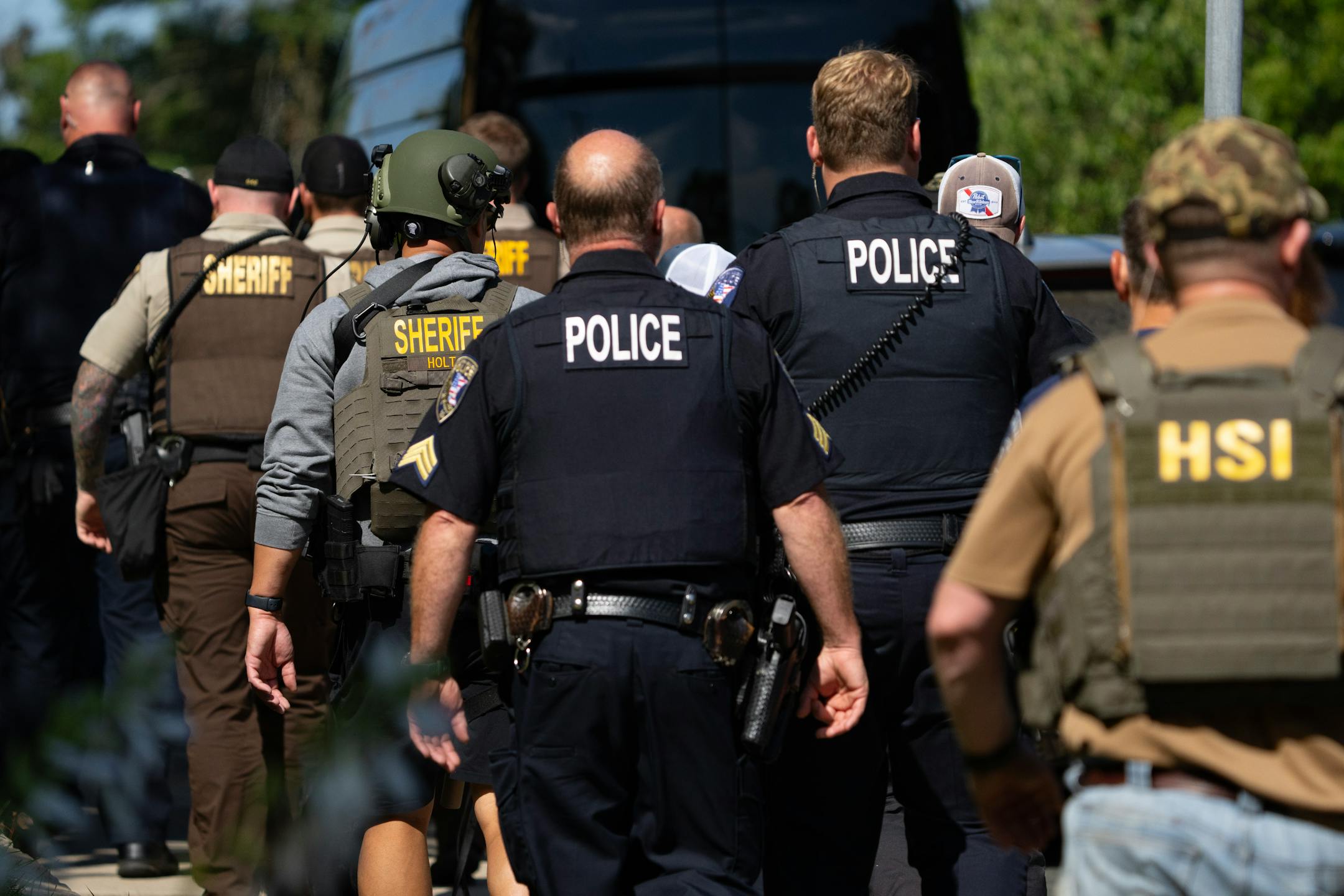
Law enforcement officers file back towards Annunciation Church in Minneapolis after searching the nearby neighborhood to clear the area after a shooting on Aug. 27. (Alex Kormann/The Minnesota Star Tribune)

Opinion editor’s note: Strib Voices publishes a mix of guest commentaries online and in print each day. To contribute, click here.

•••

In the aftermath of Wednesday’s shooting, Minnesota is again gripped by grief. The familiar ritual followed — fundraising, news conferences, partisan entrenchment — while the underlying problems remain untouched. If we are serious about preventing future violence, we must set aside symbolism and pursue evidence-based measures that can command broad support.

What won’t work: Assault weapons bans

Foremost among the familiar proposals is the call for another “assault weapons” ban. It is a policy heavy with symbolic resonance, but light on demonstrated efficacy. The federal Assault Weapons Ban of 1994 has been exhaustively studied. The National Institute of Justice, tasked with evaluating its impact, concluded candidly that “we cannot clearly credit the ban with any of the nation’s recent drop in gun violence.”

Any state-level reprise would encounter the same limitations. No workable proposal has been advanced to address the tens of thousands of AR-15-style rifles already lawfully owned in Minnesota. Nor would a ban have addressed the circumstances of Wednesday’s attack: The perpetrator carried not only a rifle but also a shotgun and at least one pistol. To suggest that an “assault weapons” prohibition would have prevented the tragedy is to mistake a political slogan for a serious solution. Moreover, in the wake of Supreme Court cases Heller (2008) and Bruen (2022), such measures would confront daunting constitutional obstacles.

As Minnesota criminologists Jillian Peterson and James Densley of The Violence Project observe, the more salient drivers of such violence lie in personal crisis, trauma and the contagion of prior attacks, not weapon selection.

What won’t work: Enhanced background checks

Background checks likewise receive perennial attention. Yet in this instance, as in many others, they were entirely ineffectual. Minnesota has “universal background checks.” The Minneapolis shooter had no disqualifying record, no mental health commitments, nothing that triggered the system. They passed a check as smoothly as any lawful purchaser. Their descent into crisis, though visible to those around them, is not reflected in a database. To place confidence here is to invest in an illusion of security.

What won’t work: Demonizing communities

Still more corrosive is the tendency to demonize entire groups. Within hours, some voices were suggesting that transgender individuals should be barred from firearm ownership. Such a proposal is both repugnant to constitutional principles and to basic notions of human equality. The right of self-defense inheres in all individuals; to strip it away from a class of people because of their identity is indefensible.

Equally misguided is the reflex to equate mental illness with dangerousness. The evidence shows that individuals with mental health conditions are far more likely to be victims of violence than perpetrators. The data from The Violence Project confirms that most mass shooters are not motivated by psychosis or severe disorder but by accumulated grievance, crisis and social contagion. To misdiagnose the problem is to forfeit the possibility of a remedy.

•••

If we can step beyond these exhausted debates, there remain interventions supported by evidence, constitutionally sound and capable of uniting broad constituencies.

What can work: Expanding mental health infrastructure

One of the most consistent findings in the Violence Project’s research is that more than 4 in 5 mass shooters were in a period of identifiable crisis prior to their attack, and nearly half leaked their intentions to others. Yet in Minnesota, mental health resources are sparse to nonexistent, particularly in rural areas. This leaves families and communities with little recourse. If we are serious about prevention, we must address these deficits directly: more providers in underserved regions, more telehealth capacity and greater investment in accessible treatment.

Equally critical is equipping families, teachers and peers with tools to recognize the warning signs of crisis and to respond constructively. Community-level education on detecting a potential killer’s leaked plans, despair and grievance does not impinge on rights, but it can provide the earliest — and often the only — opportunity for diversion from violence.

What can work: Hardening soft targets sensibly

In their manifesto, the Minneapolis shooter wrote chillingly that they “wanted to make sure victims would be unarmed … that’s why I and many others like schools so much.” Schools, places of worship and other “gun-free zones” are chosen precisely because attackers expect little resistance.

We need not transform these places into fortresses, but we can make them less inviting targets. The proposed SHIELD Act in Minnesota is a promising step, providing resources for schools to implement discreet, layered security: controlled access points, environmental design that impedes entry and relationship-based threat assessment programs that identify risks early. Such measures are far more likely to prevent or mitigate an attack than another statutory ban on a particular firearm design.

What can work: Denying murderers infamy

Finally, we must recognize that many of these actors are motivated by a desire for notoriety. Peterson and Densley’s work demonstrates how future perpetrators study the media coverage of past attacks, seeking the infamy of their predecessors. Yet our culture obliges, broadcasting their names, faces and manifestos. This cycle of contagion fuels imitation. Breaking it requires discipline: Media outlets should deny attackers the fame they seek, and instead devote coverage to the victims, the first responders and the communities left behind.

•••

Let’s choose a different path. What can actually save lives are achievable, research-guided steps: stronger mental health care, tools for families in crisis, safer public spaces and starving killers of notoriety. These aren’t flashy bullet points for campaign mailers, and they won’t help one side score points against the other. But they are the kinds of solutions that could earn 201 votes — and actually make a difference.

Rob Doar works in public defense and serves as the senior vice president of the Minnesota Gun Owners Caucus, writing on topics related to civil liberties, law and public policy.

about the writer

about the writer

Rob Doar

More from Commentaries

See More
card image
Leila Navidi/The Minnesota Star Tribune

In government leadership, young people need to be ready to accept the torch, but previous generations can’t slow down their leg, or delay the pass.

card image
card image