

We got "dip" trouble in River City.
Not dip for chips and nachos. But the booming business of "dipping" or coating, tools, vehicles and even household items in rubberized coatings that has become as much a fashion statement as corrosion inhibitor.
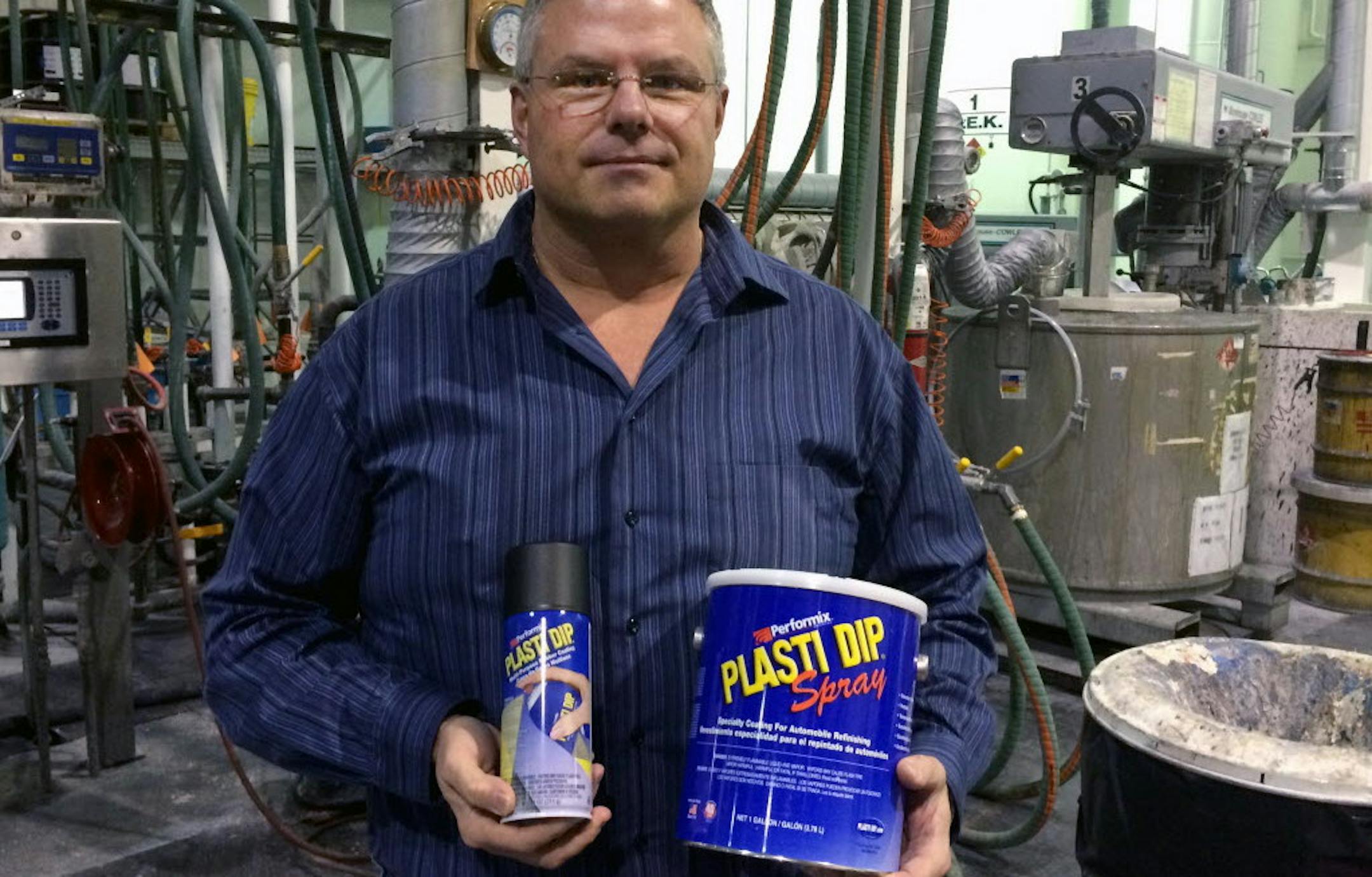
Plasti Dip International, the Blaine-based maker of tool coatings that has grown quickly since 2010 and built a global social media following, is suing the maker of Rust-Oleum over its spray-on rubberized coating that came out last year.
Plasti Dip says Rust-Oleum, owned by huge RPM International, an Ohio-based coatings firm, made its rival "FlexiDip" product based on trade secrets it obtained from Plasti Dip when the two firms discussed a joint venture in 2013.
They say Rust-Oleum's FlexiDip product violates patents Plasti Dip founder Robert Haasl registered in the 1970s and 1980s. Plasti Dip started in 1972 by making rubberized, protective coating that people could apply to hand tools for improved grip.
Plasti Dip struggled for decades as a so-so performer of a product used largely by professional and back yard mechanics to coat tools to give them a better grip. But in 2010, sales climbed 30 percent as new groups of customers, including auto customizers and craft do-it-yourselfers, latched on to Plasti Dip in the spray can.
Customers started as coating chrome car wheels and then covering entire vehicles. The product could be peeled off with no damage to the wheel or car body. Plasti Dip responded by cranking out more colors, going from six to 34 since 2009 and creating a way for people to mix their own colors.
Home decorators, professional and amateur, became the newest buyers for it. The online magazine Apartment Therapy last year featured holiday ideas for Plasti Dip, including treating pine cones and dipping wine goblets.


