

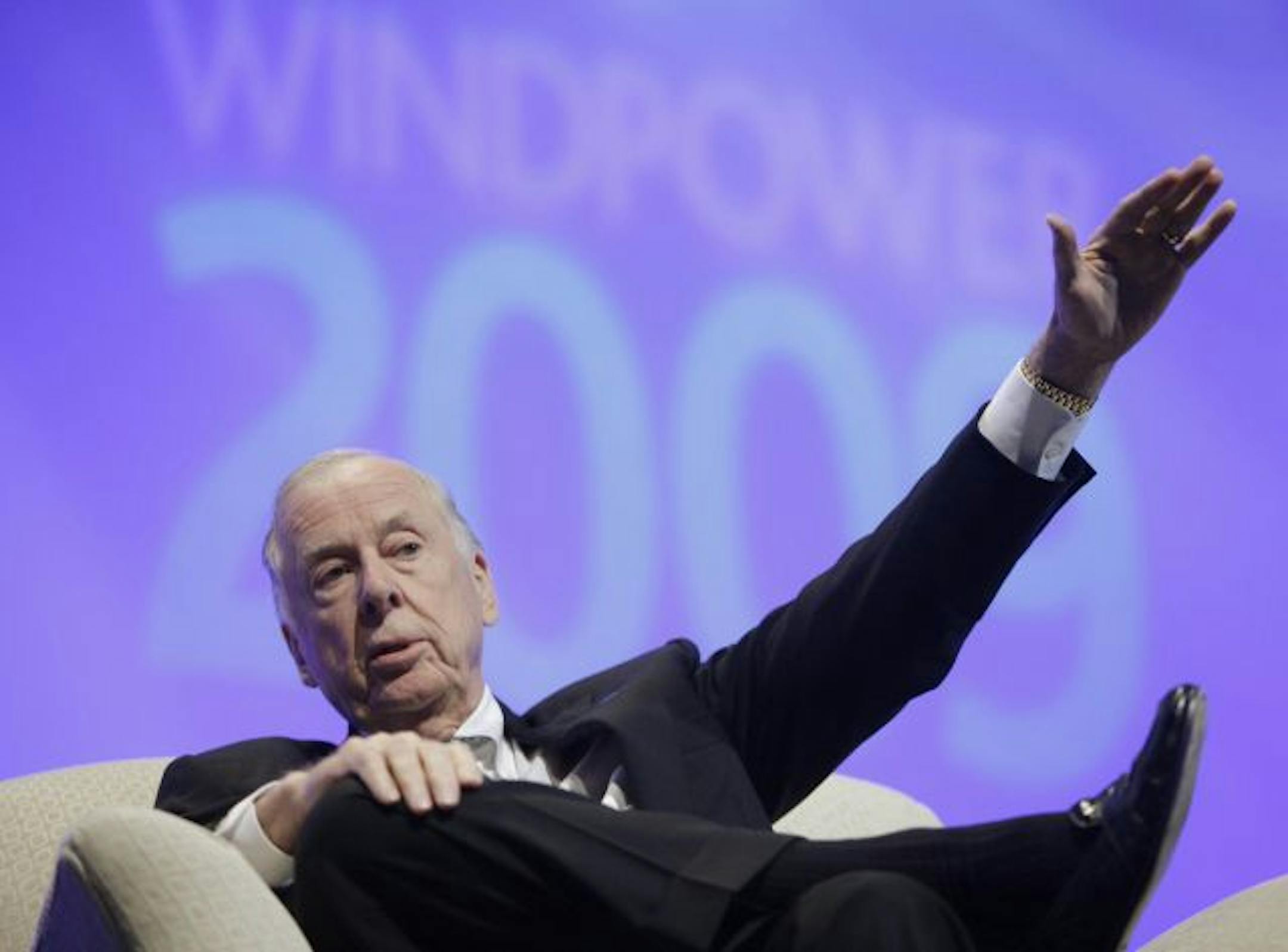
After shelving plans for a mega wind farm in the Texas Panhandle, Texas oilman T. Boone Pickens renegotiated his headline-making order of 667 wind turbines from General Electric Co., cutting it to about 334 machines with plans to stick them somewhere in the country's gusty central zone. Now we know where some of his stash is headed: Goodhue.
"He jokingly said his garage is too big to place them all, so he needs to find other locations," said Pickens spokesman Jay Rosser.
One of Pickens' companies, Dallas-based Mesa Power Group, is helping finance and supply wind turbines for a proposed 78-megawatt wind farm near Goodhue, Minn., south of Red Wing. A fairly large project for Minnesota, the Goodhue farm will generate enough electricity to power 31,000 to 70,000 homes, depending on various factors. It's still in the permitting phase.
Terms of the deal, first reported on MinnPost.com, aren't being disclosed. Technically, it's a new company called American Wind Alliance, a joint venture of General Electric and Pickens' Mesa Power, that is financing the project and supplying about 52 1.5-megawatt GE wind turbines. It encompasses about 32,000 acres in and around Belle Creek, Goodhue, Vasa, Minneola and Zumbrota.
"It's the All-American team, so to speak," said Chuck Burdick, senior developer at National Wind, the Minneapolis-based wind developer behind the project.
If all goes according to plan, National Wind will break ground on the project this year and have the farm operational next year. Minneapolis-based Xcel Energy Inc. has signed an agreement to buy all the electricity from the project, pending approval by state utility regulators.
The project faces some opposition from local residents concerned about health and other impacts of the turbines. It's also generated a dispute over whether it qualifies as a Community Based Energy Development (CBED) project that gets some preference by utilities.
American Wind Alliance is financing the project using the so-called "Minnesota flip," according to National Wind. That's an arrangement whereby large investors team up with small ones so the large investors can take advantage of the federal tax credits around wind projects and when those credits are exhausted, ownership flips to the small investors. In this case, that's a group of about 25 farmers and other landowners in the area.



