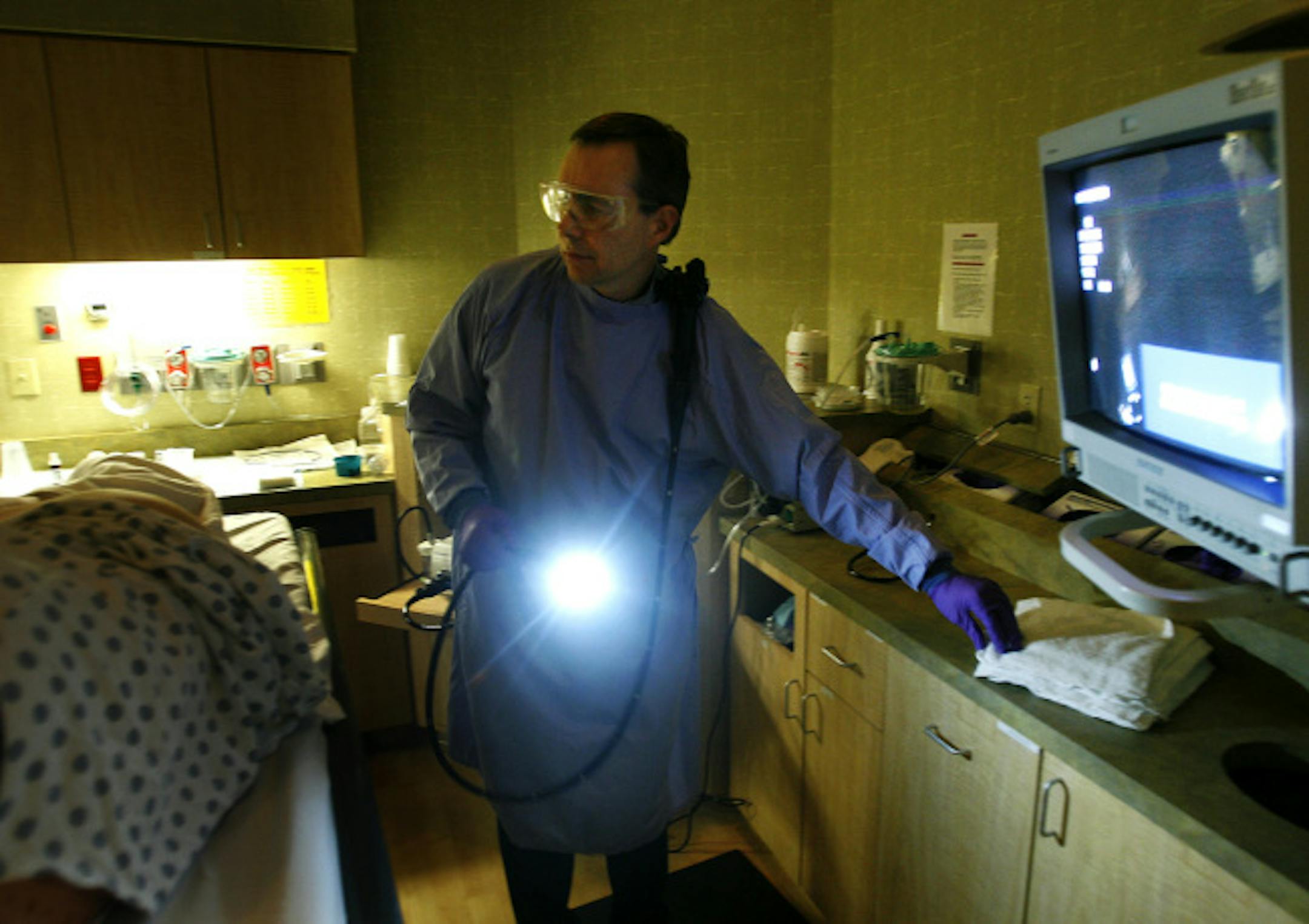
Dr. Marty Immerman won't get to take off early from work this New Year's Eve. The Edina ob/gyn is performing a tubal ligation on Dec. 31 for a patient who simply had to get in before the end of the year. He's not the only doctor who is busier than usual this holiday season. Abbott Northwestern Hospital Minneapolis is doing a record number of surgeries. And doctors at Minnesota Gastroenterology are doing 14 percent more procedures -- mostly colonoscopies -- in November and December than at the same time a year ago.
What gives?
It's the Year-End Mini-Boom, a new phenomenon brought on by health insurance plans with deductibles. It appears to work like this: Early in the year, patients are more likely to hold off getting care because they are paying out of pocket. Later in the year, some have paid enough to reach their deductible and insurance kicks in.
At that point, insurance covers most medical services -- whether at 80 percent, 90 percent or completely -- until the deductible resets in the new plan year, Jan. 1 for most of them.
That's the time to cram in colonoscopies, hysterectomies, hernia surgeries and knee replacements.
It used to be just Medicare patients with deductibles clamoring to get in at year-end, said Mary Igo, chief executive of Minnesota Gastroenterology. "Now it's everybody."
At a time when the weak economy is hurting the industry, medical groups say they are grateful for the bump in business, however temporary. To cope with demand, doctors are adding hours and delaying vacations.
High-deductible plans with health savings accounts were introduced in 2004 and now cover about 10 percent of insured Minnesotans. At the same time, deductibles for traditional plans -- known as preferred provider organizations -- also have jumped, with a $1,000 deductible now the national norm, according to benefits consultant firm Mercer.