
Editor's Pick

Editor's Pick

Pension fund covering scores of Minnesota Catholic schools has $800M shortfall

The Chicago-based Christian Brothers pension plan has informed the schools and dioceses that the fix will be costly. Some are pulling out, worried about the plan’s future.

The Minnesota Star Tribune
November 18, 2025 at 12:00PM
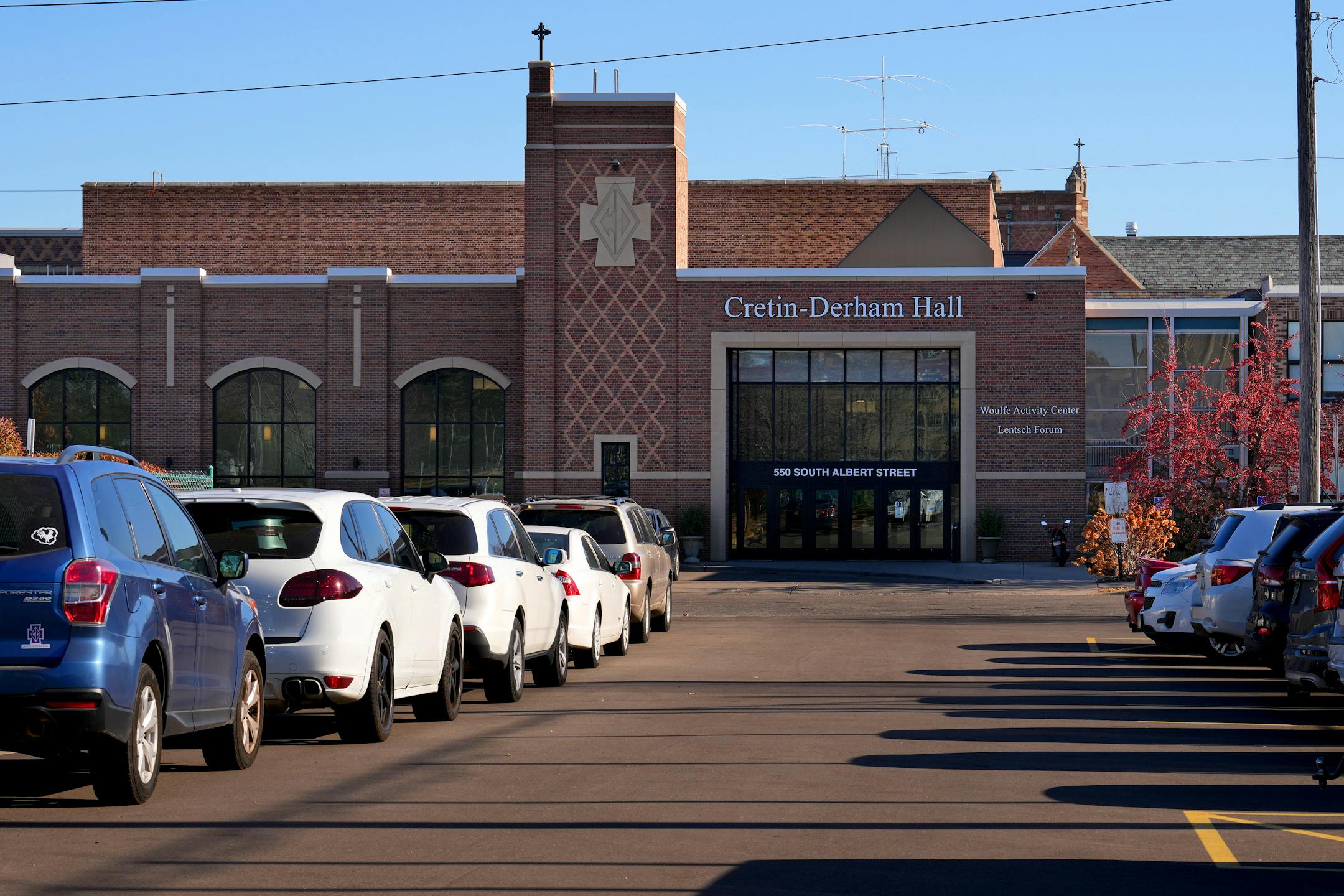
The pension funds for thousands of current and former workers at Catholic Minnesota institutions, including Cretin-Derham Hall in St. Paul, pictured, are significantly short of money. (Anthony Soufflé/The Minnesota Star Tribune)

Cretin-Derham Hall’s president, Jeb Myers, had alarming news for retirees and employees at a recent packed meeting on its St. Paul campus.

Their pension plan, managed by suburban Chicago-based Christian Brothers Services, is in need of a costly fix. If Cretin-Derham Hall (CDH) remains in the plan, its annual pension contribution would almost quadruple to an untenable $1.5 million, Myers told those in attendance.

The pensions of thousands of current and former workers at Catholic Minnesota institutions, particularly schools, are part of the Christian Brothers Employee Retirement Plan.

Many of them are getting the same ominous warnings as the CDH employees: Their pension funds are significantly short of money.

The Christian Brothers plan, which covers 180 employers and 40,000 people nationwide, is asking for big boosts in employer contributions to erase an $800 million shortfall.

There’s “really no faith” that the Christian Brothers’ funds will be there in the long term, said Sam Hartmann, a pension consultant hired by CDH who attended the school’s meeting.

The Christian Brothers plan also covers Academy of Holy Angels in Richfield and Totino-Grace High School in Fridley, as well as St. Mary’s University in Winona and Minneapolis. And the plan includes lay workers at the dioceses of St. Cloud, Crookston and New Ulm, which together run more than 40 Minnesota schools.

Foreseeing the plan’s weakness, two Twin Cities Catholic schools — DeLaSalle and Benilde-St. Margaret’s — exited from the Christian Brothers’ management in recent years to create their own retirement plans. Hill-Murray is going down a similar path, and Cretin-Derham now plans to pull out too.
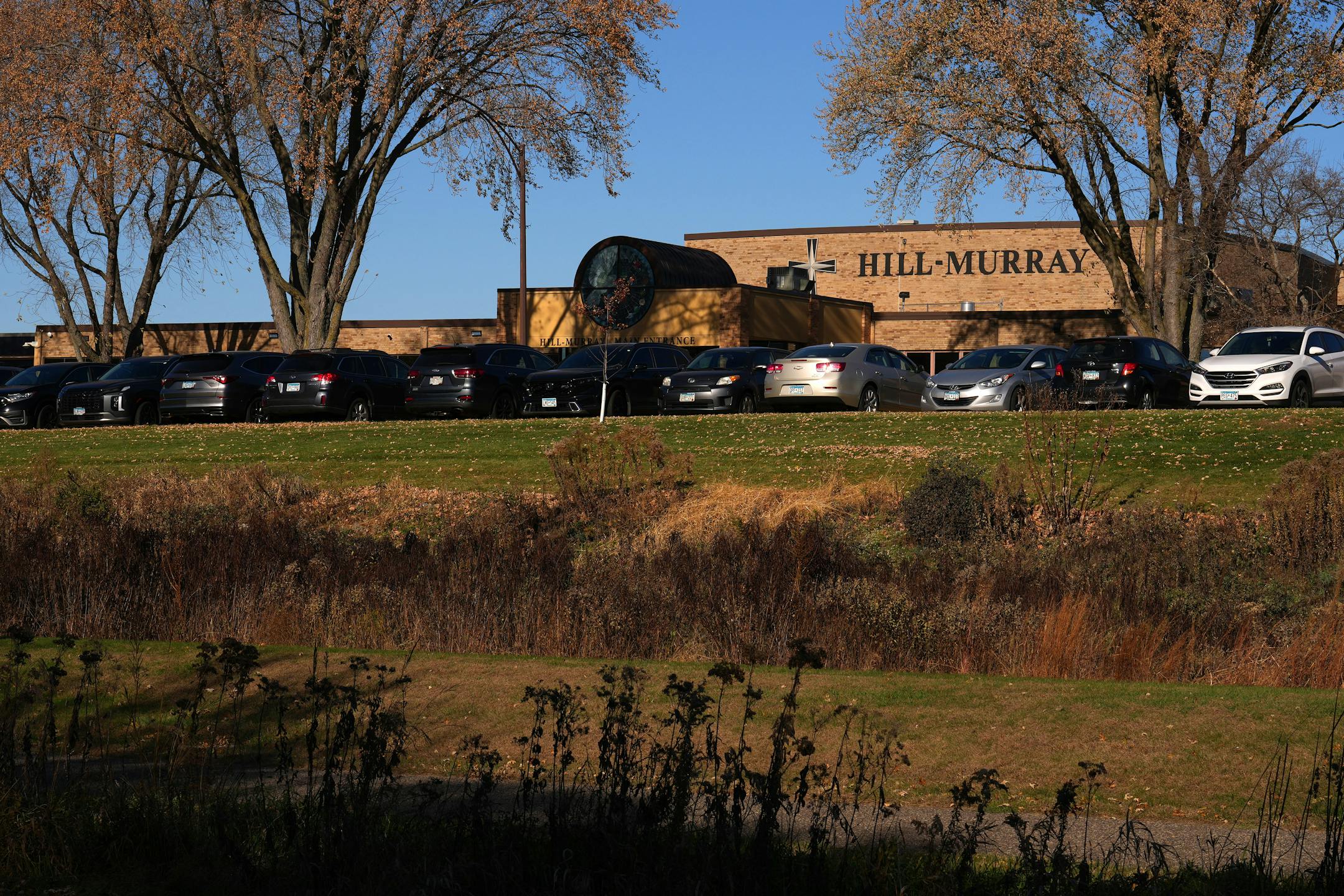
Exiting is a costly move, too, with risks of its own, but it’s better for retirees, said Hill-Murray President Melissa Dan.

“We either come up with the money for our own plan or stay in a pension with significant risk,” she said. “For our teachers to remain whole, we are now running a pension plan.”

Christian Brothers Services says its investment strategies have been sound, though the pension plan sustained a big loss in a hedge fund that cratered a few years ago.

Christian Brothers Services, a nonprofit, runs what’s called a church pension plan. Church plans are not covered by federal pension regulations and are not eligible for federal bailout if they fail.

It also is tough to successfully litigate against church plans. Essentially, workers have limited recourse if their church pension blows up.

Pension lost ground over years

Christian Brothers Services rejects the notion that its plan’s future is shaky.

“The changes we are making will bolster the long-term stability of the plan,” said Terry Arya, Christian Brothers Services’ chief marketing officer.

The Christian Brothers pension plan was 141% funded in 1999 and remained at least 100% funded until the 2008 financial crisis, which hammered pension plans of all kinds.

Its shortfalls continued to worsen over time. The plan fell below 70% funding for most of the past five years, and its current level is 66%. In other words, the plan has 66% of the assets needed to cover its liabilities.

“We have a significant gap in our funds,” said Thomas Dodd, a Christian Brothers Services executive, in a video to employers obtained by the Star Tribune. If nothing is done, the plan will be 50% underfunded by 2035.

Each employer has different demographics, so their funding levels vary within the Christian Brothers plan. Pensions at CDH, St. Mary’s, Hill-Murray and the Diocese of St. Cloud are all funded at 58% to 59%.

“We either come up with the money for our own plan or stay in a pension with significant risk,” said Hill-Murray School President Melissa Dan. “For our teachers to remain whole, we are now running a pension plan.” (Anthony Soufflé/The Minnesota Star Tribune)

For pensions covered by the Employee Retirement Income Security Act (ERISA), plans that are 60% to 80% funded raise a red flag with federal regulators, Hartmann, a partner with Quantum Pension Solutions, said in an interview.

A funding level below 60% is “a giant red flag,” he said.

In the recent video sent to employers, pension plan representatives blamed the shortfall on a demographic crunch.

The number of employees contributing to the plan has dipped slightly since 2005, but the ranks of retirees have grown rapidly. In 2024, the plan had 15,111 active workers and nearly 25,000 former workers who are due pensions.

“It’s a reflection of what’s happening to defined benefit plans across the country,” including Social Security, Dodd said.

The pension plan’s investment returns “have outperformed our return assumption,” he said.

Still, the stock market’s strong performance since 2023 has only underscored the stress on the Christian Brothers’ plan.

“What’s really important to note is that the S&P 500 has been up about 40% over the past two years,” Hartmann told retirees at the CDH meeting, seen in a video obtained by the Star Tribune.

“So, a really staggering fact is that even in some very remarkable equity markets, this plan has not gained any traction,” he said.

The Christian Brothers pension plan suffered “massive losses” after its investments in a hedge fund imploded in 2020, court records show.

The fund, managed by an arm of German financial giant Allianz, focused on trading options on stock indexes.

The collapse wiped out “in a matter of weeks, nearly $150 million of ... retirement savings that had been accumulated over decades,” the Christian Brothers retirement plan said in a suit it filed against Allianz.

Federal securities regulators charged the New York-based Allianz subsidiary with fraud over the fund’s collapse. The company settled for a $1 billion fine and agreed to pay $5 billion more in restitution.

The Christian Brothers retirement plan settled its suit against Allianz in February 2022, but declined to disclose the terms.

Employees, bishops worried about coverage

Christian Brothers representatives said in the video they don’t plan to cut benefits. Catholic Minnesota employers that responded to the Star Tribune, including CDH, said they’re committed to delivering full benefits, too.

But reducing payouts is an option for troubled church pension plans, leaving some retirees with concerns.

Kathleen Roy of Princeton is one of them.

Roy taught religion at Holy Angels for 13 years through 2006, then worked as CDH’s library director for the next decade until retiring. She learned of the pension shortfall at CDH’s meeting in late September.

“Cretin-Derham Hall did a good job addressing the problem,” she said. “They have somewhat of a plan. But we are not sure they can afford to fully pay the benefits in the future.”

Roy said Catholic schoolteachers work for lower wages than they’d make in public schools. They do so for the “mission,” expecting a pension and “some security in old age,” she said.

“I think this is a betrayal if they don’t hold to the promise of the pension,” she said.

The Christian Brothers Employee Retirement Plan has been serving Catholic institutions since the 1960s. It has $1.55 billion in assets.

The plan is sponsored by Christian Brothers Major Superiors, which promotes the efforts of the LaSallian Christian Brothers, a Catholic lay order that focuses on education.

Several Minnesota high schools covered by the Christian Brothers pension plan are rooted in LaSallian traditions, but the dioceses are direct administrative divisions of the Catholic church.

The Diocese of New Ulm has more than 800 active and former workers in the Christian Brothers pension plan. Staying in the plan isn’t feasible given the required increases in employer contributions, the diocese said in a statement.

New Ulm Bishop Chad Zielinski, in the statement, called the pension plan situation “a critical issue of justice.”

The Crookston Diocese, which has about 450 people in its plan, would need to pay $24.6 million over 25 years to stick with the Christian Brothers.

“Clearly, this is not a viable option,” Bishop Andrew Cozzens said in a letter to employees. “We understand this is unsettling news, as it has implications for you and your family. It is also deeply disturbing to us.”

Pension’s plan: Higher contributions

Christian Brothers Services is asking employers to make a second annual contribution aimed solely at reducing the shortfall.

With the extra payment, employers would pay off the pension plan’s unfunded liability over 25 years, returning it to 100%.

“We understand this is a steep hill we are getting ready to climb, but it is not an insurmountable problem to be solved,” David Enenbach, a Christian Brothers retirement plan board member, said in the video.

Employers that withdraw from the plan still face extra expense, requiring upfront cash to take over unfunded liabilities and pay a withdrawal penalty. DeLaSalle and Benilde-St. Margaret’s chose to withdraw.

Hill-Murray would have had to pony up $13 million to $15 million to withdraw, said Dan, the school’s president.

Hill-Murray instead chose a “spinoff” from the Christian Brothers plan, and after two years, has nearly completed the process. A spinoff requires no withdrawal fee, and allows a school to cover its shortfall at its own pace.

CDH has decided to do a spinoff, too, while other schools and dioceses say they haven’t made a decision. Their deadline is May.

“There is no good solution. It is expensive no matter how you do it,” Myers, the CDH president, said in an interview. Both he and Dan said their schools have no plans to cover pension costs by raising tuition.

Christian Brothers Services stressed that its plan allows employers plenty of flexibility to stay in the fund.

They can phase in the extra pension plan contribution over the next three years, or pause their normal contribution for four years.

Several Catholic schools in the Christian Brothers plan have consulted with lawyers, said Hartmann, the pension consultant.

“But they have been advised that there really is no legal action that can be taken because it falls under this umbrella of a church plan, and the way the contract is written is very one-sided.”

about the writer

about the writer

Mike Hughlett

Reporter

Mike Hughlett covers energy and other topics for the Minnesota Star Tribune, where he has worked since 2010. Before that he was a reporter at newspapers in Chicago, St. Paul, New Orleans and Duluth.

See Moreicon

More from Business

See More
SBA loans are up over 10% this year.
Getty Images/iStockphoto

The Minnesota Star Tribune has previously reported on pandemic-era fraudsters stealing from the Small Business Administration.