

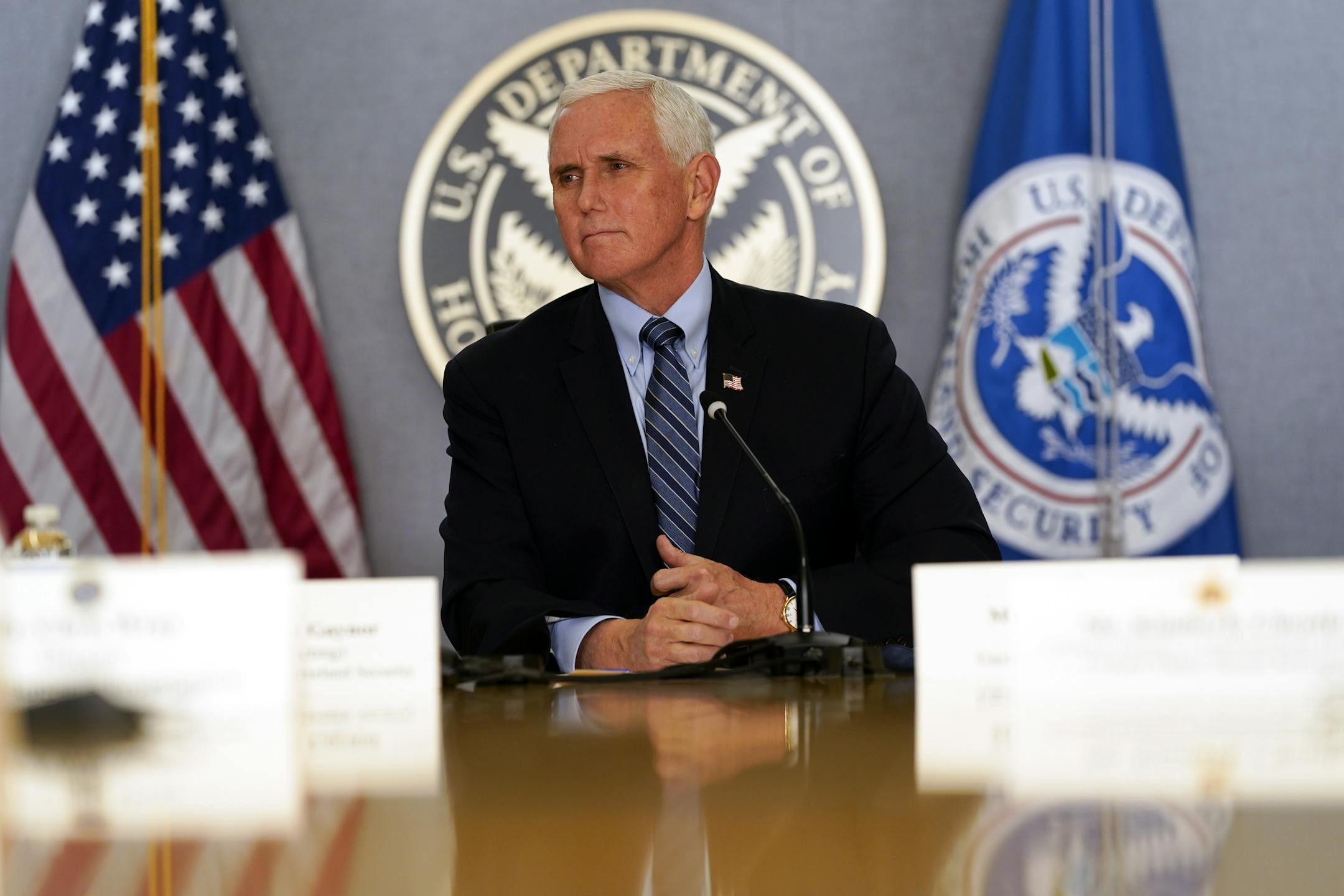
After some waffling, Vice President Mike Pence has announced that he will attend President-elect Joe Biden's inauguration on Jan. 20. President Donald Trump will skip the event.
In light of all that has happened, it is easy to dismiss these decisions as unimportant. Elected officials are not legally required to be present. Most outgoing presidents have attended their successors' swearing in, but given the incendiary language and very real violence that threaten our political system, the issue of whether our officials engage in old rituals of courtesy might seem trivial.
Yet attending the inauguration of a political rival is not just a matter of politeness. It is a symbol of peaceful continuity, a rejection of violence and an affirmation of constitutional government.
It is a signal to supporters that they should refrain from threatening their fellow citizens. It is a declaration that political disagreements can be worked out nonviolently within political institutions.
It is an affirmation of the people's authority, expressed through elections, law and judicial decisions.
An inauguration is not simply a celebration of the winner. It is a chance for officials to re-enact the founding moment of our political community. It offers citizens a tangible reminder of what John Locke taught and our founders recognized — shared self-government requires us to forgo using every means at our disposal to achieve our political ends. If we wish to maintain stable and potentially just political institutions, we must lay down our arms.
Political opponents stand together during an inauguration not because they agree on everything, but because they agree on one thing — that a shared institutional framework makes peaceful disagreement and debate possible. They stand together to submit to a shared constitution.
Almost all outgoing presidents have attended the inauguration of their successors. Since the first ceremony was held at the Capitol building in 1825, the outgoing president has not only attended the inauguration, but also escorted the president-elect to the event in a procession. In 1837 the soon-to-be-former president and soon-to-be president began the awkward tradition of sharing a carriage.


