

It was the summer of 1998. The Star Tribune dispatched me to St. Louis to interview Mark McGwire, who was dueling with Sammy Sosa to break baseball's single-season home-run record.
McGwire and Sosa were widely said to be saving baseball, which had languished after a lockout canceled the 1994 World Series.
This kind of thinking can be overdone. If McGwire and Sosa hadn't "saved" baseball, then the Yankees' run of championships or the rise of the Red Sox or simply the pervasive grass-roots popularity of baseball would have kept the game alive. But as McGwire and Sosa launched home runs while trading banter and even hugs, they charmed the country, giving casual fans reason to watch.
For those not knowledgeable about the efficacy of performance-enhancing drugs, like most sportswriters of that time, McGwire and Sosa were godsends bordering on the godlike. Baseball always had been the most democratic of major sports when it came to body types. McGwire and Sosa looked like functional Schwarzeneggers compared with many who played the game in previous decades.
McGwire had grown weary of attention by the time I reached him. He eventually agreed to an interview, but asked to do it in the hallway outside the clubhouse. Even someone who had covered the NFL had to be awestruck by McGwire's sheer size.
We would learn later that McGwire and Sosa had cheated. The transgressions of those two players and those who emulated them would not destroy baseball. In fact, realists would arrive at the conclusion that baseball might have been better when the best players were cheating.
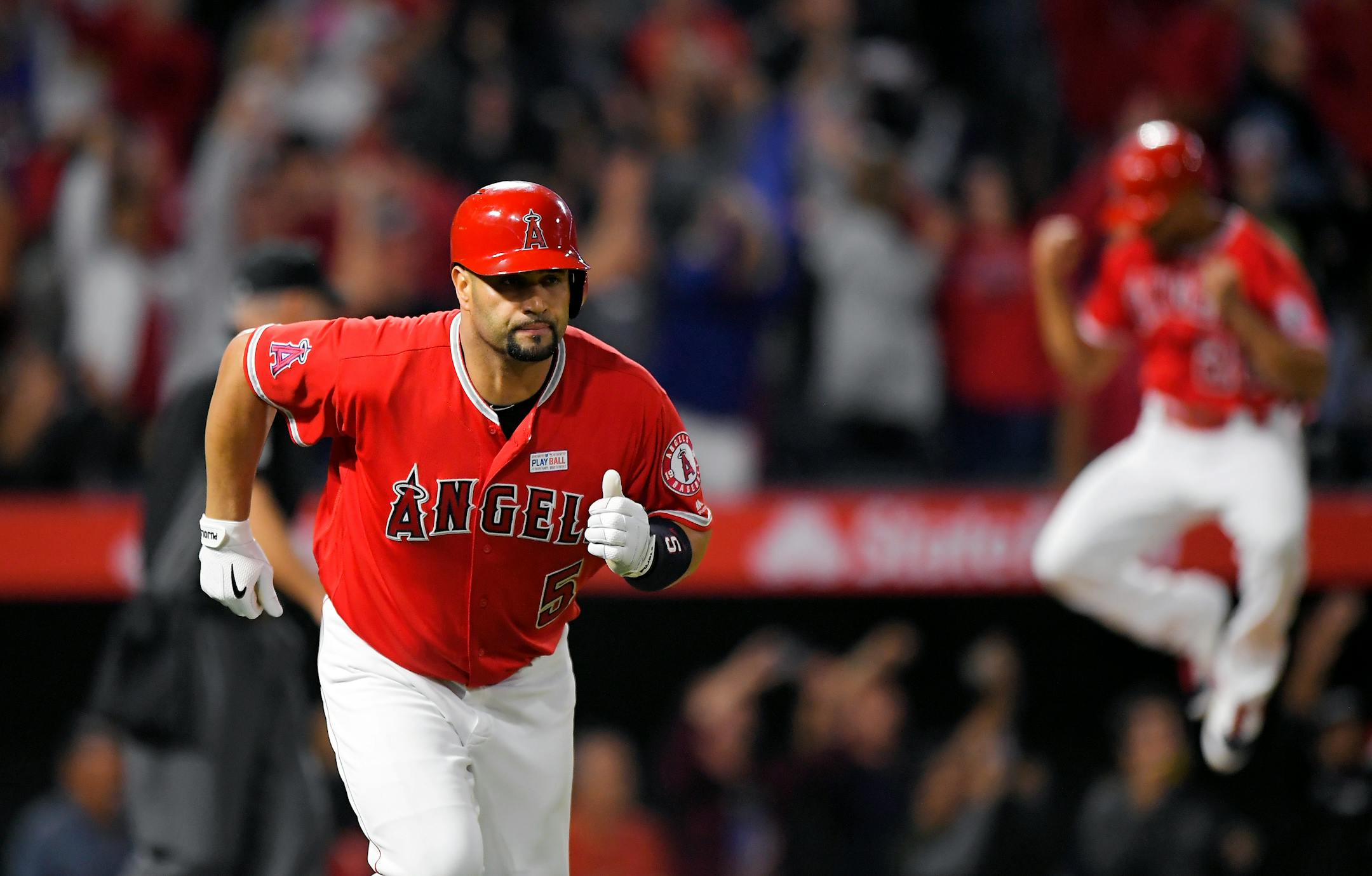
Saturday night in Anaheim, we saw the true cost of baseball's PED era. Albert Pujols became the ninth player in baseball history to reach 600 home runs, and his achievement was celebrated with an enthusiasm that would not match that of a quality NFL regular-season game.
Steroids ruined home runs even for those who did not take them.


