

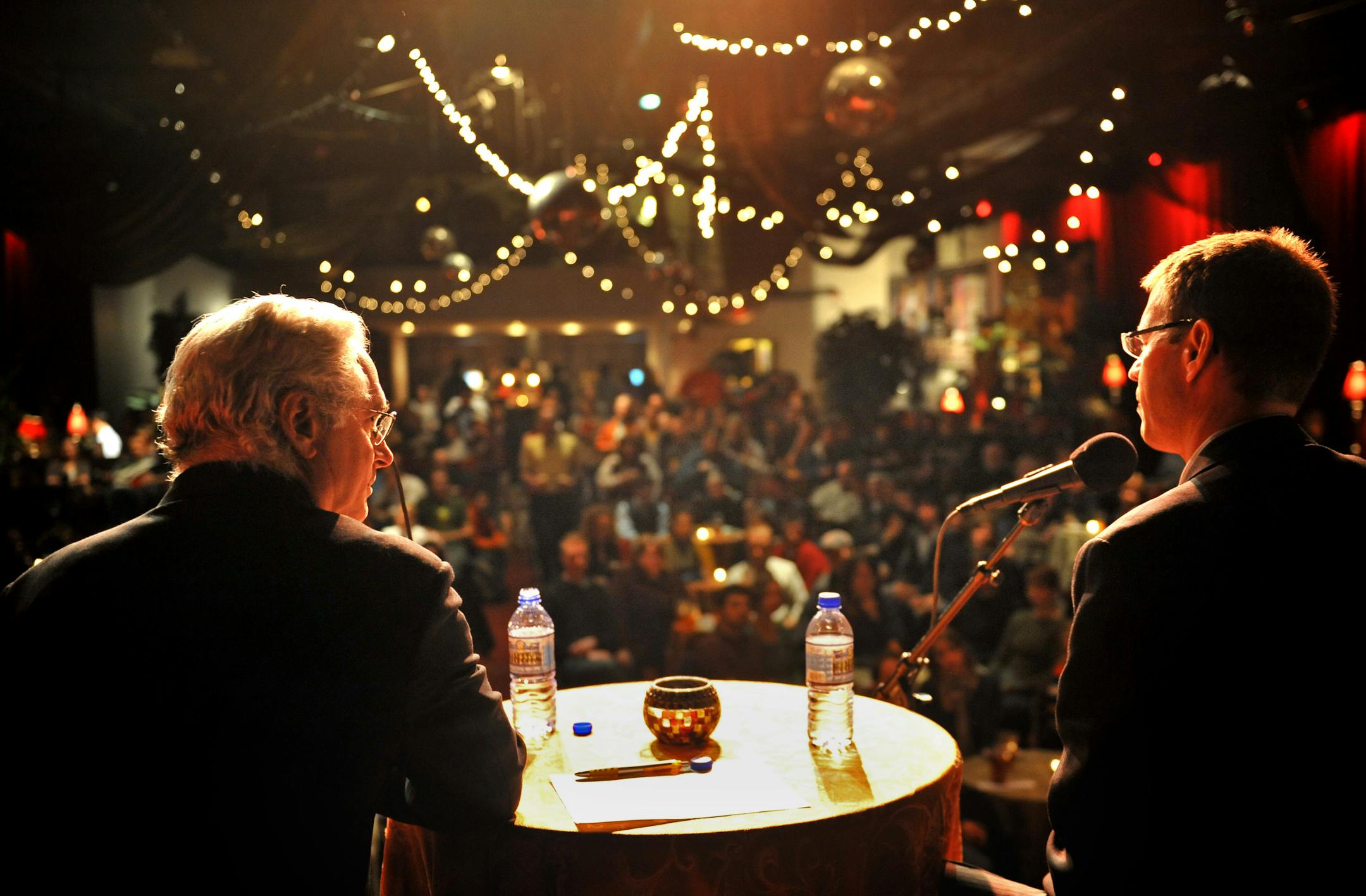
What's next for the stock market and economy? Those questions brought a standing-room-only crowd to the Varsity Theater in Minneapolis recently for another "Policy and a Pint" event sponsored by the Citizens League and 89.3 The Current. Lanae Steen came in search of advice on whether now is the time to start investing. "I don't have a huge amount of expendable income, so it is a little riskier for me to tie up that money," explained the 29-year-old project manager. "But now it seems like everything is at bargain-basement prices." Bob Scroggins, who shared a table with Steen, is in a different boat. At age 70, Scroggins thought he had "more money than we'd ever spend." Now he's wondering if there's enough. "I have two-thirds of what I had a year ago, and not because I'm spending it."
Minnesota Public Radio's voice of financial reason Chris Farrell and certified financial planner Jonathan Guyton did their best to answer questions that don't have clear answers. What if this time the stock market doesn't recover? How will consumers saving instead of spending affect the economy? What should we be doing to prepare?
Part of finding answers is to first understand how we got here. Farrell linked the mess to four trends: 1) A housing boom that had many of us refinancing our houses to remodel or pay off revolving debts, and trading up into houses that were affordable only if the boom continued. 2) Decades-low interest rates that created a hunger in the financial world to find a way to earn high interest rates. Enter sub-prime loans that were bundled up and sold to everyone from Lehman Brothers to your money market mutual fund. 3) Deregulation created a "whatever business wants" environment. 4) Declining or stagnating wages prompted some people to maintain their standard of living with credit.
Americans were "paying themselves 3 percent wage gains by borrowing against their homes ... and the bill came due," Farrell said.
Michael Anderson, 26, says most Americans expect their standard of living to increase, not stagnate. Will his generation do worse than the one before, he wonders? He also worries about whether his job is secure and has been bulking up his emergency savings by cutting back spending. However, eating out less means less business for restaurants, which could mean fewer tips or job losses for his friends in the industry. He worries about what his decision to be prudent and save more "means for the economy."
Because she left school and entered the working world, Ellie Graves, 31, is better off financially today than she was in recent years. But paying off her credit card debt concerns her because the card companies keep raising her interest rates "despite a good payment history and no problems. ... You think you have budgeted a set monthly payment and then all of a sudden the rules change on you."
So what do we do to improve our finances in uncertain times? Here are several suggestions from Guyton, principal of Cornerstone Wealth Advisors in Edina, and Farrell:
• Examine your goals for the next six months to a year. If they haven't changed, stand pat.



