

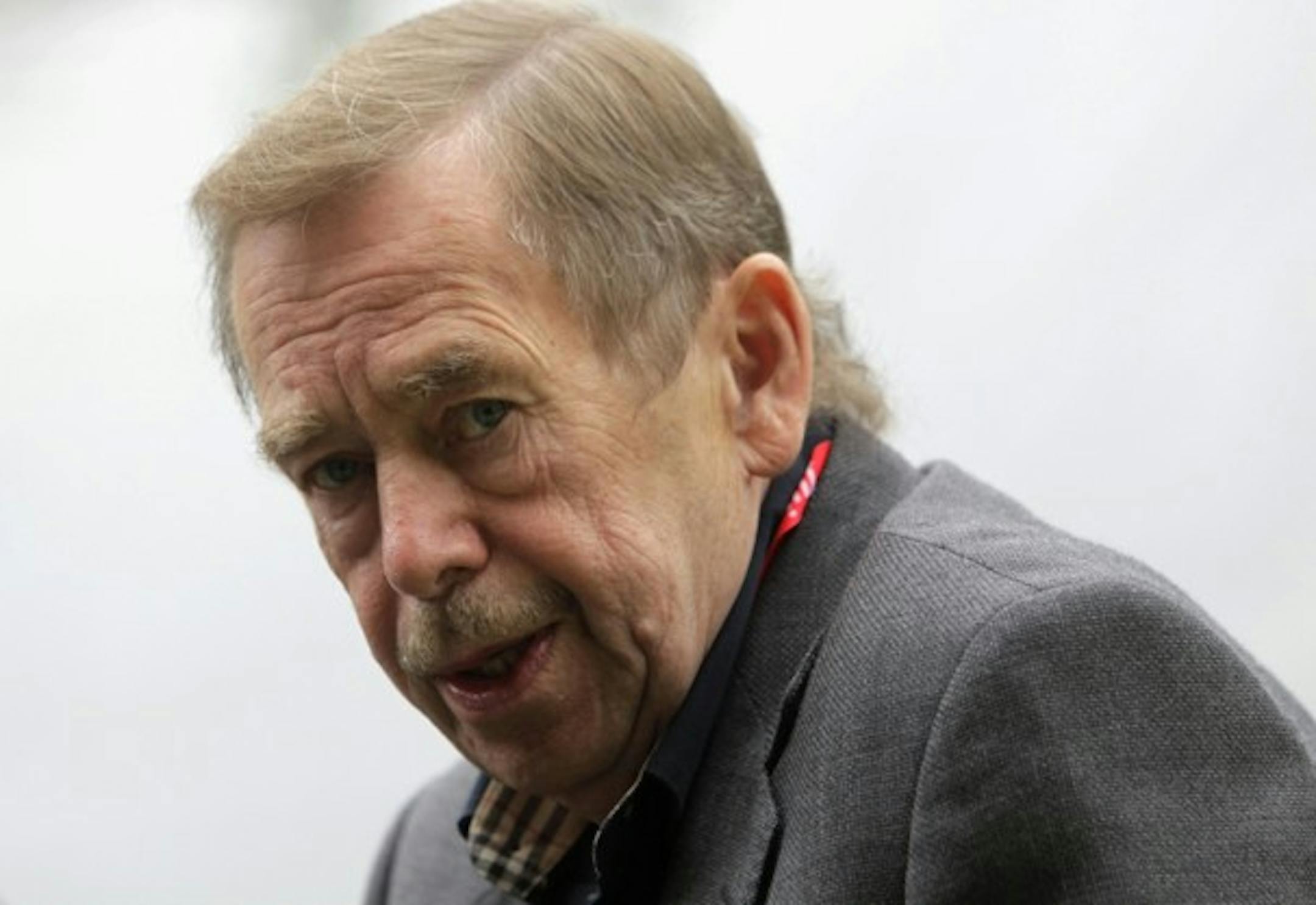
Vaclav Havel, former president of the Czech Republic, would surely have radiated his signature wry smile to see that his nearest neighbor on the obituary pages this week has been the North Korean dictator Kim Jong Il.
They both died over the weekend. Easy to imagine Havel relishing their darkly comic pairing.
Such humor is peculiarly Czech -- impish and absurdist. And dead serious behind the apparently harmless wink, the weirdly robotic Kim exiting the world stage clutching his fistful of nuclear threats, just ahead of the hipster philosopher-president who ushered in the "Velvet Revolution."
"Hear the one about the Czech revolution?" people said after the Communists seemed to melt away after holding the country in a 40-year vise-grip. "It's so peaceful even their martyrs don't have to die."
Vaclav Havel wasn't simply the centerpiece of that astonishing late 20th-century moment. He embodied a genial paradox: He was an artist and a political leader, bringing together oppositions we routinely ascribe to these identities.
The artist as outsider, powerless in the way of the world. The politician scrubbed by cynical realpolitik of whatever ideals he ever had. Havel collapsed these stereotypes in the crucible of his life.
He wore this doubleness lightly. The result was a moral presence of enduring splendor.
Havel was not only "a dissident" (though his life defined the term), but the elected president of his country. He was a writer before, during and after his life as president. Just as he had been a writer before, during and after his life as a Communist-era prisoner.


