

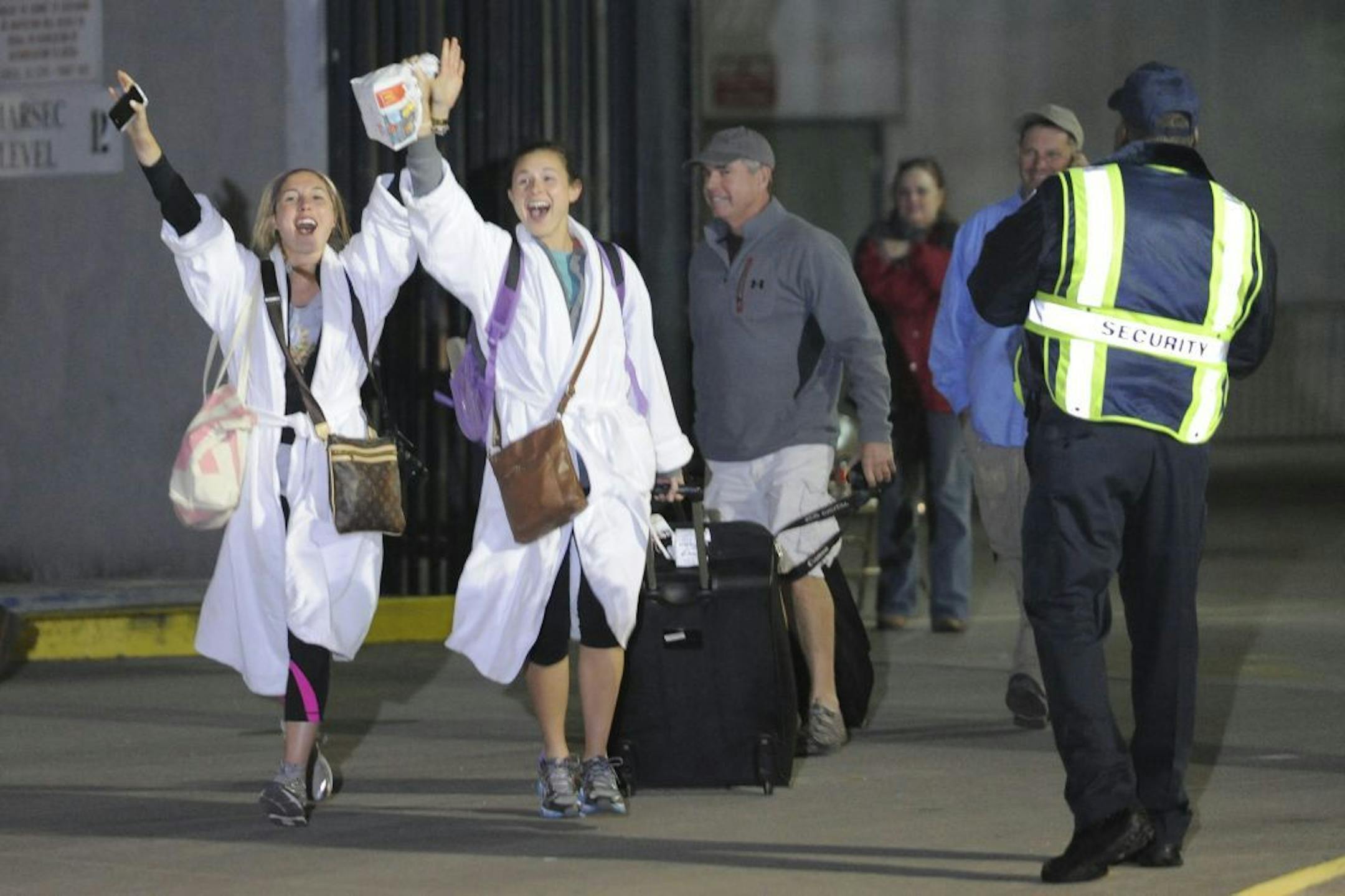
The disabled Carnival Triumph, carrying about 3,200 passengers and another 1,000 crew, was a visual slight to the carefully cultivated image of cruise vacations. There were no happy faces, only nautical imprisonment for five days without power. The stories of clogged toilets, scarce food, and potential viral outbreaks were captivating exactly because the doomed boat was close enough to shore to be photographed from helicopters but too far out to be rescued.
But this was not a disaster, however much it reached the "yuck" factor. The questions about Carnival's conduct and why passengers were not rescued by passing boats are the wrong ones. The lesson of the Triumph episode isn't about the inconvenienced passengers. It is about the size of the boats, which are so large that evacuation becomes only a last resort. They are, literally, too big to bail.
No one died on the ship. By that grim standard, the Triumph incident was a triumph. Last year, the Costa Concordia, owned by a subsidiary of Carnival, hit ground off the coast of Italy. The confused and negligent evacuation resulted in 32 deaths.
Public demands to get the passengers off Triumph were misguided. It would have been the height of panic to take 4,000 people off a boat that was disabled, but not sinking, and onto rescue ships. It may have taken days, and fatalities might have occurred. Several ailing vacationers did get taken off by lifeboats, but even that was a treacherous gamble. Evacuation on a boat is a plan of last resort that's only recommended when the ship is sinking.
The real disaster is that passengers are unlikely to have much recourse against Carnival. Weak laws govern the seas, making individual causes of action difficult to win and, even worse, collective actions almost impossible to bring. The entire system assumes that any complaint against a company will be brought because of a single instance of poisoning or tripping in the Lido lounge or, in extreme cases, falling into the sea. It does not really take into account the possibility that the massive ship would become disabled and that thousands of people would have no possible exit.
When passengers sign a cruise contract, somewhere in that multi-page document they absolve the company of most liability. Written in legal jargon, it essentially says "we own you."
But the Triumph incident shows that passengers need to be worried about more than individual claims. The travelers on the Triumph will get reimbursements, but there's not likely to be the kind of financial penalties that could alter the behavior of ship owners.
The industry, meanwhile, keeps building bigger boats, raising the stakes of any mishap. In just a decade, the average cruise ship doubled its passenger capacity. Huge and unwieldy ships, capable of carrying up to 8,000 passengers, are in the pipeline. The Panama Canal is at the end of a multi-year expansion in anticipation of these bigger boats.


