

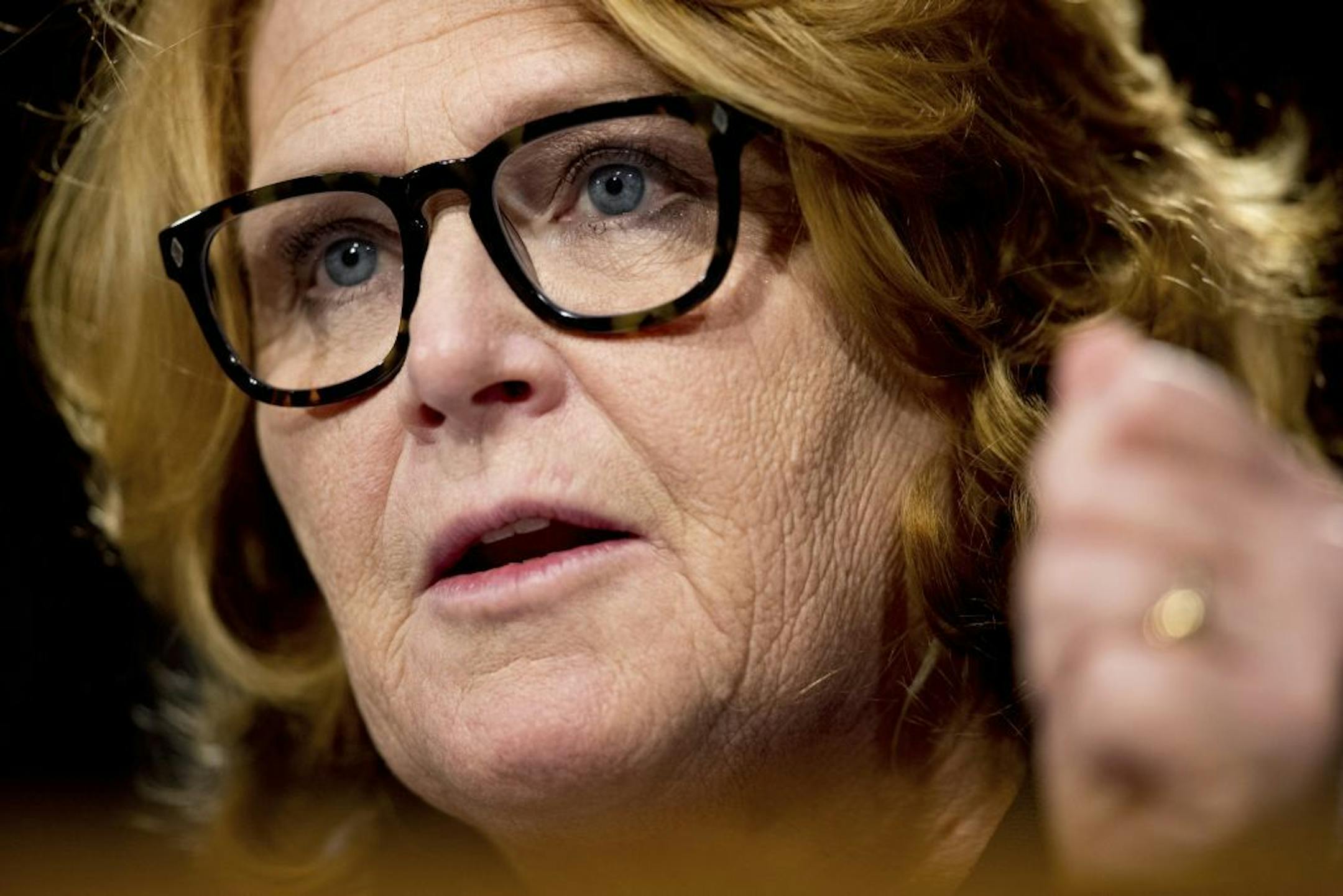
Congress should tackle tax reform or move on to something else, Sen. Heidi Heitkamp, the Democratic senator from North Dakota whose crossover appeal has brought warm attention from President Donald Trump, said in Minneapolis Tuesday.
"Either do it or shut up," Heitkamp said at a conference on the regional economy hosted by the Federal Reserve Bank of Minneapolis. "Uncertainty has delayed investment."
A former state tax commissioner, she told the audience of economists and business executives she learned the most important thing government officials and agencies can do for economic growth is provide businesses a climate of predictability.
Heitkamp has expressed support for a tax code overhaul in broad terms. While she hasn't specifically endorsed Trump's tax proposal, she has better ties than most Democratic officials with the White House. When he traveled to North Dakota last month, Trump invited her to fly along and appear on stage with him. "Senator Heitkamp. Everyone's saying: 'What's she doing up here?' " Trump said at the Sept. 6 event in Mandan, N.D. "But I'll tell you what: Good woman, and I think we'll have your support — I hope we'll have your support."
Asked by Minneapolis Fed President Neel Kashkari to handicap the chances that tax reform will emerge from the current Congress, Heitkamp declined but suggested that the intense focus in Washington on delivering big changes may itself be an obstacle to making them happen.
"There is this idea you have to run to bright shiny objects," Heitkamp said, referring to major legislation. "What we should be doing is creating efficiencies."
In her talk at the Minneapolis Fed, she described the complexity of changing the tax code. Many voters tell her they want Congress to close loopholes but, when confronted with major ones such as the mortgage interest deduction or state tax deduction, say that those should be kept. "That's an illustration of how difficult it is to have a meaningful discussion about tax reform," she said.
She said she would like to see tax legislation that "figures out the discrepancy" in tax rates on earned income and unearned income. "Why is it that if you go to work every day you pay a higher rate than if you don't go to work?" Heitkamp asked.


