

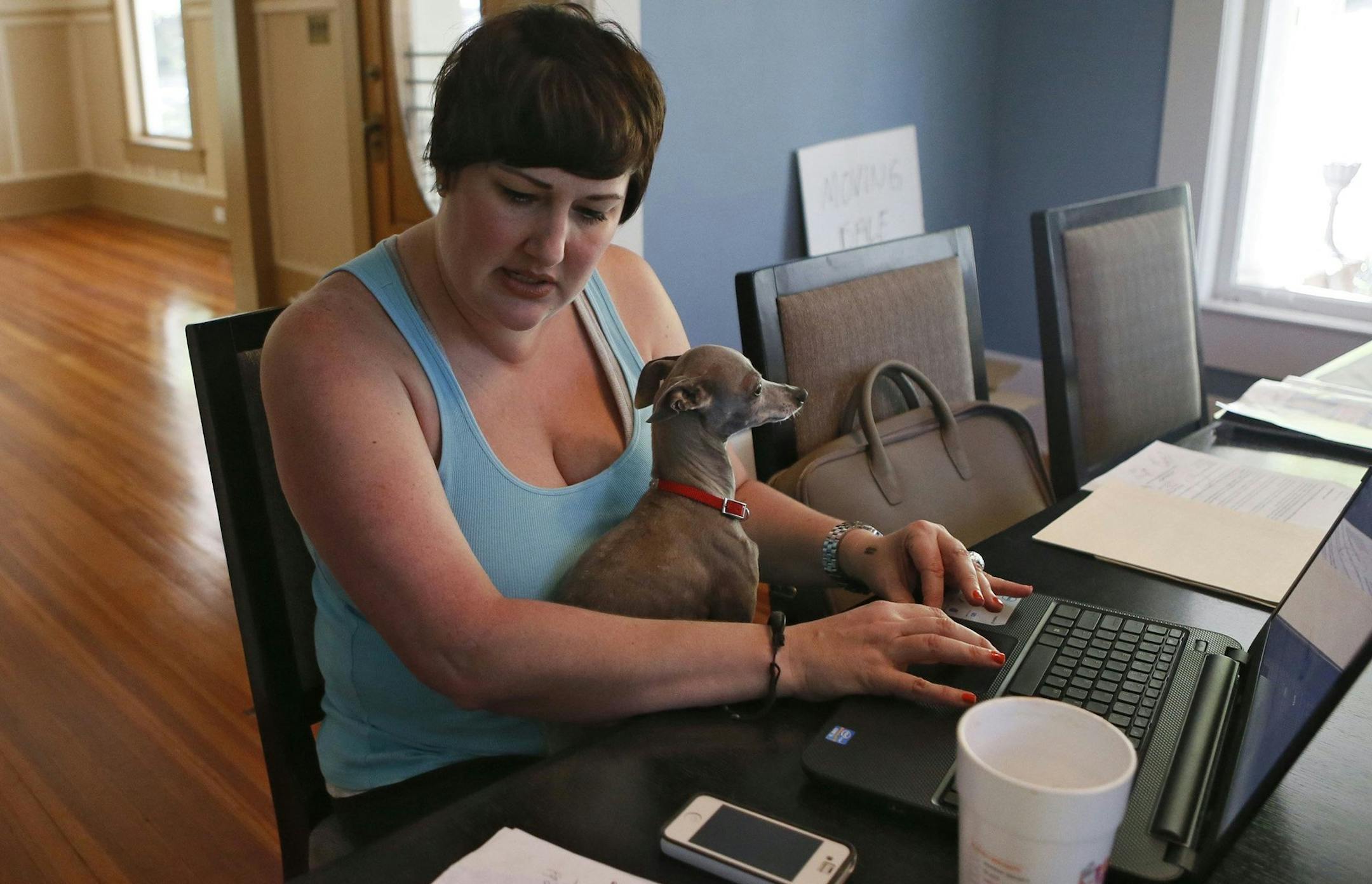
Atlanta – For Velvet Bradley, a part-time job is a little like a tattered parachute — a hopeful notion that barely slows the fall.
Bradley, 43, works 10 to 25 hours a week at home, helping to run a small trade magazine. She sells ads and manages the database and website, but the pay is modest and the hours few — and she has been stymied trying to find full-time work since losing a managerial job.
In the past few months, she lost her car to bankruptcy and her home to foreclosure. "I'm just trying to keep the utilities on and the Internet going," said Bradley, who lives in Rockmart, Ga., 45 miles northwest of Atlanta. "It's been two years of this, and I have just had it."
About 26.3 million Americans work part-time, according to the Bureau of Labor Statistics. Some want flexibility or are in school. Some are satisfied padding a partner's income.
But nearly four in 10 part-timers — 7.4 million — have taken part-time work only because they cannot find a full-time job, the BLS estimates, based on surveys it uses to measure unemployment.
The number of those involuntary part-timers rocketed to record levels as the recession deepened in 2008 and it slowly declined as growth restarted. The economy has slowly improved for nearly five years, renewing job growth and bringing down the jobless rate.
The number of part-timers who'd rather be full-time remains historically high, however: 4.7 percent of all jobs nationwide. That's down from the 2010 peak of 6 percent, but higher than other times since the early 1990s recession.
"We are creating a lot of part-time jobs in this recovery," said economist Jeff Wenger of the University of Georgia. "Part of it is this business cycle being so weak. And some of it is driven by changes in business practices."



