

It's not often that labor, business, and community organizations all agree — but they agree that the Minneapolis Park and Recreation Board is making a mistake in marching toward a lawsuit against Southwest light rail.
Last week, the Park Board approved its 2015 budget, cutting recreation center hours across the city. Just weeks before, Park Board President Liz Wielinski explained in these pages why the board is spending a quarter-million dollars on a precursor study to a lawsuit, which could lead to hundreds of thousands in additional spending if the lawsuit is filed ("Southwest light rail needs more tunnel, less bridge," Oct. 31).
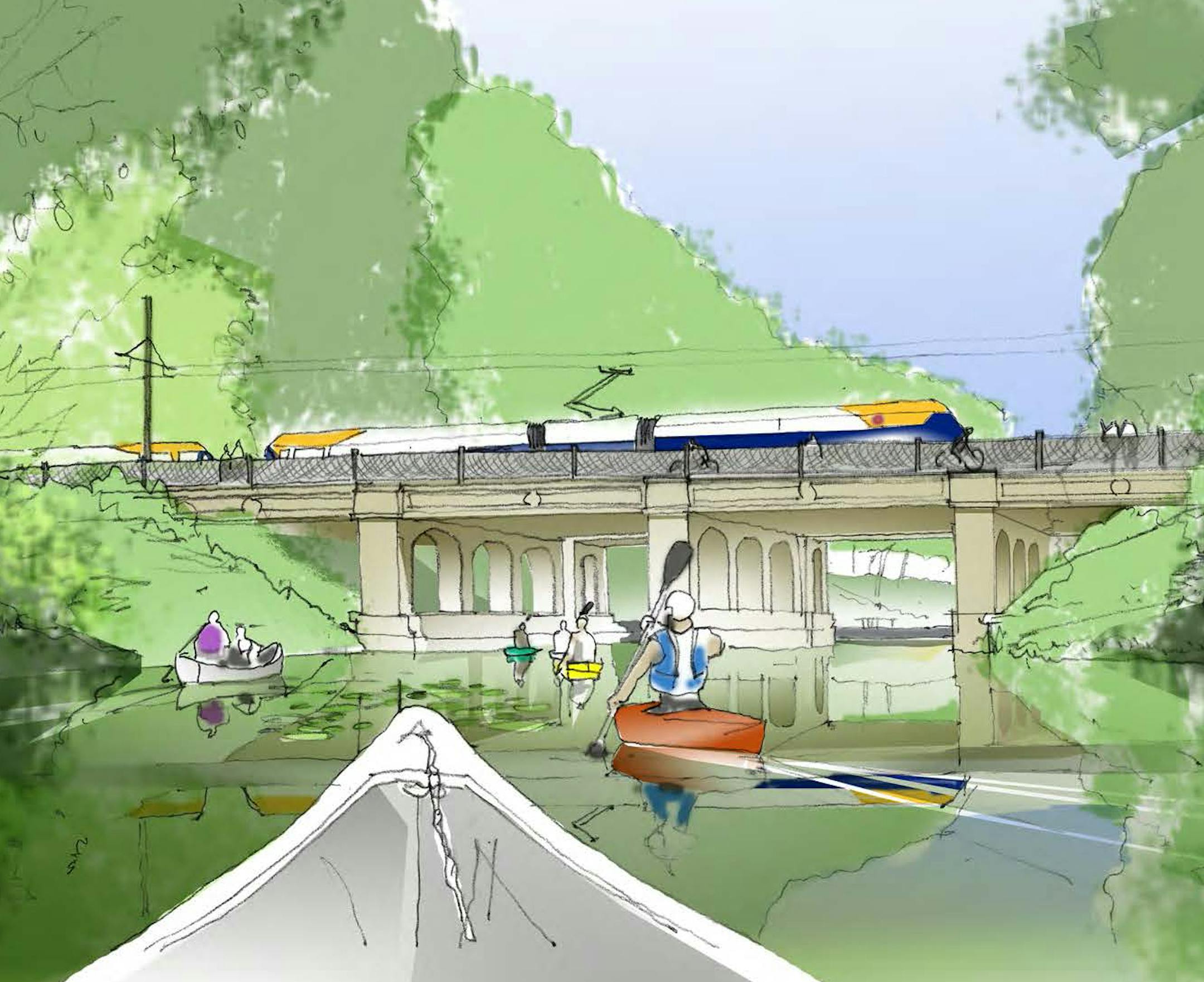
The Park Board seeks a tunnel under the Kenilworth Channel, it says, because the proposed bridge widening over the channel is "simply incompatible" with the parklike setting.
This objection leaves out some important context. Pre-construction, the man-made channel is currently crossed by a bike path and freight-rail bridge. Post-construction, the man-made channel will be crossed by a bike path and a light- and freight-rail bridge. The change will be 28 feet in additional bridge width (from 45 feet currently to 73 feet, separated into two bridges with a 9-foot gap).
To put this in perspective, the channel on the other side of Lake of the Isles is crossed by a multiuse trail, West Lake of the Isles Parkway and six lanes of Lake Street traffic, but still thousands happily use these passages every year. Voting with their feet and their paddles, the public already agrees that bridges are compatible with park use.
If the Green Line extension is not built, southwest Minneapolis and the southwest metro will remain dependent entirely on roads and motor vehicles. Anyone who drives this area at rush hour knows what that means: an environment of frequent, serious gridlock; polluted air, and endless pressure for more and more parking. This would be a tragedy of regional proportions.
Losing the light-rail project is a real risk if the Park Board moves forward with its lawsuit. Wielinski misrepresents the additional cost of the tunnel at $30 million to $50 million. The Metropolitan Council actually estimates that the tunnel would add $75 million in capital costs, and $45 million to $50 million in inflation cost due to an extra year of construction — or $120 million to $125 million in additional cost.
If the Park Board wins a lawsuit and forces a tunnel, this would trigger a new round of municipal consent with all five cities along the line, and require additional funding from the Legislature and the five counties in the Counties Transit Improvement Board. These additional costs would make the outcome uncertain at best.


