What happens when hockey players lose teeth? ‘There’s going to be stitches.’

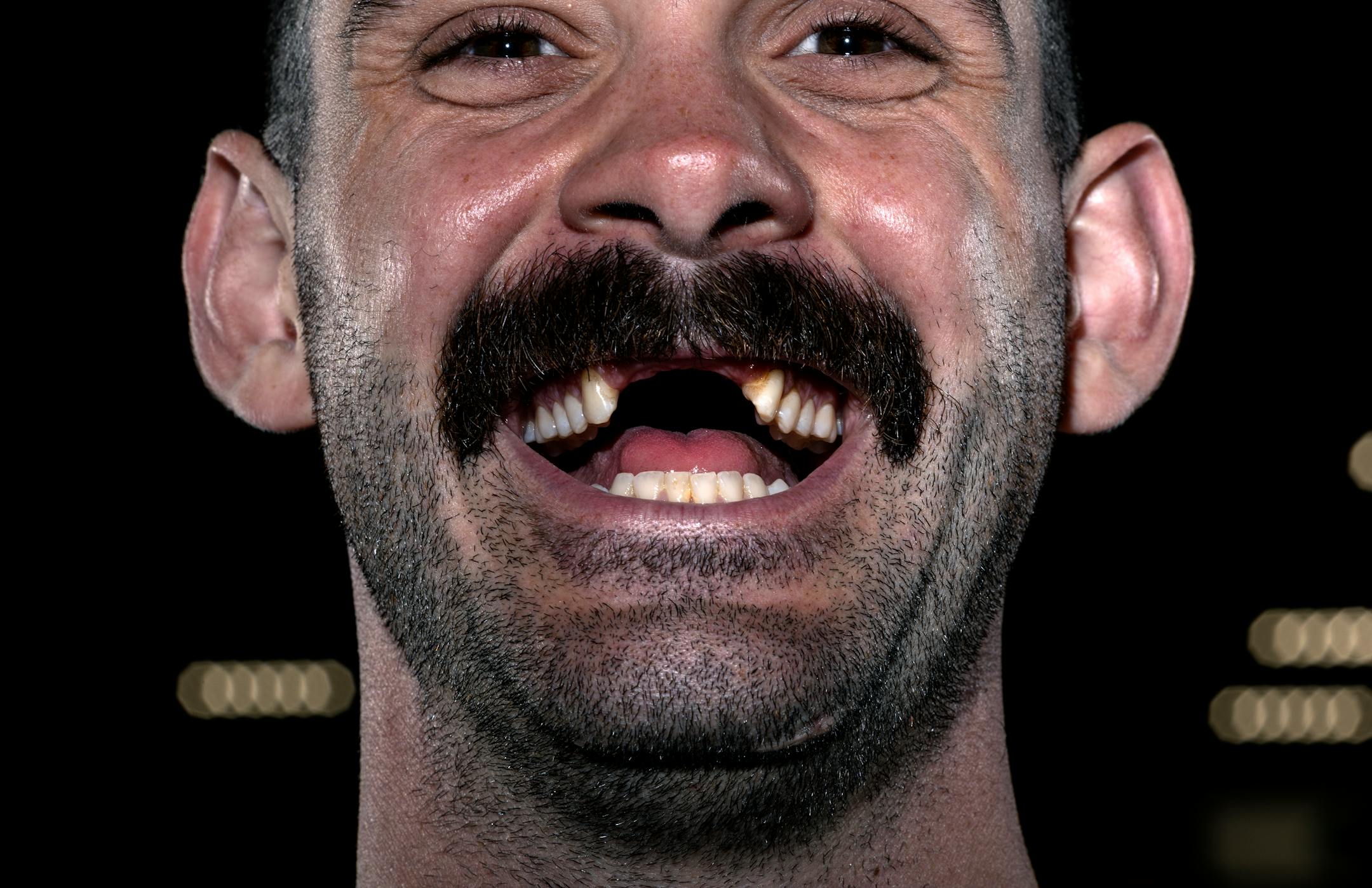
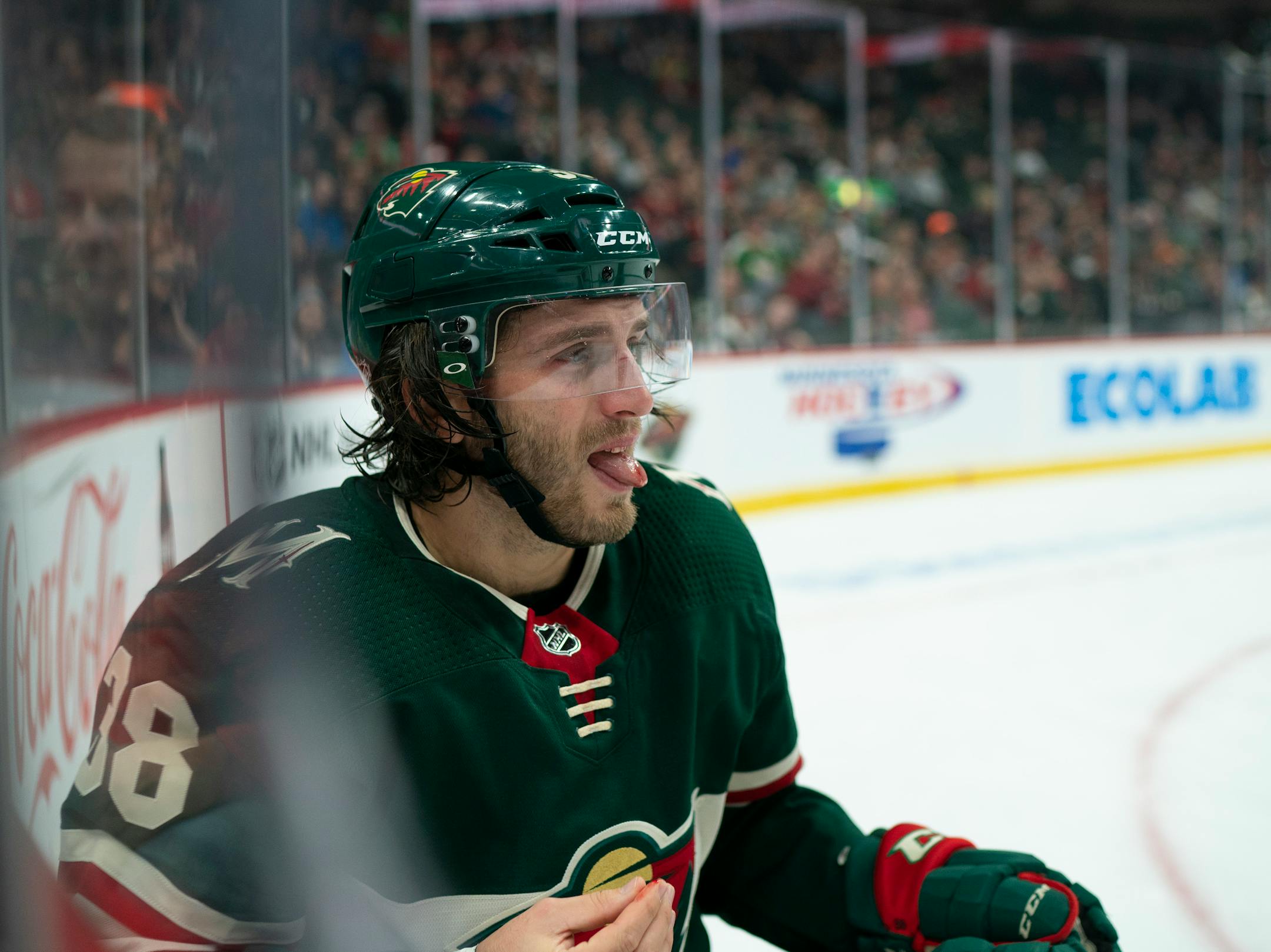
Most Wild players have spit bloody enamel on the ice after taking pucks or sticks to the face; then, they live with crooked smiles.

The Minnesota Star Tribune
November 9, 2025 at 2:33PM
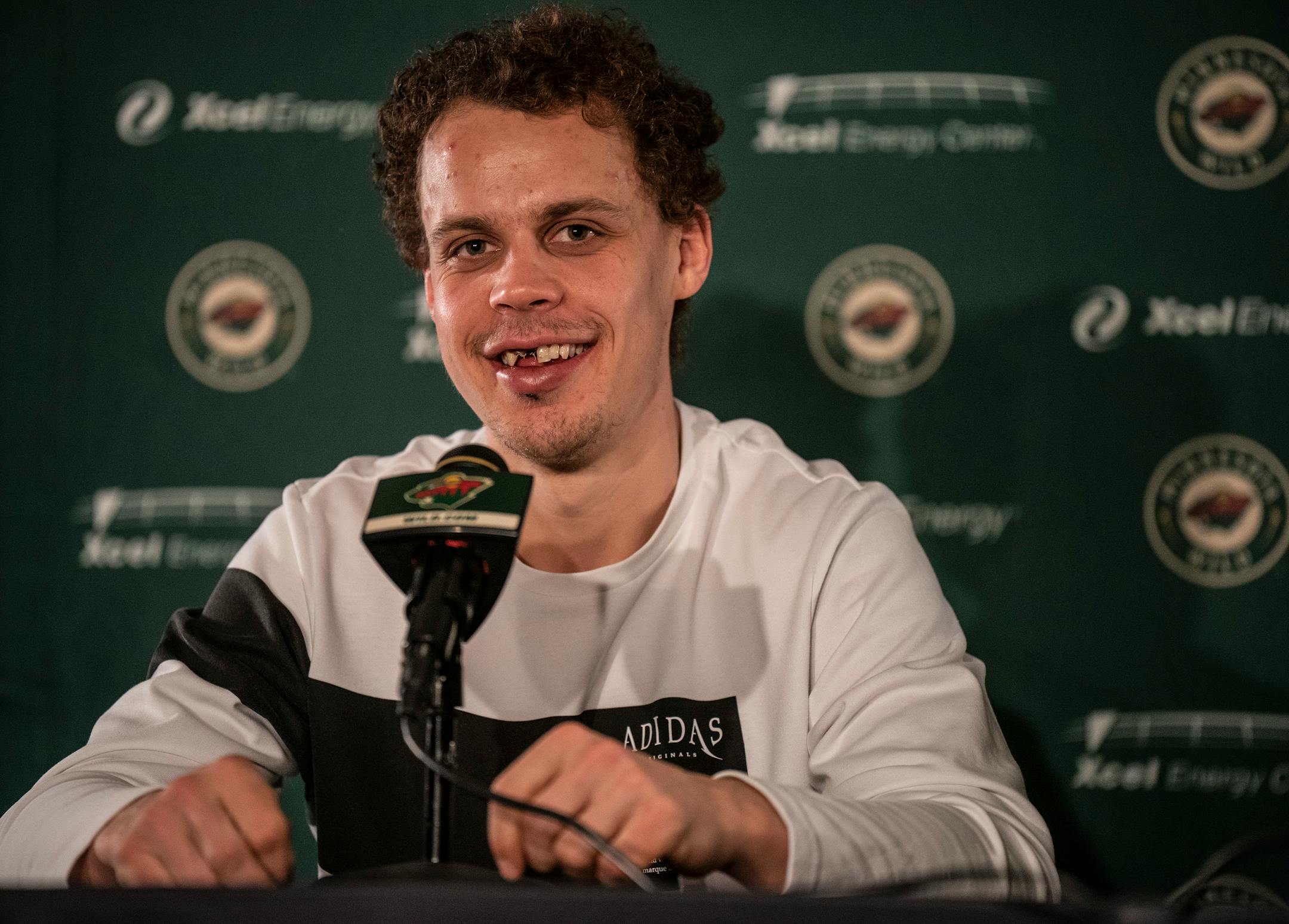
Wild center Joel Eriksson Ek pays the price for his physical play. This what he looked like at his postseason press conference after the 2022 season. (Jerry Holt/The Minnesota Star Tribune)

Joel Eriksson Ek’s head snapped back, his left glove immediately feeling for his mouth as he dropped to his knees.

When he finally got up, with a smattering of blood in his wake, the Wild center left the ice as his teammates searched for the enamel shrapnel.

He needed stitches to close the cuts caused by an errant stick the opening minute of a game Oct. 18 at Philadelphia. Before the first period was over, he was back in the game, his lips swollen and mouth stretched around its new vacancies.

But Eriksson Ek figured the most painful part of the entire ordeal was the needle that numbed him for the hour-and-a-half dentist appointment to repair his teeth after he and the Wild returned to Minnesota.

“It all hurts,” Eriksson Ek said. “But, yeah, it’s never fun to have to deal with what comes after.”

A gummy grin, or grimace, is as relevant to the hockey uniform as skates and jerseys, with an errant puck or stick to the face a routine hazard of the job.

But the acceptance and attitude are also quintessential.

“It just comes with the territory,” Wild alternate captain Marcus Foligno said. “Guys don’t care. In order to play this game, you really can’t care about your face.

ADVERTISEMENT

“There’s going to be stitches, and, yeah, we got good dental insurance, so we’ll fix that up when you’re done playing.”

Down but not out

Eriksson Ek is a magnet for clips and collisions because of his hard-nosed style.

This wasn’t even the first time his top teeth were hit: They were previously damaged by the stick of then-teammate Dmitry Kulikov during the 2022 playoffs vs. St. Louis.

Another teammate caught him last month, with rookie defenseman Zeev Buium’s stick coming up as Buium battled with the Flyers’ Matvei Michkov.

“I didn’t even know,” Buium said. “I felt so bad.”

The bridge Eriksson Ek wore broke, one tooth was knocked out and two more were fractured. But refilling Eriksson Ek’s mouth wasn’t top of mind when he exited the ice in Philadelphia; his brief absence was typical.

“Eriksson Ek’s a special guy,” said Mike Pelke. “He’s definitely one of those guys if he can be out on the ice, he will. He’ll find a way.”

Pelke has been a Wild team dentist since 2004, and he or another dentist is at every home game at Grand Casino Arena. That’s standard in the NHL. The Wild have four team dentists listed on their medical staff.

Pelke’s priority is to ensure players are comfortable and that their dental injury isn’t affecting their availability.

“There’s the pain,” said Pelke, who practices at Woodbury Dental Care. “But there’s also the pressure that this may be a young guy that only plays a shift or two a game and if he’s not out there, he doesn’t get that opportunity.

“You can’t make the team in the locker room, so they’re tough and they want to make sure they’re out on the ice as much as possible.”

The hockey term for players losing teeth during the game is “spittin’ chiclets,” a throwback to when tooth-sized Chiclets was a popular brand of gum.

Jake Middleton’s well-known gap is the byproduct of two incidents, with two of his front teeth getting dislodged when he went sliding into the boards in the minors during the pandemic-shortened season — an impact that also broke his eyebrow bone and nose and shattered his jaw.

The Wild defenseman’s other two front teeth were casualties from Middleton getting hit from behind and connecting with the dasher along the boards.

Wild defenseman Jake Middleton, like many NHL players, will wait until his career ends for final work to repair his teeth. (Carlos Gonzalez/The Minnesota Star Tribune)

“It kind of felt like a rite of passage, but then when it happened, it’s the worst and you wished it never got to that point,” said Middleton, who doesn’t even like getting his teeth cleaned because of how many hours he has spent in the dentist chair.

Middleton finished his shift, playing another 25 to 30 seconds despite his mouth pooling with blood. After getting numbed, Middleton came back with a bubble on his helmet but soon removed it since it kept fogging up.

This early in his pro career, “which is also why I stayed in,” Middleton said. “I was still trying to keep a job.”

Forget about anesthetics; helmets weren’t even mandatory when Tom Reid suited up for the Blackhawks, then the North Stars, from 1967 to ’78.

A deflected puck slammed into Reid’s face during one game, cracking a tooth in half and leaving the nerve exposed. Reid used gum to protect it from the cold air.

After the game, Reid went to have the tooth extracted before the team left for New York.

“Every time the doctor would put the pliers in my mouth, the nerve would hit the pliers and that would make me jump,” recalled Reid, who is in his 24th season as the Wild’s radio analyst. “He kept telling me to lay still. I said, ‘I’m trying. Believe me.’”

Ultimately, Reid went to another doctor to get the tooth out. He still made it to the airport in time to travel with the team.

“You’re going to play hockey,” Reid said, “you’re going to lose some teeth.”

Bridging the gap

Reid isn’t exactly sure how many teeth hockey took from him.

“Could be seven, eight,” he guessed, with a handful flying out when Reid’s defensive partner Lou Nanne went to crosscheck an opposing player, who ducked to defer the destruction to Reid.

“I think he put his face in the way just because he needed better-looking teeth,” joked Nanne, the former North Stars coach and general manager.

Once Reid’s career ended, he had a full reconstruction done on his mouth.

But while he was still playing, Reid had a bridge put in, and that’s a go-to for players.

“It’s porcelain,” Pelke said. “It’s aesthetic. It’s functional, and you can always do a dental implant later. So, it’s a nice thing they don’t have to take it in and out.”

Pelke made a new bridge for Eriksson Ek, and the teeth fragments that were collected from the ice in Philadelphia assisted in the reconfiguration.

(If a natural tooth is knocked out cleanly, there is a solution that can help preserve it so it can be reimplanted, but that situation is rare.)

“When you redo your teeth, they just feel different for a long time,” Eriksson Ek said.

Foligno, who’s missing three originals, also has a bridge in his mouth.

“They eat steak and everything,” he said. “It’s pretty good. I can still eat corn on the cob.”

Ryan Hartman of the Wild assesses the situation after some tooth damage when he was caught by a high stick during a game in 2019. (Jeff Wheeler/The Minnesota Star Tribune)

Some players, however, choose to leave their grill as-is, what Pelke described as a “badge of honor.”

Kirill Kaprizov and Ryan Hartman both have a space among their bottom teeth, which Kaprizov sees no point in addressing until his career is done.

“If you lose teeth, you still can play,” he said. “With other injuries, you can’t play.”

Hartman used to have a flipper, which is a removable denture, but it changed how he talked.

“A lot of people don’t even know it’s not there because it’s just hidden by my lip,” Hartman said.

Middleton, whose jaw was remade with a cadaver bone, attaches his flipper whenever he’s not on the ice.

“I didn’t wear them for a long while, and all my teeth started shifting, which is also painful,” he said. “So, I wear them as much as I can now, and it looks a little more socially acceptable.”

Tyler Pitlick is without his two front teeth after getting repeatedly swatted by pucks and sticks.

Although the forward has a flipper, he hates using it.

“I’m trying to get an appointment to get a new one,” said Pitlick, the former Centennial High School standout. “I went to my daughter’s conferences this morning with no teeth in. I forgot about them.

“It’s fine. They know I play hockey, so it is what it is.”

On guard

At 19 years old, Buium still has all his teeth, but he recently had a close call during a line change.

“If you aren’t scared of it, then maybe it won’t happen,” said Buium, who was required to wear a full face shield — like all college players — until he joined the Wild. “But if you’re afraid that they’re going to get knocked out, they probably will.”

Also in the clear is — go figure — goaltender Filip Gustavsson, whose mask absorbs the brunt of the burden.

“I’m lucky that way,” Gustavsson said. “I get a lot of pucks in the face, but it’s fine.”

Yakov Trenin has only had chips. Same with Marco Rossi, who plays with a mouth guard.

Pelke said 30% of the Wild use one, but most if not all players have a mouth guard modeled for them in case they decide to add it.

“It’s kind of like wearing a seatbelt,” Pelke said. “Maybe the accident would have been worse if you didn’t have one.”

Buium doesn’t like the feel of a mouth guard and found himself chewing on it, an in-game habit made famous by Florida’s Matthew Tkachuk.

“A lot of guys do. A lot of guys don’t,” Pitlick said. “For me, I’ve tried, and I need to be able to talk, and I feel like when I have it in it limits how I talk. So, I’d rather just lose a tooth than not be able to talk out there.”

Throughout his 600-plus games with the North Stars, Nanne kept all his teeth, which he credited to the mouthpiece he and former North Dakota coach Bob May created that Nanne utilized in college and as a pro.

“I had over 300 stitches in the face,” Nanne said. “I never lost a tooth.”

Future remodel

Wes Walz’s first thought after he saw Eriksson Ek struck was, “I just hope his teeth are OK.”

The former Wild forward and current broadcaster believes centers like Eriksson Ek elicit more punishment because they play low in the zone and fight for pucks around the net, and Walz would know.

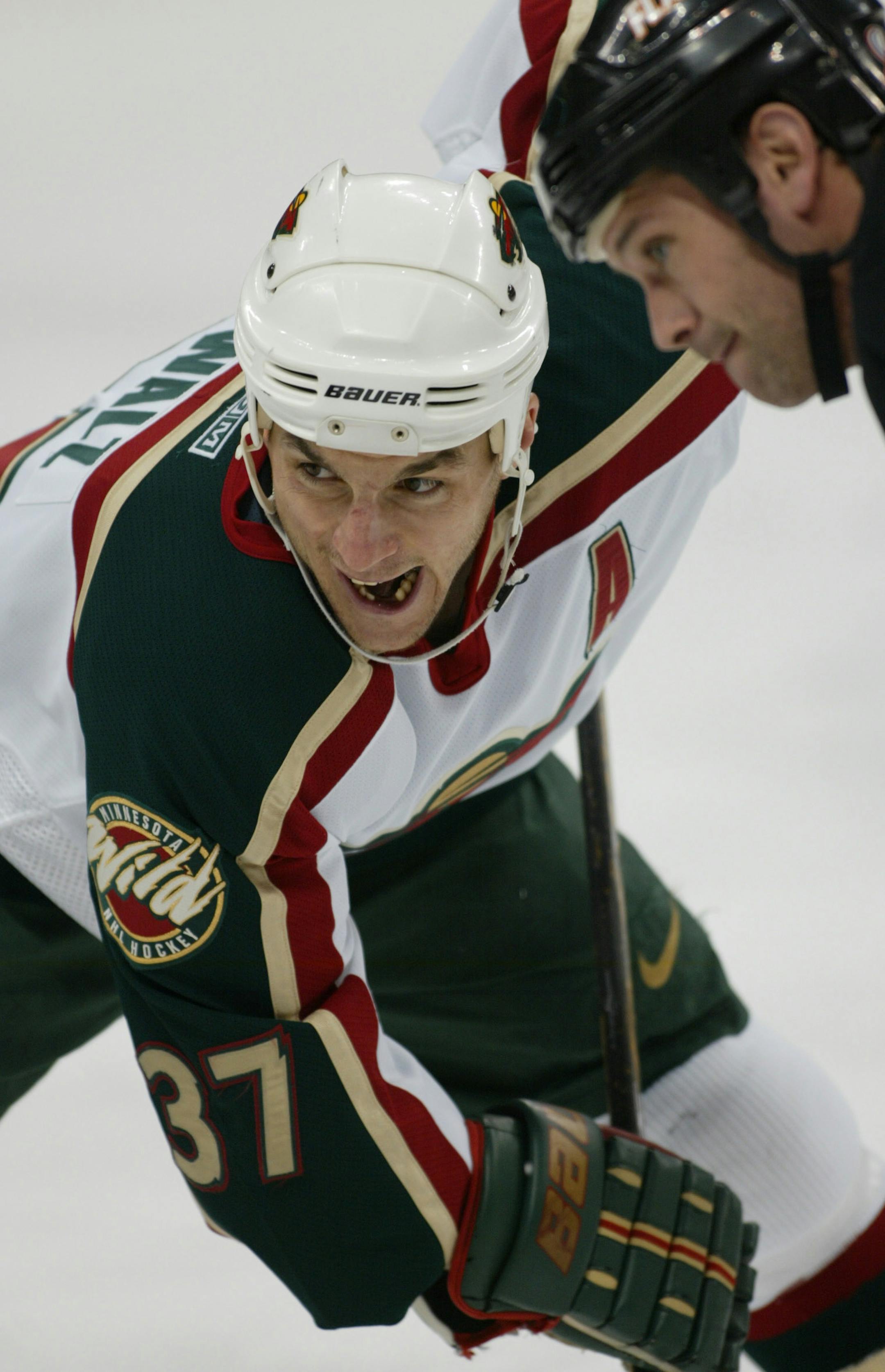
“I ate more than most,” he said, including taking a stick up high that cost him four bottom teeth while he was competing in Switzerland in the 1990s.

Former Wild center Wes Walz "ate more than most" when it came to losing teeth. (BRIAN PETERSON)

His teeth pierced his tongue, the gaping hole requiring 20 to 30 stitches, and Walz talked with a lisp for 18 months due to the scar tissue.

“Your body goes into shock,” Walz said. “You don’t really feel pain. You can ask anybody. You don’t feel pain right away. … You gotta wait for maybe five to 10 seconds when you start feeling around with your tongue in your mouth. Are they all in place? That time when you’re skating back to the bench, there’s a lot going on in your mind.”

Walz adopted a flipper that he took out for hockey, his empty bottom row making it easier to breathe on the ice.

“You get more air coming in,” he said.

Finally, when Walz’s career ended, his mouth was rebuilt with bone from his hip. This new look held up for about seven years until a tooth came loose.

“It was a long, long process to eventually get it completely fixed,” said Walz, now a TV analyst for the team.

Later in life there’s time for that, but not so much during the season when the threat of carnage is constant.

“When I’m done playing, then you probably do a little bit more,” said Eriksson Ek, who estimated he’s down five, maybe six teeth during a makeover that will continue.

Said Foligno: “He’s going to look really good when he’s retired, because he can get it all finished up. You guys will see him at an alumni event one of these days and you’re going to be like, ‘Wow, what a smile on that guy.’ ”

about the writer

about the writer

Sarah McLellan

Minnesota Wild and NHL

Sarah McLellan covers the Wild and NHL. Before joining the Minnesota Star Tribune in November 2017, she spent five years covering the Coyotes for The Arizona Republic.

See Moreicon

More from Wild

See More
card image
Carlos Gonzalez/The Minnesota Star Tribune

The Wild are on a holiday break after a seven-game win streak ended with consecutive losses to Colorado and Nashville.

card image
card image