

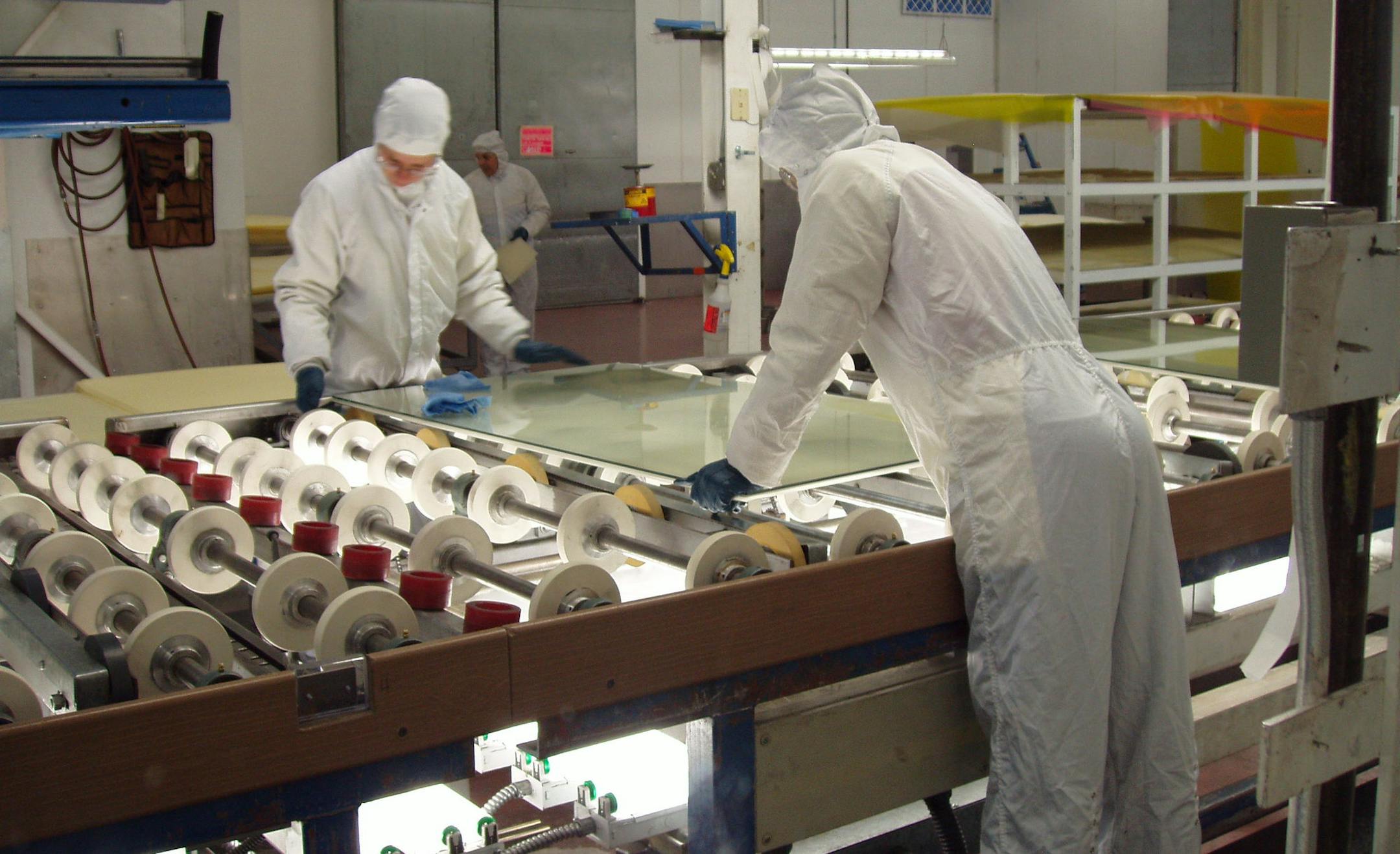
The rise of stolen trade secrets, hacked texts and corporate spying is pushing more executives and law firms to embrace protective architectural remedies such as Viracon's CyberShield security glass that can prevent eavesdropping and data theft.
The Owatonna company — known for cloaking the exteriors of U.S. Bank Stadium, the World Trade Center and the Federal Reserve Bank of Minneapolis with glass — first introduced its eavesdrop-preventing glass to governments four years ago.
The CyberShield product, which took nine employees 18 months to develop, launched in 2012 and is not a large driver of Viracon sales, currently generating less than $10 million in annual sales. However, it is a growing area, said Ron McCann, specialty products sales director for the company. Viracon is showcasing it this summer at Facades+ trade shows in Minneapolis, Denver and Chicago.
The specialty glass that blocks radio frequency (RF) transmissions costs just 15% more than regular laminated building glass but adds huge protections, he said.
The global window films and coatings industry as a whole is predicted to grow from $10 billion to $13.8 billion by 2025, according to Grand View Research.
Right now, Wi-Fi blocking building glass is "something most people are not even aware of. But we have seen a growing interest," said Annette Panning, marketing and product management director for Viracon, a subsidiary of $1.4 billion Bloomington-based parent Apogee Enterprises.
Demand is springing from architects and builders as they erect new courthouses, corporate skyscrapers, boardrooms, California mansions and research centers.
The leaders of pharmaceutical firms, chemical engineers, government contractors and financial institutions "are some of our target markets," McCann said. "That is where the growth opportunities are. … We foresee a very healthy growth opportunity over the next three to five years."



