

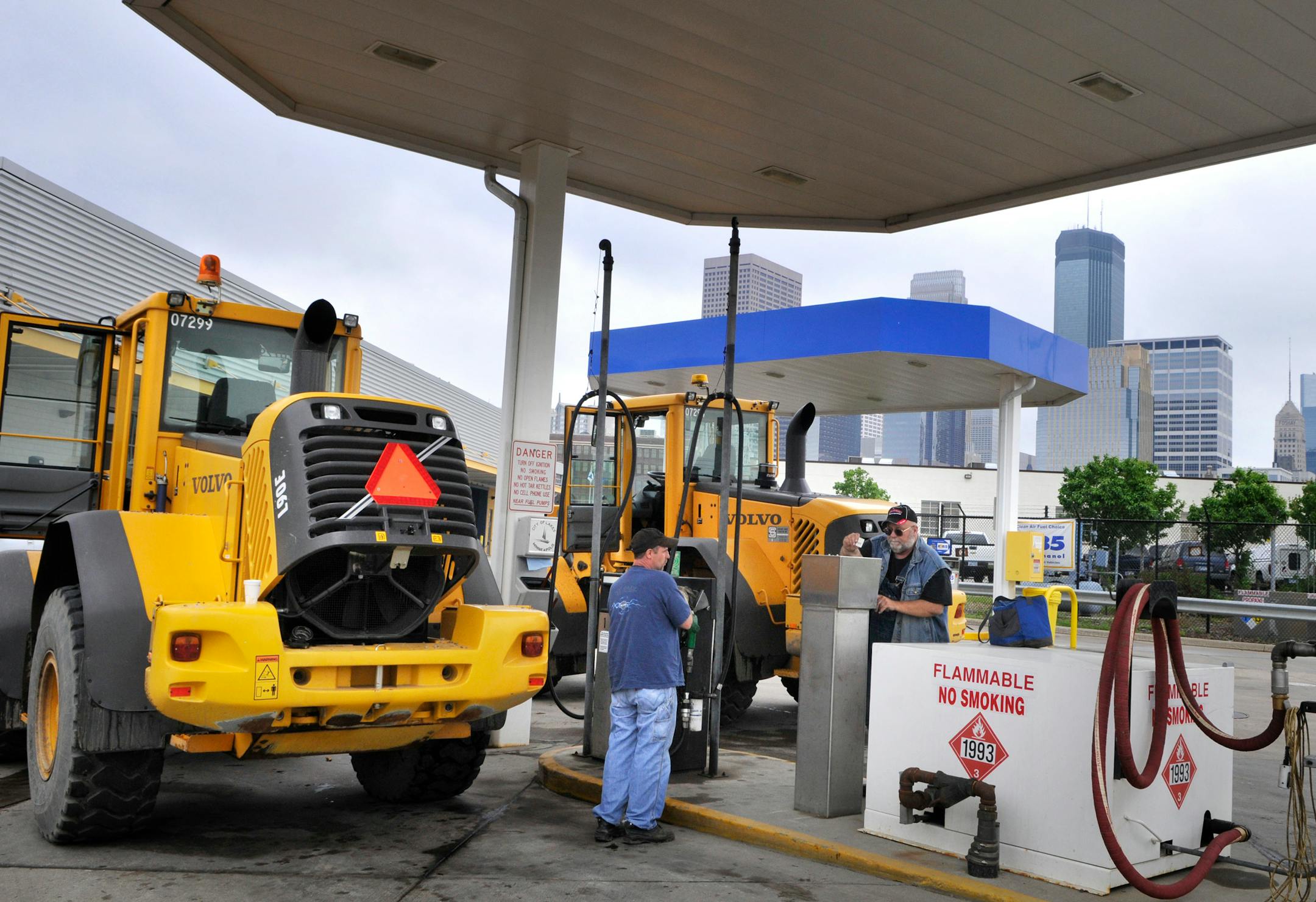
With a fleet of 1,500 vehicles, Minneapolis' Public Works Department has 1,498 more reasons than the average family to scratch for every possible savings in gas consumption. The city, like every other, can't help but drive constantly to fulfill its basic duties -- from policing neighborhoods to hauling trash to patching miles of spring potholes.
Minnesota businesses are struggling with similar inevitabilities. Take Pequot Tool and Manufacturing in Jenkins. High commodity prices are inflating the cost of materials and the cost to transport them, President Mark Shervey said. Even though steel to him is up from 45 to 70 cents a pound since January, he's still selling manufactured steel components on customer contracts he costed-out at the old price.
While households are struggling with record-high energy costs a dozen eggs and one SUV at a time, government and industry are taking industrial- size inflationary hits. At cash registers, in back offices and municipal garages, and on factory floors, the public and private sectors are trying to cover the spread between their old balance sheets and new ones pocked with fuel surcharges and pass-through price hikes on petroleum-based supplies.
Global oil prices have surged 40.5 percent from Jan. 1 through Friday, when West Texas crude closed at $134.86 per barrel.
Cities are instituting new "anti-idling" policies, so many police officers now will turn off their cruisers before stepping out to write a speeding ticket. And some are buying alternative-fuel cars and trucks as fast as they can. Businesses are consolidating deliveries -- or charging customers for them. Some have increased their advertising, to tug customers into their shops. Others are helping employees arrange carpools.
"Everybody is feeling the pain," said Brian Bethune, U.S. financial economist at Massachusetts-based Global Insight. "The only good thing about this is it's collective pain, and we can all complain."
Your tax dollars on the road
At Minneapolis Public Works, which maintains the cars and trucks of most city agencies, there are 194 "flex-fuel" vehicles that can run on every gas-ethanol blend on the market, with another 45 due by the end of summer, fleet officials said. Add about 300 vehicles that burn biodiesel, and that's more than one-third of the fleet.



