

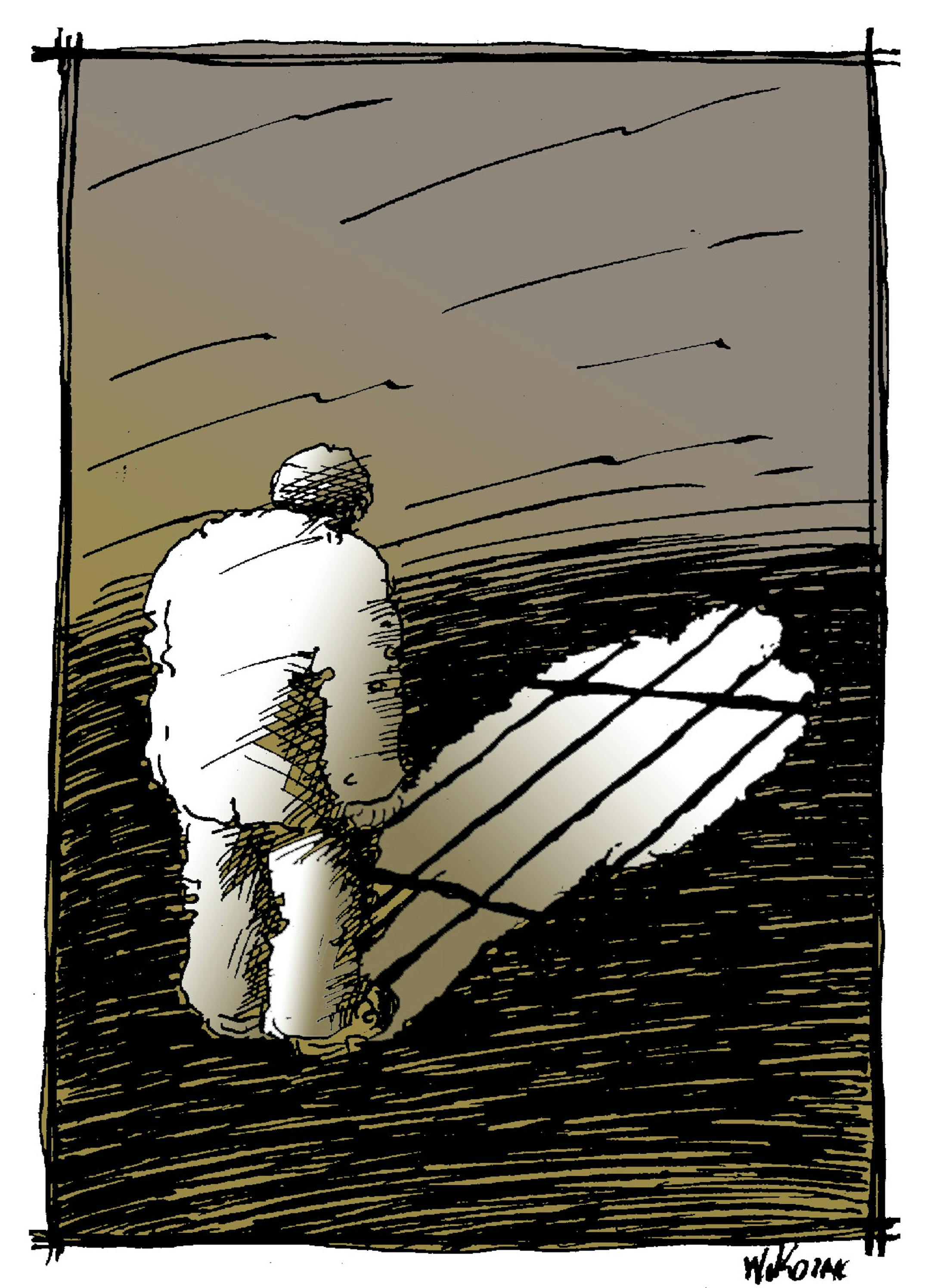
"Robert" was arrested and booked in our Hennepin County jail last week for the 31st time — 15 of them since 2012. He's been a defendant in 59 Minnesota criminal cases, but never for a felony-level charge. His most common offenses are trespass, vagrancy and disorderly conduct. Robert was civilly committed as chemically dependent in January 2014 and discharged in August 2014. But then he was booked in our jail again in November, December and February — and again just last week.
A 64-year-old homeless veteran, chemically dependent and likely suffering from mental illness, Robert has been living on the streets of one of our suburbs, and falling through the gaping holes in our support network, for well over a decade.
All too often, law enforcement is called upon to solve these problems. Jail is now the landing place for all those caught up by the system, or by their own chronic needs. But our one-size-fits-all criminal justice system treats every situation, including Robert's, as if a violent crime has occurred.
The criminal-justice system was designed to address society's problems — with criminals. Most of the violent crime we see today stems from the lethal combination of guns, gangs and drugs. We want to hold these criminals accountable.
When we engage in community-oriented policing, and take advantage of technology, information sharing and strategic partnerships, we can target our efforts to reduce, disrupt and even prevent violent crime.
When police have the resources and the extended time to work with community members and build trust, we can focus on unsafe neighborhoods, in partnership with community leaders, and target violent crimes and violent offenders.
But when someone calls 911, it's our job as first responders to stabilize the situation, to remove the threat, and to restore some measure of safety to the home, the community, the business, the school.
But then we leave.


