
A Ukrainian refugee wanted to continue his pigeon-raising traditions. His new hometown found a way.

Orono changed its rules on bird-keeping after it heard from a landlord who wanted to help his tenants feel more at home.

The Minnesota Star Tribune
August 11, 2025 at 11:00AM
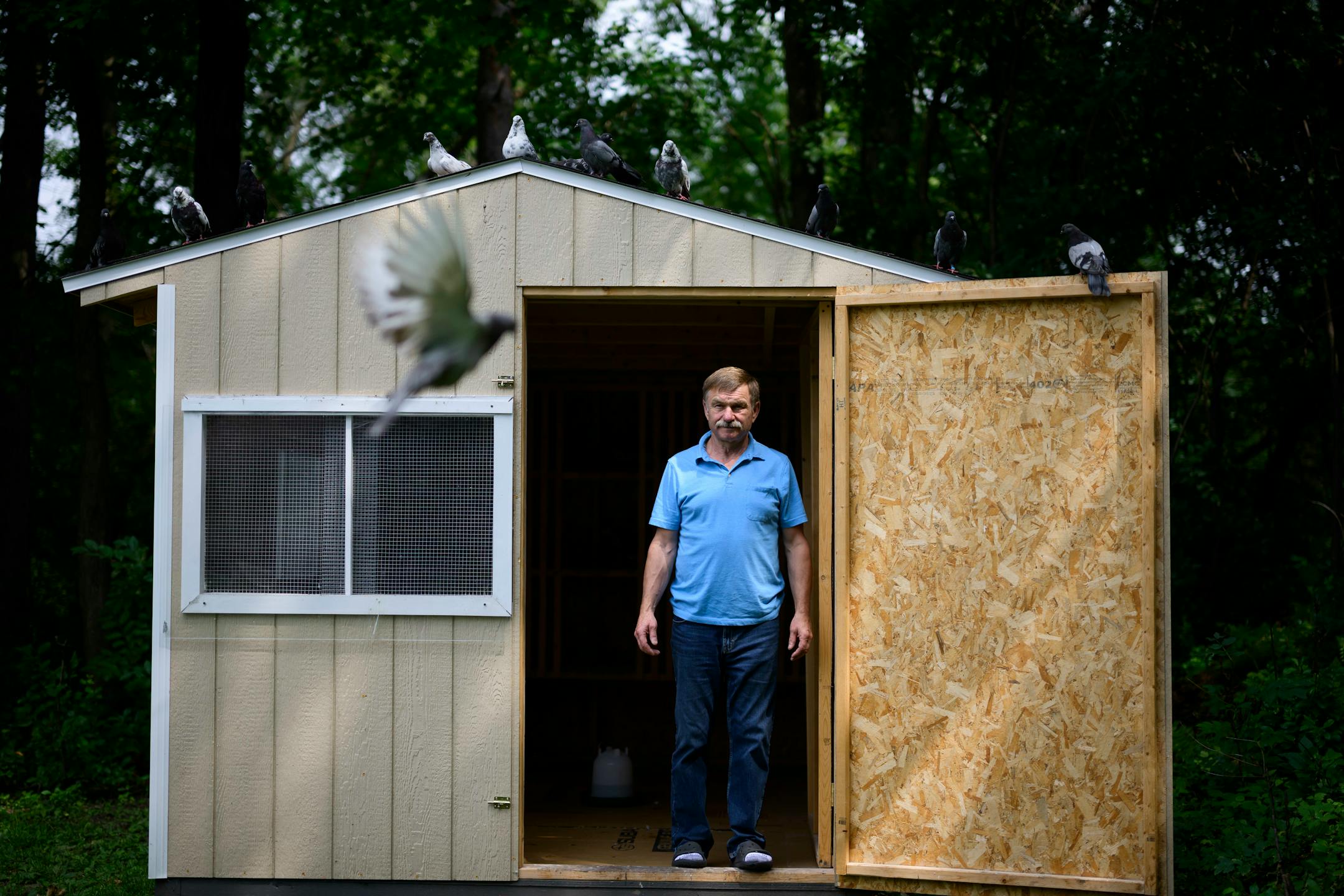
Anatolii Vusatyi stands in the doorway of his pigeon loft before feeding his Skycutter pigeons in Orono, where the city recently changed its rules to allow more people to keep pigeons in their backyards. (Aaron Lavinsky/The Minnesota Star Tribune)

Anatolii Vusatyi, a Ukrainian refugee preparing for his new life in Minnesota, needed to know: Did his family’s house have space in the backyard for a small pigeon loft?

He had already been separated from his children. The family’s home city of Kramatorsk had been ravaged by Russian attacks that prompted mass evacuations.

And for Vusatyi, who had been raising and training pigeons since he was 5 years old, the birds were “a true source of comfort and emotional support,” said his daughter-in-law, Viktoriia Myrna.

The yard at their Orono home did, indeed, have space for a loft. But the city didn’t appear to allow the birds — until their landlord intervened.

“These people just want to raise pigeons,” said the family’s landlord, Dean Thomson. “Shouldn’t we as a community encourage that and welcome that?”

City officials endeavored to welcome and support the newcomers, and everyone got a lesson in local democracy accommodating new customs: months of debate over categories of animals and permits, followed by applause at City Hall.

Plus, some donated pigeons.

“The whole thing was really an opportunity for us to open our eyes,” said Orono Mayor Bob Tunheim, who described the situation as one of the more heartwarming topics he’s tackled in office.
A Ukrainian tradition

Pigeon breeders are part of a special caste in Ukraine, Myrna said, comparing them to fishermen and hunters.

“In almost every city you can meet such enthusiasts — they have devoted most of their lives to breeding pigeons," said Myrna, who answered questions mostly in English, with some assistance from translation apps. “For them it is not just a hobby, but a way of life connected with traditions, communication and competitions.”

Many pigeon breeders join clubs, where they share lessons they’ve learned about the birds and participate in exhibitions. They’re intimately familiar with each breed’s unique characteristics: the carrier pigeons that fly for long distances, the fighters that perform flips in the air, and the Skycutters that Myrna compares to “silent dancers in the sky.”

“For a pigeon breeder, every bird is not just an animal, but a source of pride and admiration,” Myrna said.

When Myrna’s family raised the idea of building a loft for Vusatyi, Thomson knew he wanted to help. He had a small glimpse at what they had endured and was impressed by their resilience.

Life amid warfare

The family’s home city of Kramatorsk sits on the eastern side of Ukraine and has become a frequent point of attack for Russian forces, who, at times, have been just kilometers away.

The United States in 2022 launched the Uniting for Ukraine program, which aimed to provide a streamlined process for Ukrainian refugees to travel to the United States and stay for a couple of years.

It “gave us hope,” said Myrna, who moved to the United States in 2023 with her husband, Serhii Vusatyi, and her son, Mykola Myrnyi.

“We left behind our entire life and started from scratch here,” Myrna said. “The beginning was very difficult: We didn’t speak the language, and it was nearly impossible to find work right away.”

The family spent the first six months in an apartment in Minneapolis, until the Ukrainian American Community Center connected them with the Thomsons, who offered space in a home they owned in Orono.

Myrna, an accountant back in Ukraine, took a job as a school cook, and her husband landed a job as a car mechanic.

“We slowly found our footing,” Myrna said.

About a year after they arrived, her husband’s parents — Anatolii Vusatyi and Kateryna Vusata — moved in with them.

But there was still a question of how to get pigeons there, too.

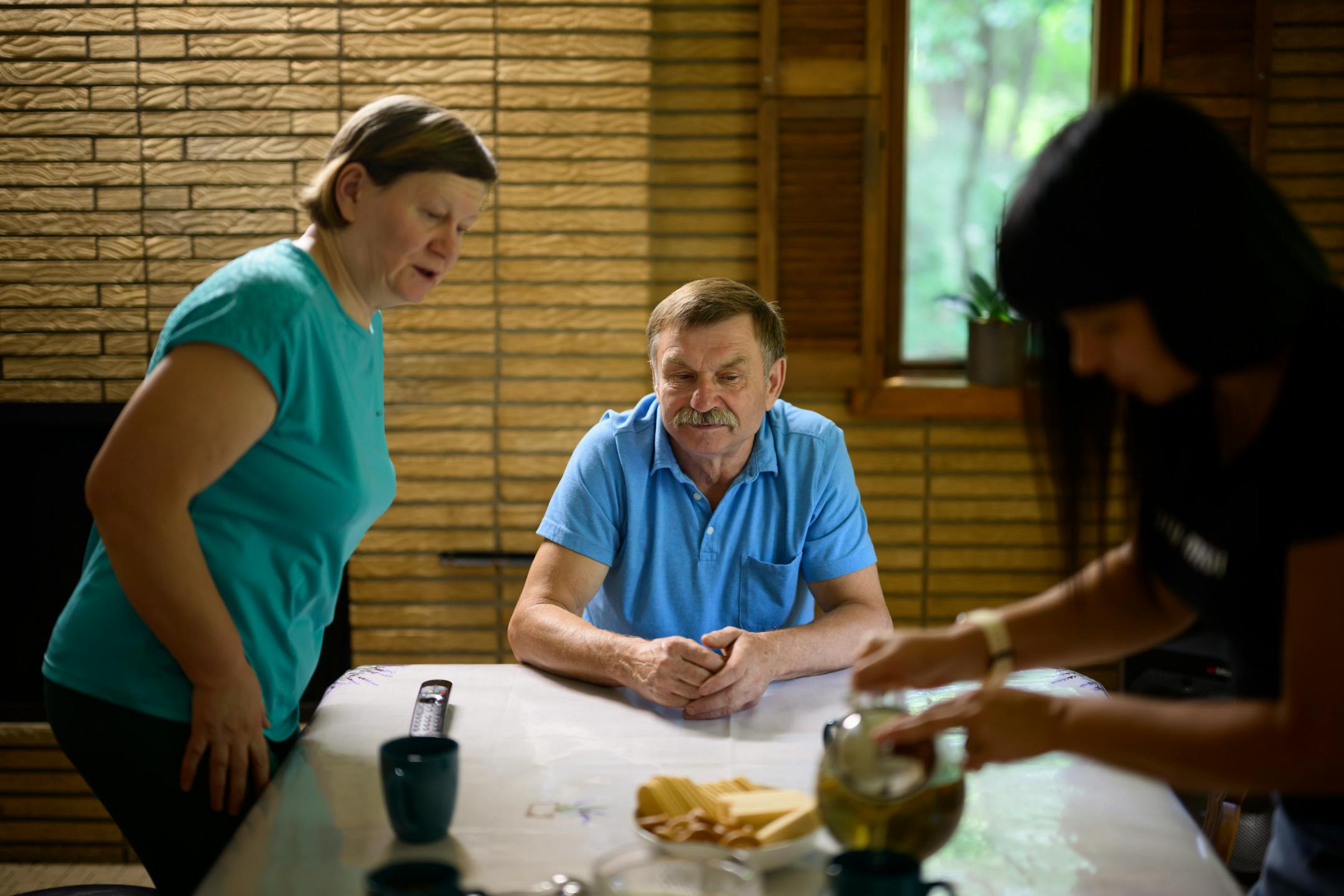
Viktoriia Myrna, right, pours tea for her father and mother-in law Anatolii and Kateryna Vusatyi in their dining room. (Aaron Lavinsky/The Minnesota Star Tribune)

Defining animals

The family wanted a modest pigeon loft, roughly 9 feet by 6 feet, to help Anatolii Vusatyi feel more at home, and Thomson was eager to help.

“They’re the type of people you would want in your community,” Thomson said, and building a loft felt like a small gesture to help them feel at home.

But figuring out how to build a loft in Orono posed some logistical challenges.

Local ordinances didn’t mention pigeons. Thomson spent months working with the city to determine whether they should be considered farm animals, domestic animals, like cats and dogs, or something else and which rules might apply.

The City Council granted Thomson a permit in March, and people in attendance erupted in applause. This summer, the council updated city rules to allow pigeons, doves and chickens to be kept on more small, residential lots.

“This was a way to allow them to feel like they were back at home, in a certain way,” while minimizing any disruptions, said Tunheim, the mayor.

Finding home

Shortly after receiving the permit, Myrna’s family began constructing the small, tan loft that sits in their backyard.

Pigeon enthusiasts who hadn’t met her father-in-law, but who had heard of his work, shipped him free birds. They came from Illinois, Missouri and California. The birds bred and the flock now includes 23 pigeons.

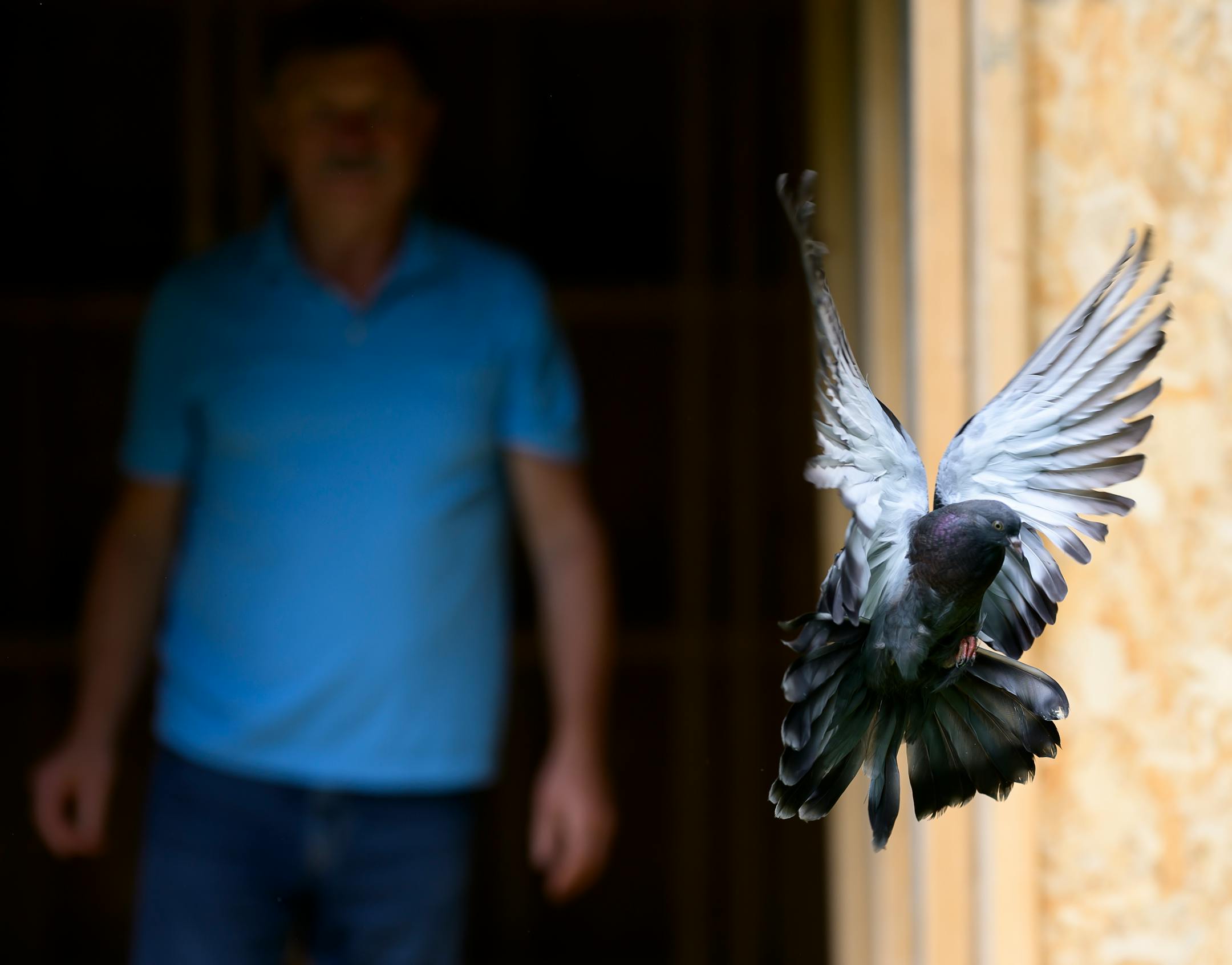
On a recent afternoon, Anatolii Vusatyi gently tossed the birds high into the air. The Skycutter pigeons flapped their wings, demonstrating their distinct flying style that, at times, makes it look as if they are standing midair.

He whistled, and they moved. He clapped his hands once, and they returned swiftly to the loft. He beamed as he explained that training pigeons is a lot like training dogs, Myrna translating for him. It’s something that he said he loves.

Having pigeons has helped the family feel truly at home in Orono, Myrna said.

“America has given us a chance to rebuild,” Myrna said, “and we will never forget those who helped us along the way.”

A Ukrainian Skycutter pigeon flys out of its loft before a feeding by breeder and trainer Anatolii Vusatyi on Monday. (Aaron Lavinsky/The Minnesota Star Tribune)
about the writer

about the writer

Liz Navratil

Reporter

Liz Navratil covers communities in the western Twin Cities metro area. She previously covered Minneapolis City Hall as leaders responded to the coronavirus pandemic and George Floyd’s murder.

See Moreicon