

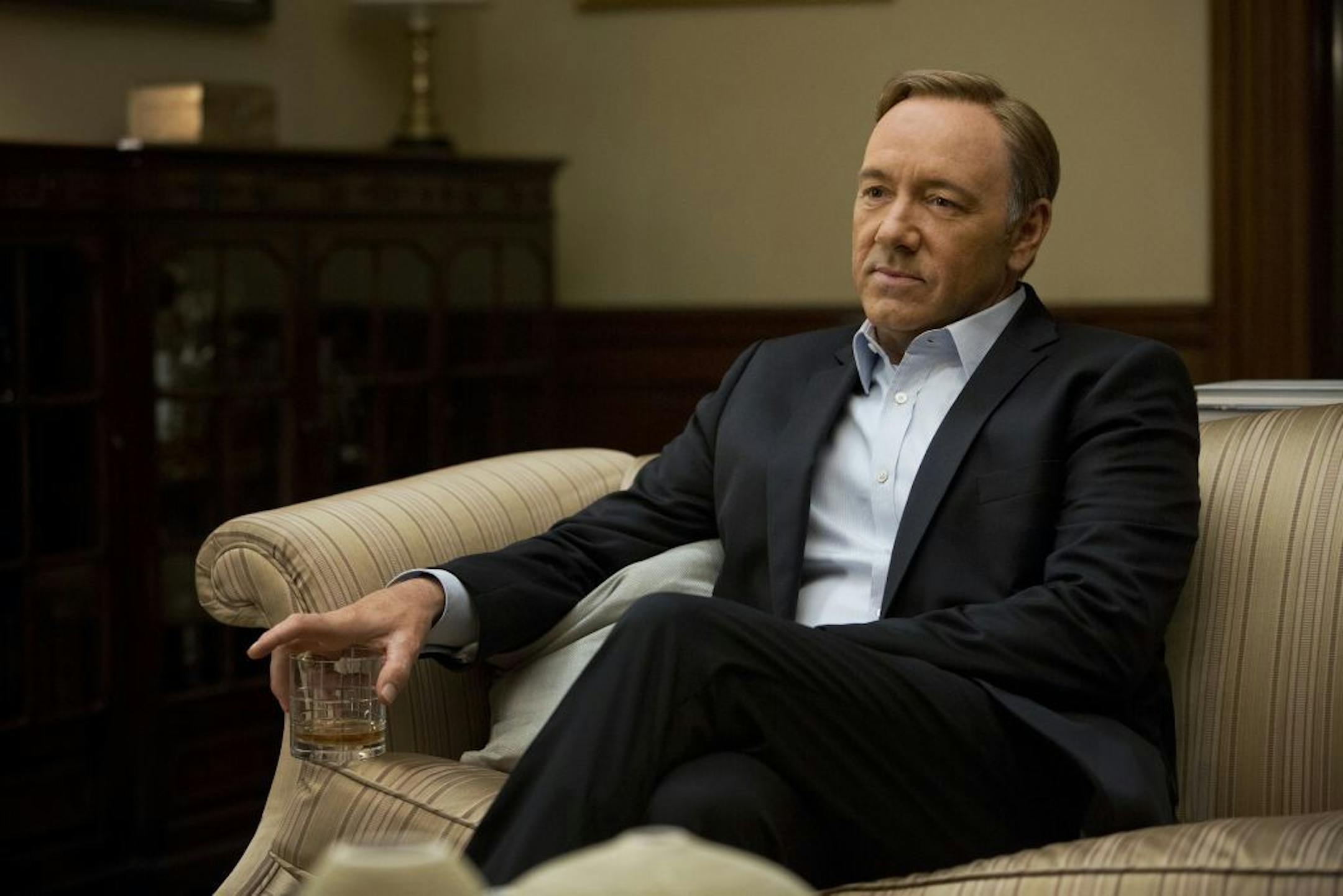
"Power is a lot like real estate," Frank Underwood muses. "It's all about location, location, location."
Underwood is a scheming congressman played by Kevin Spacey in the pilot of "House of Cards," a new series that could, if successful, change the way the American entertainment industry works.
"House of Cards," an adaptation of a BBC miniseries, has big-name actors and a big budget -- the first 26 episodes are thought to have cost more than $100 million. When the show premiered on Friday it was not seen on either broadcast or cable television. It will be available exclusively from Netflix.
Creating original, high-end television shows for subscribers is a new tack for Netflix, whose main business is renting out and streaming other companies' content online. Others are following suit, however: Amazon, which also offers a video-streaming service, has commissioned six television pilots and has plans to develop films. The online-video site Hulu also is making original programs such as "Battleground."
YouTube, Google's online-video site, which is better known for amateur videos of babies and blunders, has launched "channels" that are run by media companies and celebrities. They offer more professional content, although so far they have had only mixed success.
Welcome to the early stages of what is being called television's "third wave." Online video used to be amateur and short-form, but it is starting to follow the path of broadcast television, and then cable, by offering high-quality content.
People are watching more video online and will be consuming even more of it as quality improves. During the third quarter of last year, Americans on average clocked seven hours of online video a month, 37 percent more than they watched a year before, according to Nielsen. This is, of course, still much less than the 148 hours a month -- yes, really -- that they spent in front of their television sets.
Not unlike characters in a daytime soap opera, every player jumping into original content has a private agenda. For streaming services, costs to acquire content are high. In 2011-12 Netflix spent $4.8 billion on streaming content, according to Wade Holden of SNL Kagan, a research firm. Plowing some of that cash into developing their own programs helps protect the firms against content costs rising further.



