Opinion editor’s note: Strib Voices publishes a mix of guest commentaries online and in print each day. To contribute, click here.
•••
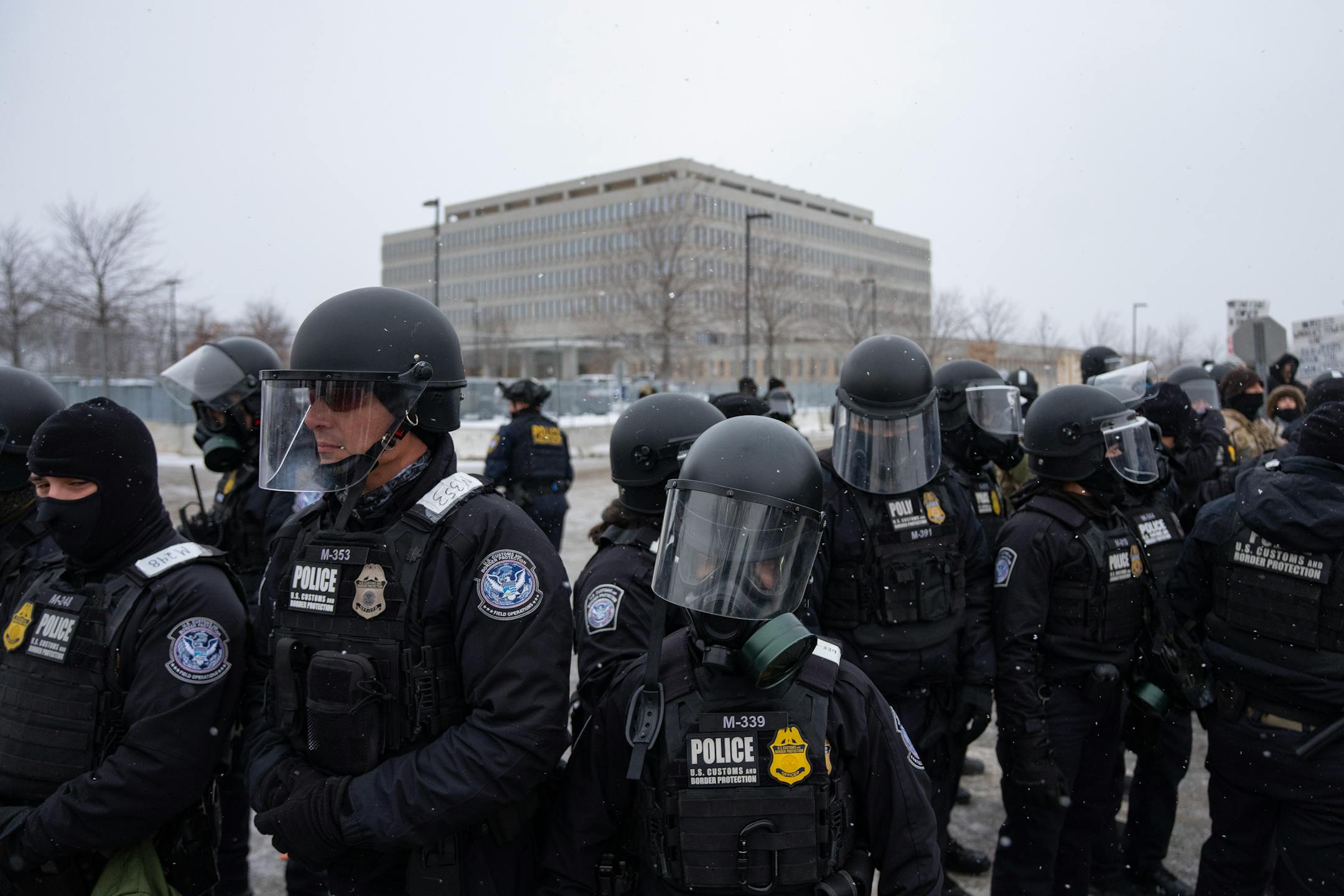
“Bdote,” the land beneath the Whipple Federal Building at Fort Snelling, is not neutral ground. It’s a place where federal law and power have repeatedly decided who is worthy of protection and who can be cast aside. That history matters now, because the patterns formed here never ended but were institutionalized.
Long before a federal office complex rose near Minneapolis-St. Paul International Airport, this place was Bdote, the sacred uniting of the Minnesota and Mississippi rivers, central to Dakota origin stories, culture and survival. European immigrant expansion treated that reality as an obstacle. In 1805, Lt. Zebulon Pike negotiated land cession for a military post that became Fort Snelling, atop the rivers as a symbol of federal authority over Indigenous land in the 1820s (Minnesota Historical Society).
From its earliest years, the fort enforced racial hierarchy. Although slavery was prohibited under the Northwest Ordinance of 1787 and reaffirmed in the Missouri Compromise of 1820, U.S. Army officers brought enslaved African Americans to Fort Snelling and held them in bondage (William E. Lass, “Minnesota: A History,” 3rd ed., pp. 54-55). Federal law said slavery was illegal; federal power allowed it anyway.
Enslaved people resisted. In the 1830s, Rachel and Courtney (enslaved women with only first names), once held at Fort Snelling, successfully sued for freedom in Missouri courts, arguing that residence in free Minnesota territory made them free. Yet, the Army continued to ignore the law. Dred and Harriet Scott were enslaved at Fort Snelling despite these precedents. Their later freedom suit relied on the same reasoning — but when it reached the U.S. Supreme Court in Dred Scott v. Sandford (1857), the court ruled Black people could not be citizens and Congress could not prohibit slavery in the territories. The decision dismissed an entire people from constitutional protection.
Federal law proved equally devastating for the Dakota. Broken treaties, land theft and starvation led to the U.S.-Dakota War of 1862. Military tribunals tried hundreds of Dakota men, often in proceedings lasting just minutes, and 303 were sentenced to death. President Abraham Lincoln commuted most sentences, sparing all but 38 Dakota men, who were hanged in Mankato on Dec. 26, 1862 — the largest mass execution in the U.S.
The punishment of nonwhites did not end at the gallows. Roughly 1,600 Dakota women, children and elders were interned at a fenced camp on the river flats below Fort Snelling through the winter of 1862-63. Hundreds died, and Congress went on to void all Dakota treaties, expelling the Dakota people from Minnesota entirely.