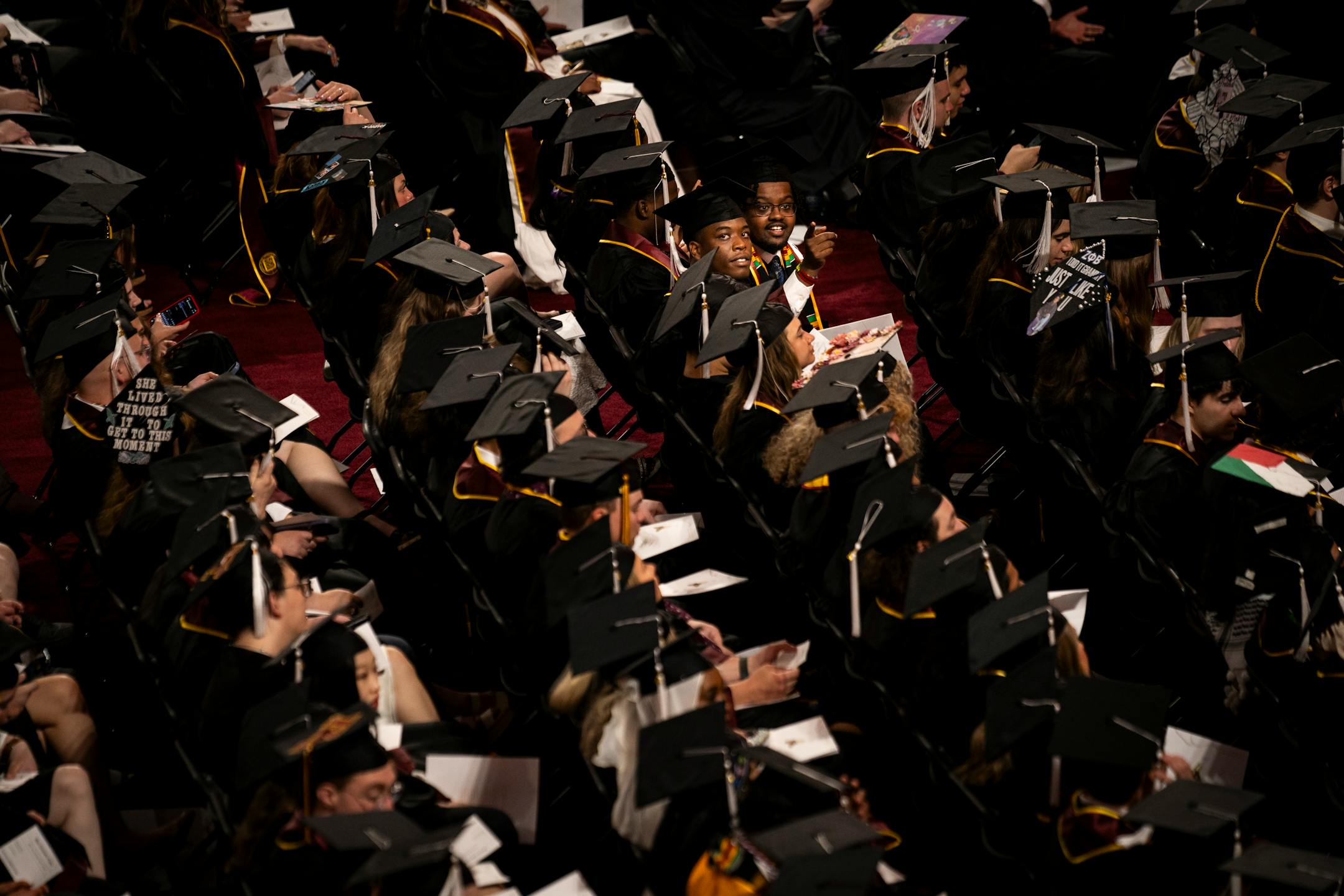
Educators like me need to prove to the taxpayers of Minnesota that we can continue to provide an affordable, strong education that prepares trade, technical and four-year graduates capable of strengthening our state and country. To achieve this worthy purpose, we need resilient students, and I want to make the case that we can still meet that expectation.
These students, not GPAs, are the key to reforming the old trust. Here’s a typical weekly breakdown from one of my excellent biology students: 12 hours of labs, 12 hours in lecture, 40 hours at Jimmy John’s (typically the 6-11 p.m. shift) and studying for another assumed 36-plus hours, leaving some errant time for family, church and shadowing.
Tough, honest and motivated students just like this populate Minnesota institutions, all with their own unique circumstances. What else do they build from this forging? I’d argue discipline, organization, perspective and unity among other working students. Thousands of these superstars are making good on the investment from Minnesota taxpayers, but they lose the obvious indispensable resource: time.
We lose a higher percentage of this population before they can graduate when compared to their peers who have the means to forgo working while in school. But that doesn’t mean they are “worse” students. Maybe their GPA suffers, but their resilience grows. Losses of social, community, sleep, exercise, extracurricular and office hour opportunities add up, though. Not only could some changes foster better odds, but we must begin highlighting their strengths as well. After all, wasn’t college the great American economic class escalator? We should take steps for this population because they are among the best prepared to deliver.
Specifically, these students revile dishonesty, namely gaming assessments using AI models, because they didn’t outsource their learning despite their time crunch, an ethic every employer would value. Yet it’s absent from CVs and GPAs. Their motivation falters when others that choose the disingenuous route are never held accountable.
So first, courses must meet rigorous outcomes that prepare students to contribute and do not inflate grades. The definition of a star student can evolve into someone capable of overcoming failures together with the help of faculty. Second, we must re-evaluate course integrity and ensure that hardworking, honest students have the best chance at success (and that dishonesty doesn’t). Going back to handwritten exams on paper works well for that. Third, we can take small but meaningful steps to increase class community. And most importantly, we must re-evaluate the value of a GPA. Next-generation metrics must emerge, like adding the number of hours you worked through school to sustain your needs. There’s precedence for this, as medical school applications have students document all their relevant hours.