
Opinion | Some specific questions for Tom Homan

The border czar has said that federal agents will draw down if the state cooperates. That gives rise to the following inquiries.

February 2, 2026 at 10:59AM
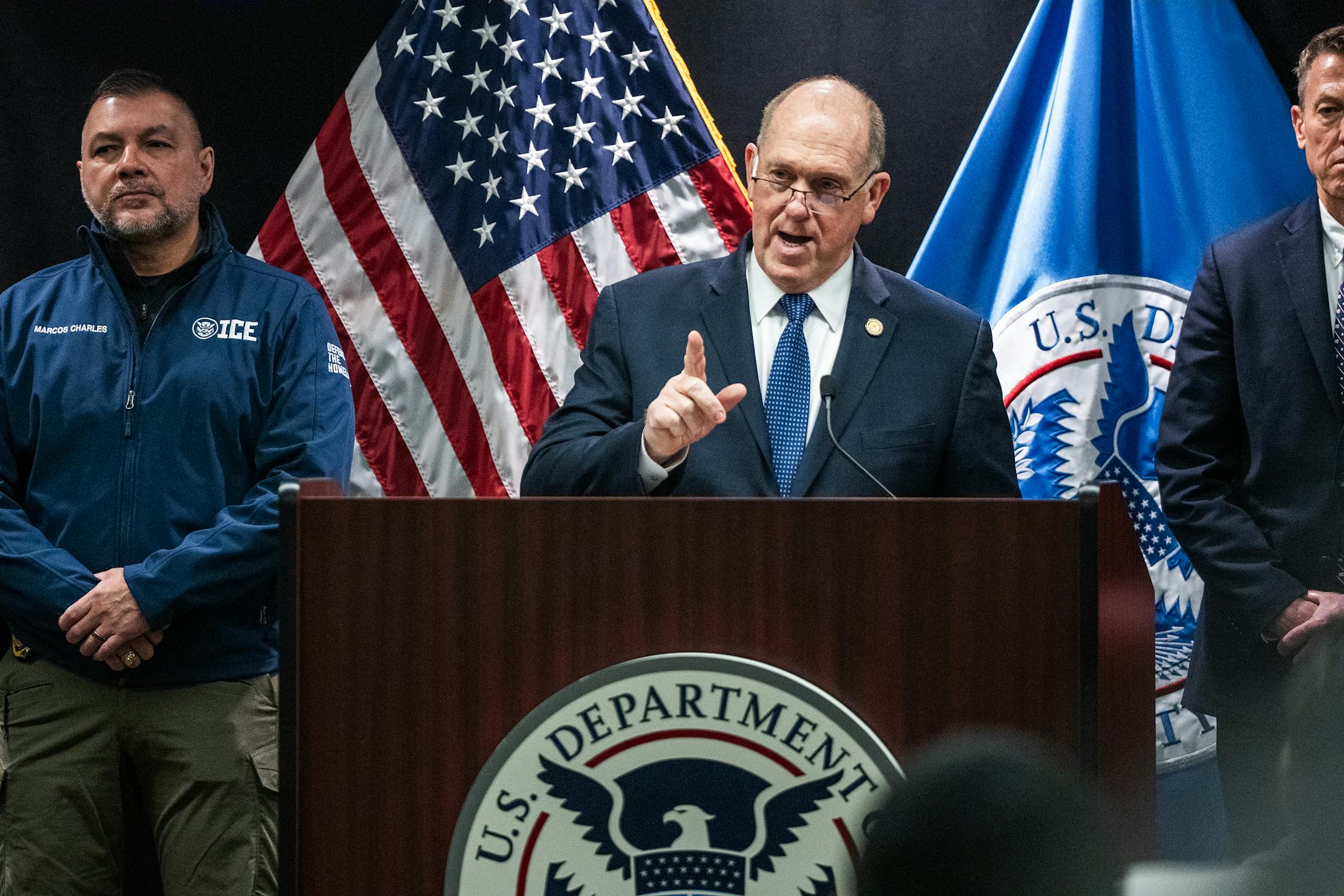
Border Czar Tom Homan makes his first public Twin Cities appearance on Jan. 29. Michael Feldman hopes that he'll be a better communicator than his predecessor in running Operation Metro Surge. (Richard Tsong-Taatarii/The Minnesota Star Tribune)

Opinion editor’s note: Strib Voices publishes a mix of guest commentaries online and in print each day. To contribute, click here.

•••

Dear federal border czar Tom Homan:

On the belief that my views may be shared by many of the traumatized citizens of Minnesota, I write to you in good faith to see if trust may grow between us, no matter some inevitable differences in policy viewpoints. We are hopeful that you truthfully consider us to be a core part of your public audience, which is a vast improvement over other officials who have led federal Department of Homeland Security communications, who appeared to primarily be speaking to their own social media following. We recognize that you have a boss and that you may not have final authority over every decision that needs to be made, but we are hopeful that you can at least be a better communicator, not just with us but within your own chain of command.

As our political leaders have discussed publicly and in court, we are suspicious that Operation Metro Surge is predicated on retribution and political showmanship against our population. We will not be paying the ransom that the leader of the Department of Justice — Attorney General Pam Bondi — has demanded. As you know, many of the demands she made in a letter to our governor had little to do with immigration enforcement.

However, we are willing to take you at your word that there are other, legitimate motives that you would like to see addressed. But progress will require that you can more effectively and consistently communicate with us. Relationship building always takes some back and forth. Accordingly, we’d appreciate it if you can provide detailed and honest responses to the following groups of questions, all consistent with your stated emphasis on public safety, which (so long as the term is thoughtfully defined) is a goal we all indeed would share:

1) The Minnesota commissioner of corrections, Paul Schnell, has insisted that Minnesota’s policy has always been to follow the law and cooperate with Immigration and Customs Enforcement as needed when prisoners are released. Do you have any reason to believe that is not true?

Is there anything you can prove is not true on the website Schnell created to expose false DHS claims? Can you provide any examples of ICE being frustrated by our state prisoner-release process that the agency tried to resolve but could not? What specifically is there about the process that you would like to change? (Please explain and share if Minnesota leaders have yet heard your ideas and, if so, what they have explained as the basis of their objection and how you may propose to resolve that.)

2) County jails in Minnesota have varying policies about communications with ICE. Some that previously held prisoners solely on the basis of administrative warrants issued by ICE (i.e., not signed by a judge) were successfully sued and paid damages because the Fourth Amendment prohibits holding such people in jail when they would otherwise have been free to leave custody. It has been implied that your complaint may also include that some counties won’t routinely share who is in the jail so you can look them up to see if they may be lawfully subject to deportation. Given that county jails only supervise inmates who either have not yet been convicted of a crime or have committed crimes that are not felonies, is county cooperation for deportation purposes really all that important for public safety? Or is it merely a pretext to end permission of U.S. residency for greater numbers, while in the process disrupting families, employers and communities?

If you still insist it is critically important, how do you suggest counties can prevent getting sued for honoring your detention requests when courts have found that unlawful? In regard to communicating with ICE about who is on the county jail roster on any given day, why do you insist on their initiating the communication? Could you instead just provide county jails with an up-to-date list of people believed to be in Minnesota who are wanted by ICE due to judicially authenticated deportation orders or judicial warrants authorizing arrest and seizure? (A procedure which, to our knowledge, would be defensible against the kind of lawsuits that counties previously lost.)

3) Sanctuary policies were not created simply out of sympathy for immigrants lacking legal status or the desire to protect them. They are the result of careful consideration by local police departments and other public safety officials who have experienced problems when immigrants fear contacting the police to report a crime — whether domestic abuse, something else they have experienced or something they have witnessed. Related policies also protect immigrants who interact with city officials for matters like enforcing labor law or landlord violations. While immigrants who feel free to report to police or regulators certainly support their own safety, they also contribute to the safety of others, including citizens. It is unclear to us how sanctuary policies on the balance of things harm public safety, and we would appreciate your thoughtful explanation. One that does not rely on “sanctuary” being a buzzword like “woke” or “DEI” that is insufficiently understandable. What experts can you cite that have found public safety to be negatively affected by sanctuary policies such as the ones described above?

•••

As you can imagine, our community is most upset about experiencing what has been well documented in court and often directly observed as an essentially lawless operation. At some point, we will have to talk about the need for transparent investigations that include state participation, compensation for willful and unnecessary property damage, reimbursement of costs — such as travel back to Minnesota after detention and release in another state when there was no probable cause for the seizure — and most likely a truth and reconciliation process to best document which stories about this experience are true and which are not and to promote healing. But as you have cited public safety concerns alone as integral to ending this federal mobilization, and you have spoken about the need to reset the conversation, your detailed response to the three areas above are sufficient first steps.

In advance of your response, we thank you for reciprocating our good-faith effort to learn more about your views.

Michael Friedman is the former executive director of the Legal Rights Center, a Minneapolis nonprofit specializing in public defense and restorative justice.

about the writer

about the writer

Michael Friedman

More from Commentaries

See More
card image
Richard Tsong-Taatarii/The Minnesota Star Tribune

The border czar has said that federal agents will draw down if the state cooperates. That gives rise to the following inquiries.

card image
card image