
Opinion | In Minnesota, grief is a collective task

There is no road map for this kind of pain, only the choice to stay present.

January 25, 2026 at 8:10PM
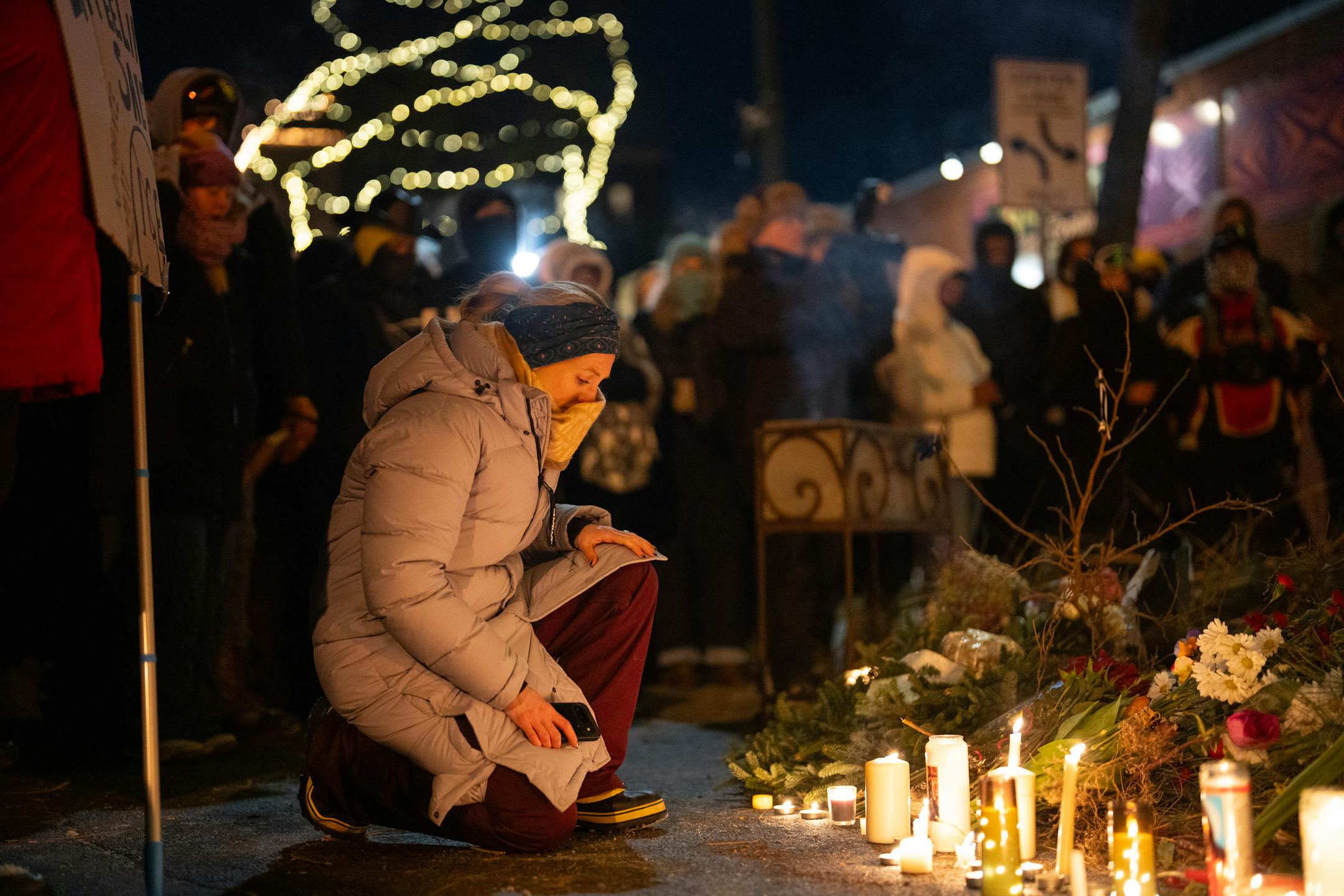
A community member kneels at a memorial at the site Alex Pretti was shot and killed by a federal agent near Nicollet Ave. and W. 26th St. in Minneapolis on Jan. 24. (Alex Kormann/The Minnesota Star Tribune)

Opinion editor’s note: Strib Voices publishes a mix of guest commentaries online and in print each day. To contribute, click here.

•••

We’ve seen another Minnesotan’s life end in footage shared widely online: that of 37-year-old Alex Pretti, a Minneapolis resident, shot dead by federal agents on Saturday, Jan. 24 in the middle of our streets.

For us — for our community — this isn’t an unfamiliar story or abstract headline. The senseless and tragic images of his final moments will stay with us, sit heavy in our chests, and replay in conversations around kitchen tables, in classrooms and at offices across the state.

The killing of Pretti may neither be shocking nor surprising for some. But for many of us, moments like this one can feel sudden and surreal. We watch the recordings and feel fear in our bodies while our brains instinctively transition to survival mode.

The vigilance and anxiety we are feeling right now are normal and human, and they are exactly why we need to tend to our mental health as deliberately as we tend to how we are responding in the milieu of ongoing ICE aggression, harassment and intimidation.

The nervous system activates and the brain prioritizes threat upon witnessing or anticipating harm. It does so by shrinking its capacity for connection, empathy and long-term thinking. In the face of repeated trauma, the body and mind often shut down, not out of indifference but from exhaustion. This is the nervous system doing what it was built to do: protect us from overload.

To remain present in this moment — mentally, emotionally, socially, morally — we need tools to help us regulate rather than retreat. Practices as simple as grounding our attention in our bodies, slowing our breath or reaching out to a trusted friend are not mere self-care but rather skills for survival.

We must also be cautious about how we consume information. There is a real difference between staying informed and becoming overwhelmed. Doomscrolling floods the nervous system with stress chemicals, erodes our empathy and narrows our capacity to think clearly. Maintaining connection through community, intentional conversation, supportive networks and grounded action help protect our physical and mental health in moments that threaten to diminish it.

If you find yourself wanting to look away now, you are not failing. You are experiencing a human response.

Fear can make people freeze or spiral, but regulation makes us useful. Small, steady and logistical action is an impactful and effective means to navigate this fear: offering transportation, dropping off groceries, checking in on a neighbor, volunteering for a hotline or legal observation, or filling a shift to stand watch at a local school. These actions may seem small, but they matter more than we may realize.

Minnesotans know how to rally in moments of crisis. It’s on full display in airports and courtrooms, carpools and group chats, mutual aid spreadsheets, legal offices and elementary school street corners. And all of it is making a difference.

This is how we hold the line between the heartbreaking realities we are enduring in this moment and the Minnesota we refuse to give up on. Take a break if you’re mentally or emotionally drained. This might be a marathon, not a sprint.

Marcus Schmit is the executive director of NAMI Minnesota. Safia Khan is a public servant and former victim advocate. If you are in need of mental health resources, visit www.namimn.org.

about the writer

about the writer

Marcus Schmit and Safia Khan

More from Commentaries

See More
card image
Alex Kormann/The Minnesota Star Tribune

There is no road map for this kind of pain, only the choice to stay present.

card image
card image