

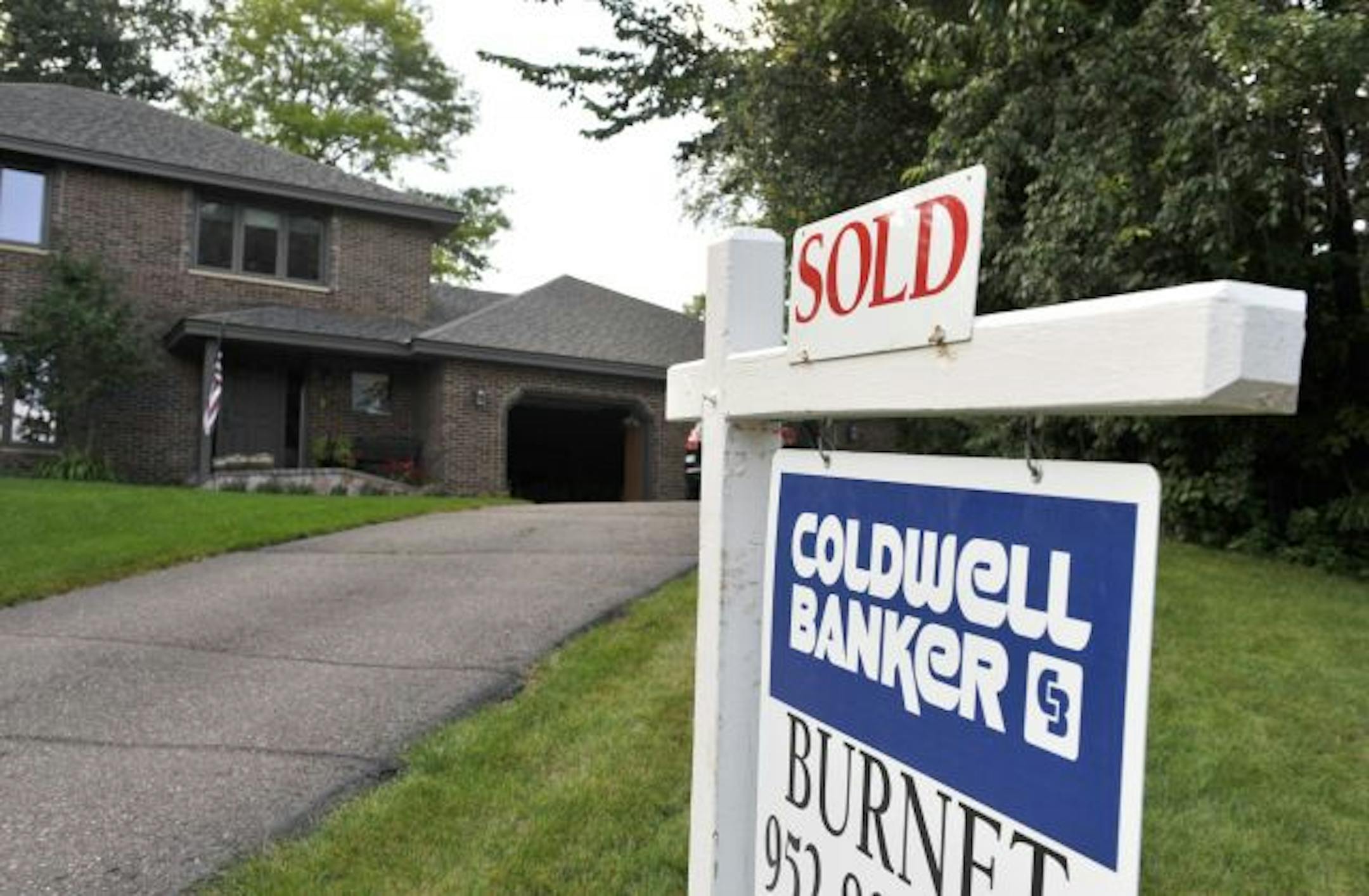
Mary Jo Yeager was afraid of being "married to a mortgage for 30 years." But the first-time home buyer tax credit drew the 51-year-old into the market at the last minute. Luckily, she loved the first house she walked into and signed a purchase agreement for the Shakopee property on April 30 -- the day the up-to-$8,000 credit expired.
Shoppers like Yeager gave the residential real estate market a kick in the pants in April -- especially during the final days of the month. For the week ended May 1, there were 1,469 pending sales in the Twin Cities metro area. That's a 31.2 percent increase over a year ago, according to data from the Minneapolis Area Association of Realtors.
For the month, a preliminary tally of pending sales was up roughly 13 percent compared with April 2009. The local market hasn't seen such a strong month of pending sales since August 2005, before the housing bubble burst.
Final numbers, including median prices, will be released Wednesday.
April is always a busy month for home sales, and there's no argument that the tax credit pulled forward buyers who might have bought later in the year. The question now is how much the housing market slows in the traditionally busy months of May and June.
Brad Fisher, president of the Minneapolis Area Association of Realtors, predicts we'll see strong numbers in the first week of May, because some April sales won't be booked until then. After that, "I'm sure that we will be down in numbers from a year ago, there's no question," he said. He predicts that sales will be down 15 to 20 percent from where they were last year.
Aaron Dickinson, an agent with Edina Realty, figures that the busiest week of sales activity is behind us. "To top that number is kind of like winning the Super Bowl and thinking you can go back and do it again next month," he said. Still, he predicts business for 2010 will be at least as good as it was last year.
Agents say business in the first 10 days of May has been less hectic, but showings are still taking place and deals are being made. Some buyers didn't qualify for the federal tax credits, which included incentives for repeat buyers, but they had to have been in their home for five years. Others did, but didn't find the right house in time. Dickinson said his tax-credit-eligible buyers aren't too broken up about not getting the incentive. "They realize that there was likely a buy-up in the pricing due to the tax credit."



