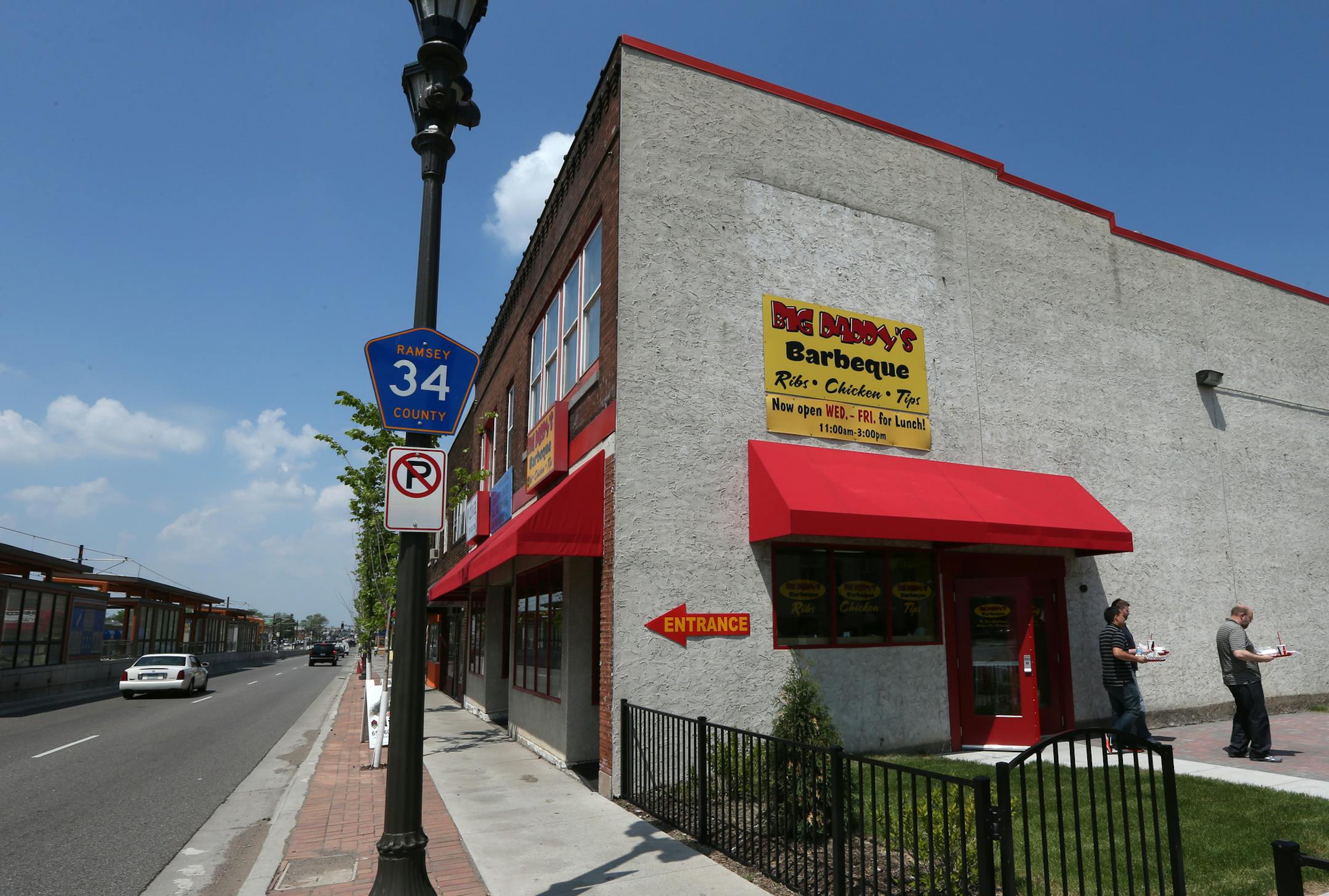
Ron Whyte figured his tiny barbecue shop in St. Paul could weather the dust, noise, traffic and parking disarray associated with the construction of the billion-dollar Green Line, the light-rail service that will link the downtowns of Minneapolis and St. Paul.
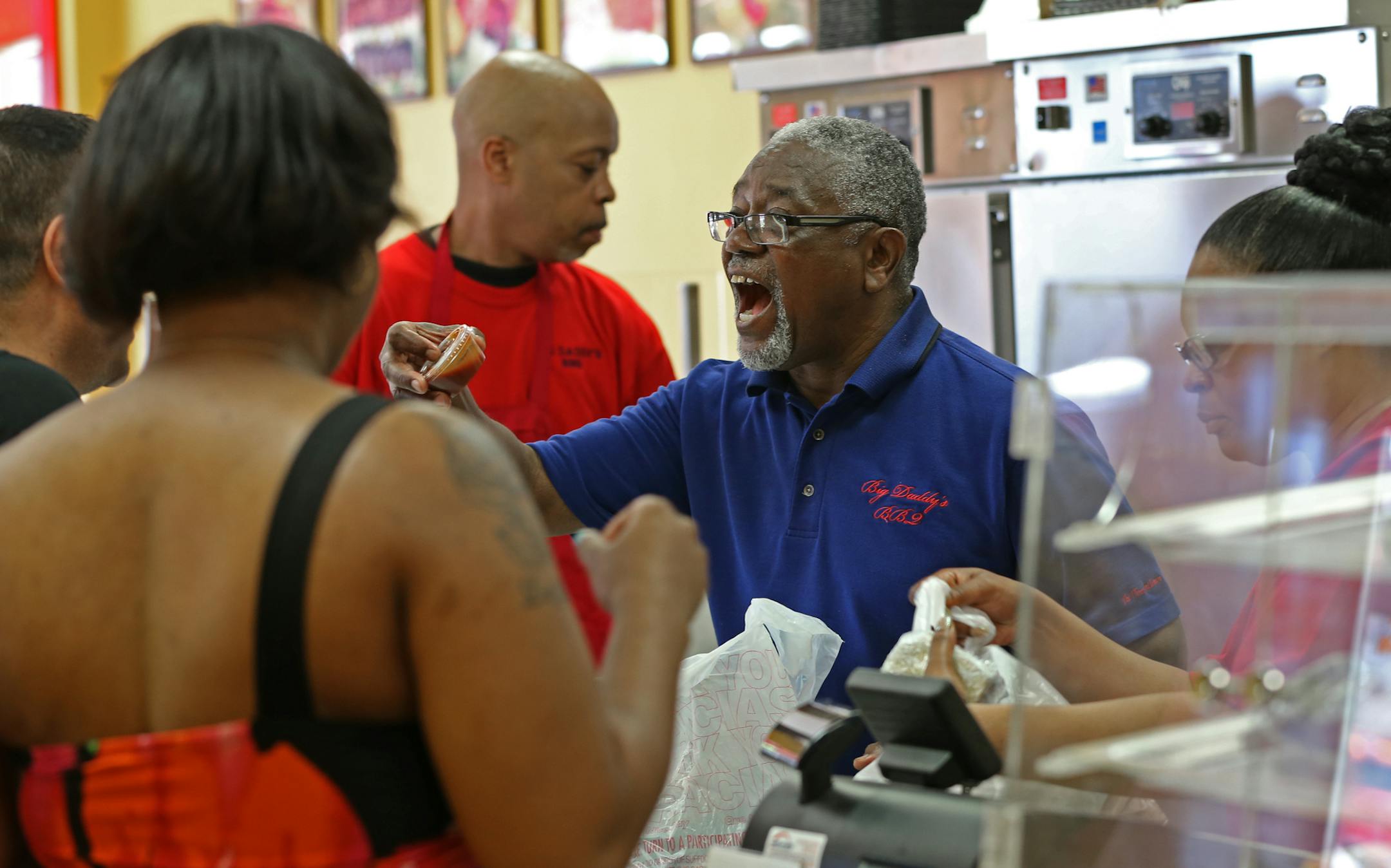
But "one day I looked up and they put a Port-A-Potty right at my front door," said the still-incredulous co-owner of Big Daddy's Old Fashioned Barbeque. "What kind of advertising is that for a restaurant?"
The public transit line will open to great fanfare Saturday, but many of the small-business owners along the 11-mile stretch of track have doubts about the project's promise. Construction of the rail line, which began in late 2010, was toughest on the smallest businesses, some of which were fledgling to begin with. More than 100 businesses either closed or moved out of the Central Corridor between February 2011 and December 2013.
"When you lose 30 to 40 percent of your revenue, that's pretty devastating," said Isabel Chanslor, director of the Neighborhood Development Center, a community-based economic development group.
Yet there's hope that the brightly painted trains — along with new streets, sidewalks and lighting along University Avenue — will bolster an area of the Twin Cities that, in some spots, has been slow to realize the spoils of the economic recovery.
"I feel like people were afraid there would be carnage, all vacant storefronts, but I don't think that's happened," said Nancy Homans, policy director for St. Paul Mayor Chris Coleman. "Generally, people feel as though we've gotten through it in a pretty good position."
Officials from the Metropolitan Council, the regional planning agency that built the Green Line, say the massive project already has attracted $2.5 billion in new construction, ranging from the $243 million renovation of the Union Depot terminal in St. Paul's Lowertown to the $45 million expansion of the Episcopal Homes senior housing complex in the Midway neighborhood.
According to a Met Council tally, 128 new businesses opened along the Green Line between February 2011 and December 2013, and 27 stayed in the area but relocated.
![Vanh Ratsamy, second from right, and her son Chris, a Univesity of Minnesota economics major, wait on customers Victoria Hser, left, and Paw Blue Saw at 88 Oriental, the Asian grocery store the family owns, Tuesday, June 3, 2014, in St. Paul, MN.] (DAVIDJOLES/STARTRIBUNE) djoles@startribune.com Many businesses along University Avenue were affected by the construction of the Green Line. Some didn't survive, while some did. Peter and Vanh Ratsamy own 88 Oriental, an Asian grocery store along the C](https://arc.stimg.co/startribunemedia/RNVXLZ2UKHYWSMXUYNJL3UFS6I.jpg?&w=1080)
![Ma Nway, originally from Myanmar who now lives in St. Paul, shops in the frozen seafood section at 88 Oriental, an Asian grocery store, Tuesday, June 3, 2014, in St. Paul, MN.] (DAVIDJOLES/STARTRIBUNE) djoles@startribune.com Many businesses along University Avenue were affected by the construction of the Green Line. Some didn't survive, while some did. Peter and Vanh Ratsamy own 88 Oriental, an Asian grocery store along the Central Corridor, and their business is thriving.](https://arc.stimg.co/startribunemedia/HZJT6RKLLZZRLXFHXGKG3MC2YU.jpg?&w=1080)