

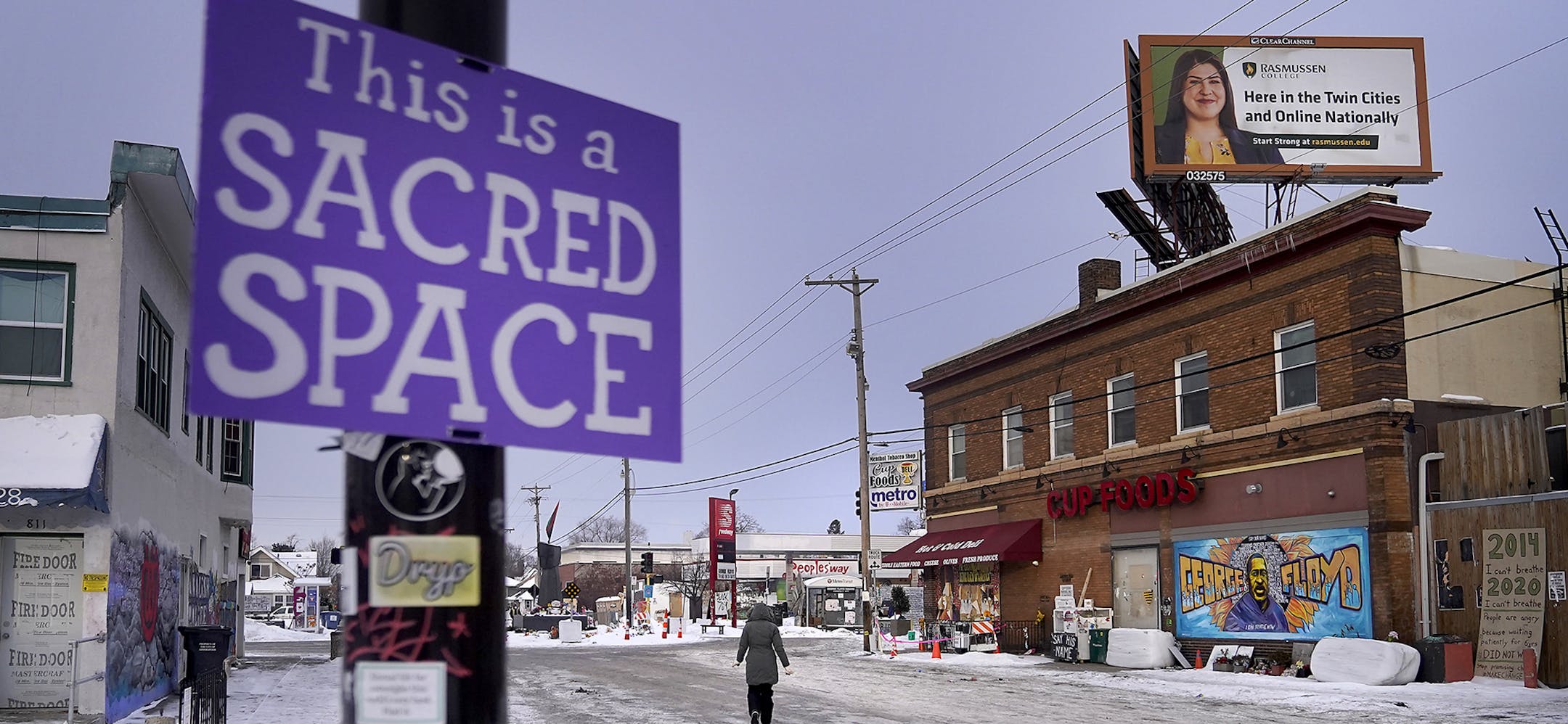
I arrived in Minneapolis on a rainy Saturday, the city quiet and still, in the calm before the storm. It is a city changed, scarred and shifted, in anticipation and apprehension.
What strikes me first is the placidity, but I remind myself that rain, quite literally, dampens activity. And as testimony begins in the trial of Derek Chauvin, the police officer who knelt on George Floyd's neck before he was declared dead, so will a flurry of activity, just like the ones that have taken place during jury selection.
My hotel is near the site of the trial, which stands silent with no one near it. The courthouse is ringed by a double wall of chain-linked fencing, and beyond those barriers I can see a few soldiers and Humvees.
But I am not in Minneapolis to see where the trial will be. I am here to go to the place where the dreaded thing happened. I am here to visit the spot where Floyd lost his life, and am here to stand on hallowed ground.
That intersection, 38th Street and Chicago Avenue, also known as George Floyd Square, is a few miles south of downtown, just beyond Powderhorn Park.
I drive in that direction with some trepidation. I know what a vulturous view people can take — often rightly so — of the media who swoop in when a big event happens, when there is death, pain and strife, and simply vanish when they have exhausted their angles of coverage.
The people who live at the center of this coverage often feel more used than heard, like creatures on exhibit rather than people living through pain.
The closer I get to the intersection, the more Black Lives Matter signs I notice, posted in yards or in windows, or painted on glass. Despite my best attempts to prevent it, my mind immediately drifts to suspicion: How many of these signs are meant to mark the houses, like the lamb's blood above the door frames in the Bible's Book of Exodus, so the shadow of death might recognize their solidarity and pass them over?


