

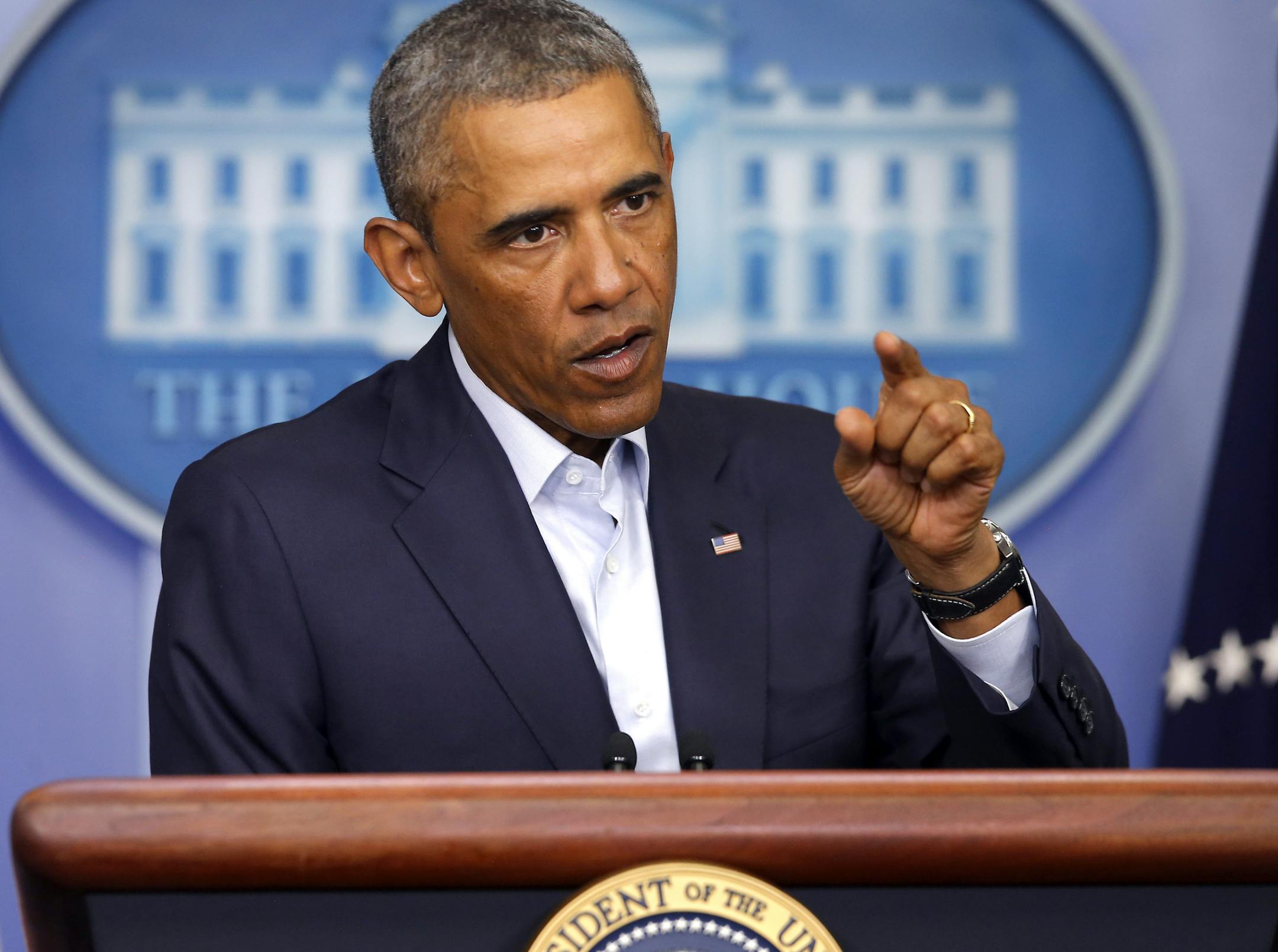
As the tumultuous situation in Ferguson, Mo., entered its second week, President Obama stood before the nation and offered a mild, balanced plea.
There is "no excuse" for excessive use of deadly force by police, he observed at a Monday news conference; the family of Michael Brown, gunned down by a white officer under suspicious circumstances, deserves justice. But violent protests "undermine" that cause. Americans should "unite with each other and understand each other," "listen and not just shout."
If Obama's words were anodyne, his affect was somber and subdued. In a nation roiling with anger, fear and confusion, the president alone appeared unfazed.
To which I say: Good for him.
One thing that's not in short supply in America right at the moment is emotional rhetoric. The airwaves and newspapers and Twitter feeds are thick with it, in case you haven't noticed. Therefore, it's not immediately clear what purpose would be served by presidential venting, especially in the midst of a bitter off-year election campaign, when his every word is bound to be politicized and polarized.
Others disagree. They want Obama to raise his voice, to speak from his heart and from his experience as an African American, the first to occupy the White House.
MSNBC's Michael Eric Dyson, a professor at Georgetown University, reproaches the president for not using his "bully pulpit" to "tell us as a nation what happens when festering rage in a community then begins to ignite and then begins to consume not only that community but the people around the nation who are empathetic."
Maureen Dowd of the New York Times says Obama has gone from "hot commodity to wet blanket" and demands to know why he won't "stop going to Beverly Hills to raise money and go to St. Louis to raise consciousness."


