On Exhibit: How the Science Museum of Minnesota’s Exhibits Department shares its mission through learning

October 10, 2025
icon2:53
This episode of “Behind the Science” introduces you to the Science Museum of Minnesota’s Exhibits Department, a team that creates exhibits for museums and compa

Exhibits at the Science Museum of Minnesota have the power to bring big topics to life. The museum’s exhibits department is sharing that power with institutions across the world.

Provided by The Science Museum of Minnesota

At the Science Museum of Minnesota, exhibits don’t just explain a topic. They’re where stories come to life.

Every exhibit at the museum is created in-house by the Exhibits Department: a team of designers, writers, fabricators, and others who work to make sure every piece comes together to tell those stories.

These projects aren’t only for Science Museum visitors.The team’s work can be seen in other institutions across the country and even around the world.

A history of learning

The Science Museum has a long history of constructing pieces that make complicated topics engaging and more easily understandable. During World War II, the Science Museum created a series of chalk globes to help teachers around the country explain to students where conflicts were taking place.

That emphasis on hands-on learning can still be seen in exhibits throughout the Science Museum.

“One of our favorite things that we do here is get visitors excited about STEM,” said Aaron Schmoll, senior director of exhibits. “And the easiest way that we’ve found to do that is to present interesting topics in new ways. And so often that’s creating a hands-on exhibit.”
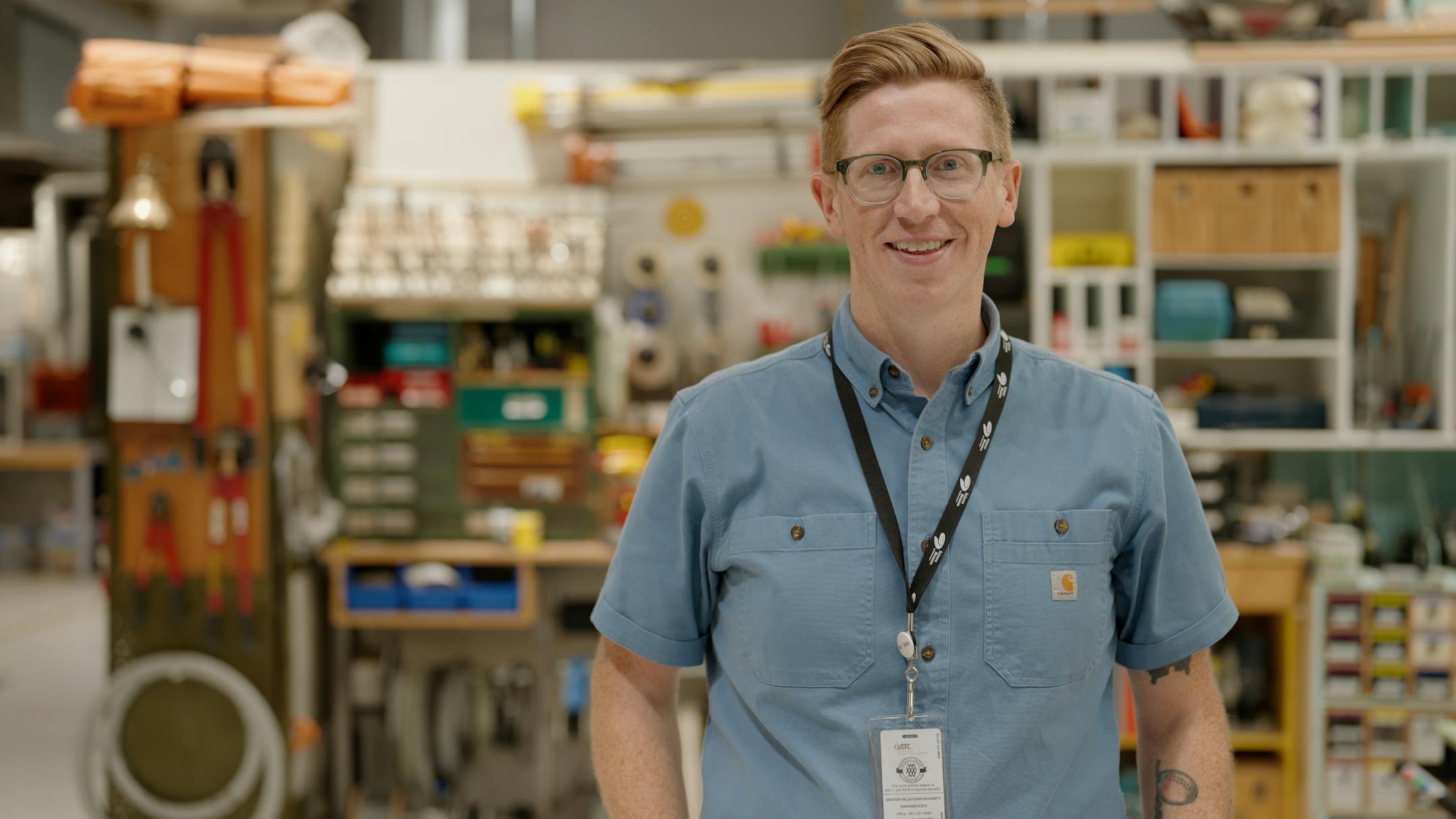
Aaron Schmoll, senior director of exhibits, at the Science Museum of Minnesota

How the team works

Members of the exhibits team come from a variety of backgrounds, including engineering, art, design and writing. Together, they construct exhibits in the museum’s two on-site production shops.

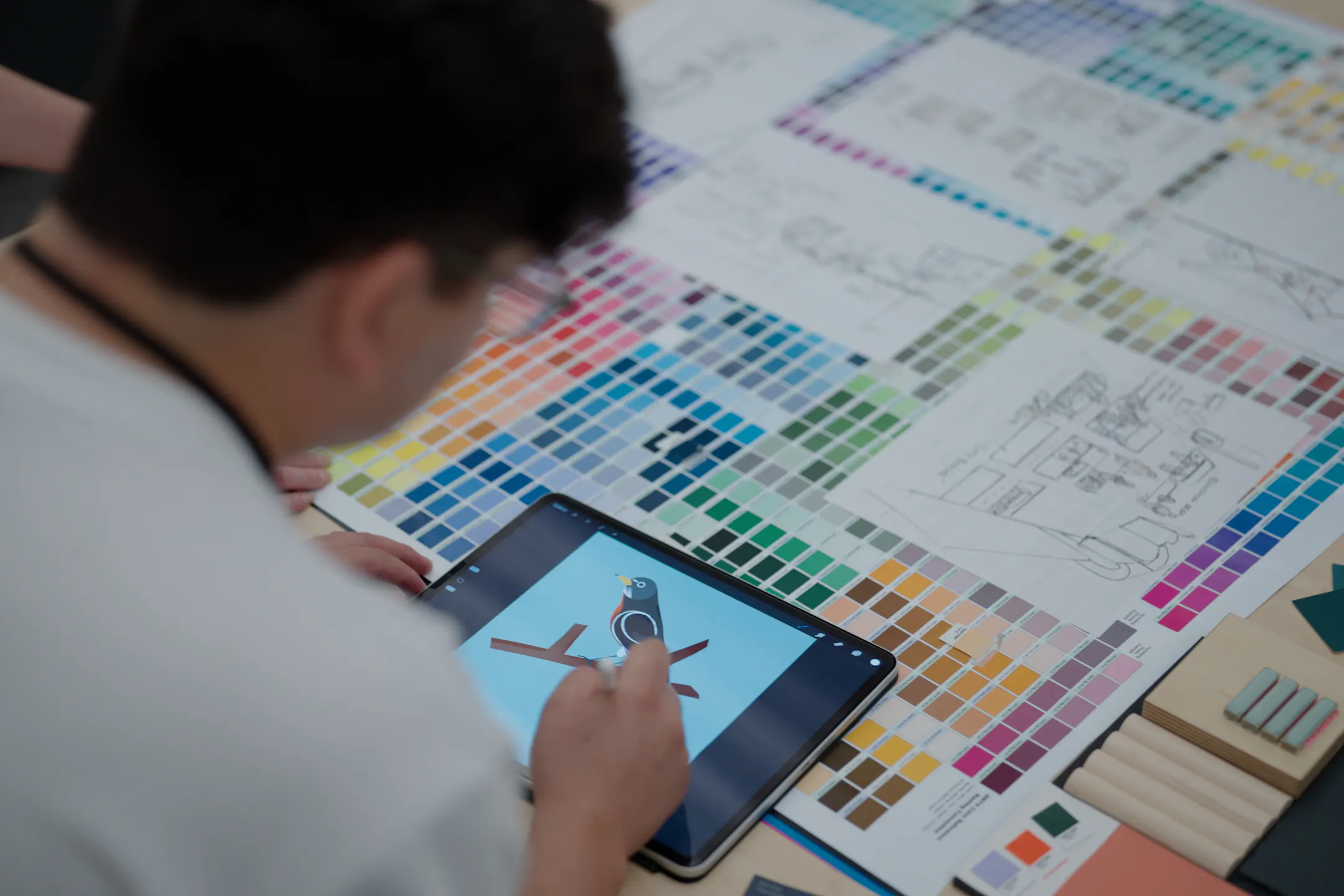
Experience designers like Elias Ramos-Solis are tasked with thinking through the best ways to present information in an exhibit.

“As visual storytellers, we set and execute the design direction for each exhibit, from 3D environments to media elements, ensuring every experience is visually cohesive and engaging,” Ramos-Solis said.

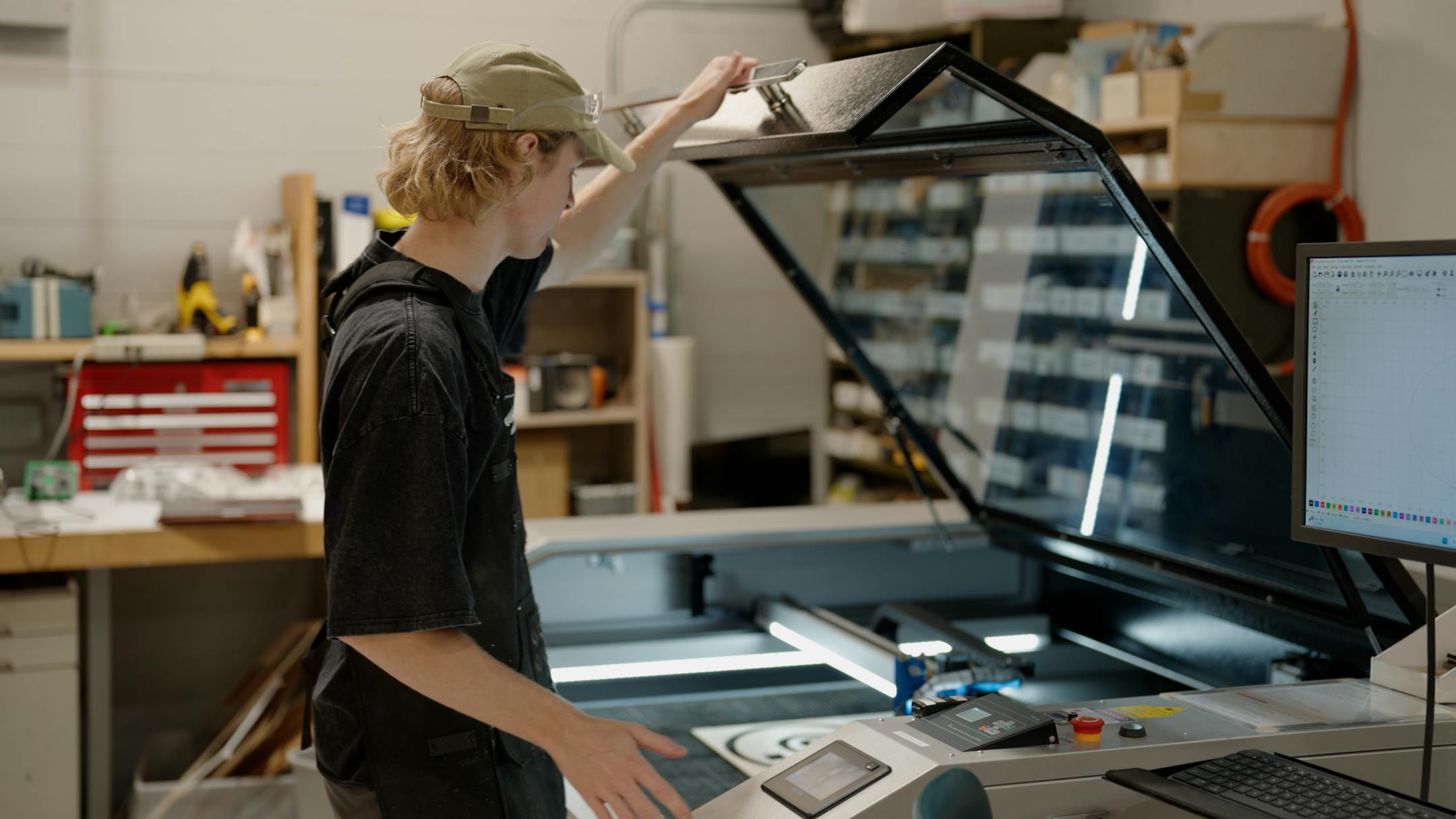
From there, fabricators like Brett Sasse are tasked with constructing the things needed for the exhibit — often using a mix of materials and techniques to make the exhibits into something tangible.

“Fabrication is really whatever it takes to bring something from an idea into reality,” Sasse said.

Ben Sasse, one of the Science Museum of Minnesota’s exhibit fabricators, works in one of their production shops
Brett Sasse, one of the Science Museum of Minnesota’s exhibit fabricators, works in one of their production shops

Beyond the Science Museum

When the exhibits team isn’t working on exhibits for the Science Museum, they’re constructing projects for museums around the country and in other parts of the world.

In fact, around 90% of the projects the team works on will go to other museums. That work isn’t limited to exhibits on STEM topics, either. The museum’s partners include history museums, nature centers, and children’s museums.

By working with the Science Museum on their exhibits, these partners are supporting an important revenue source for a like-minded institution, Schmoll pointed out. That money supports general operations at the museum, but also scientific research happening throughout Minnesota and beyond.

“We look to work with other like-minded, mission-driven organizations, and when we come together, it’s really a fulfillment of both of our missions,” Schmoll said.

A collaborative process

The process of building a new exhibit for another institution can take years from ideation to completion. To start, the team takes time to understand exactly what a partner wants out of an exhibit, and what it will take to turn it into something tangible.

“We take a more intimate approach,” explained Motoko Hioki, director of exhibit project management. “We really care about our partners, and we want to get to know them and help them spread the mission of inspiring learning. So we really build a lasting relationship.”

Once a prototype of an exhibit is created, it can be tested on the Science Museum’s floor before it’s sent out to partner institutions. This allows the team to observe how visitors interact with something in a real-world setting — something third-party partners can’t replicate.

Elias Ramos-Solis, experience designer, and Motoko Hioki, director of exhibit project management examine an exhibit being tested in one the Science Museum of Minnesota’s production shops
Inside the Science of Museum if Minnesota’s production shop.
One benefit of having exhibits developed by the Science Museum of Minnesota is that prototypes can be tested by the museum’s visitors
Elias Ramos-Solis, experience designer, developing the look for a new exhibit
The Science Museum of Minnesota’s exhibits team develops exhibits for museums and companies all over the world

“We see our visitors as part of our team,” Hioki said. “And we believe that’s what sets us apart.”

Based on what they observe, the team can make adjustments to ensure visitors get the most out of their experience with the exhibit.

“One of the most rewarding parts of putting an exhibit together is knowing that when we install it, that’s not the end but rather the beginning,” Ramos-Solis said. “It’s all very exciting knowing that students and teachers and families can come together and congregate around a certain story.”