2:37
2:37Step into the Science Museum of Minnesota, and you’re immediately greeted with countless items to see and explore — from dinosaur skeletons to Indigenous belongings to hands-on, interactive exhibits.
But just as important for the museum and the scientists who work there are the specimens visitors can’t see.
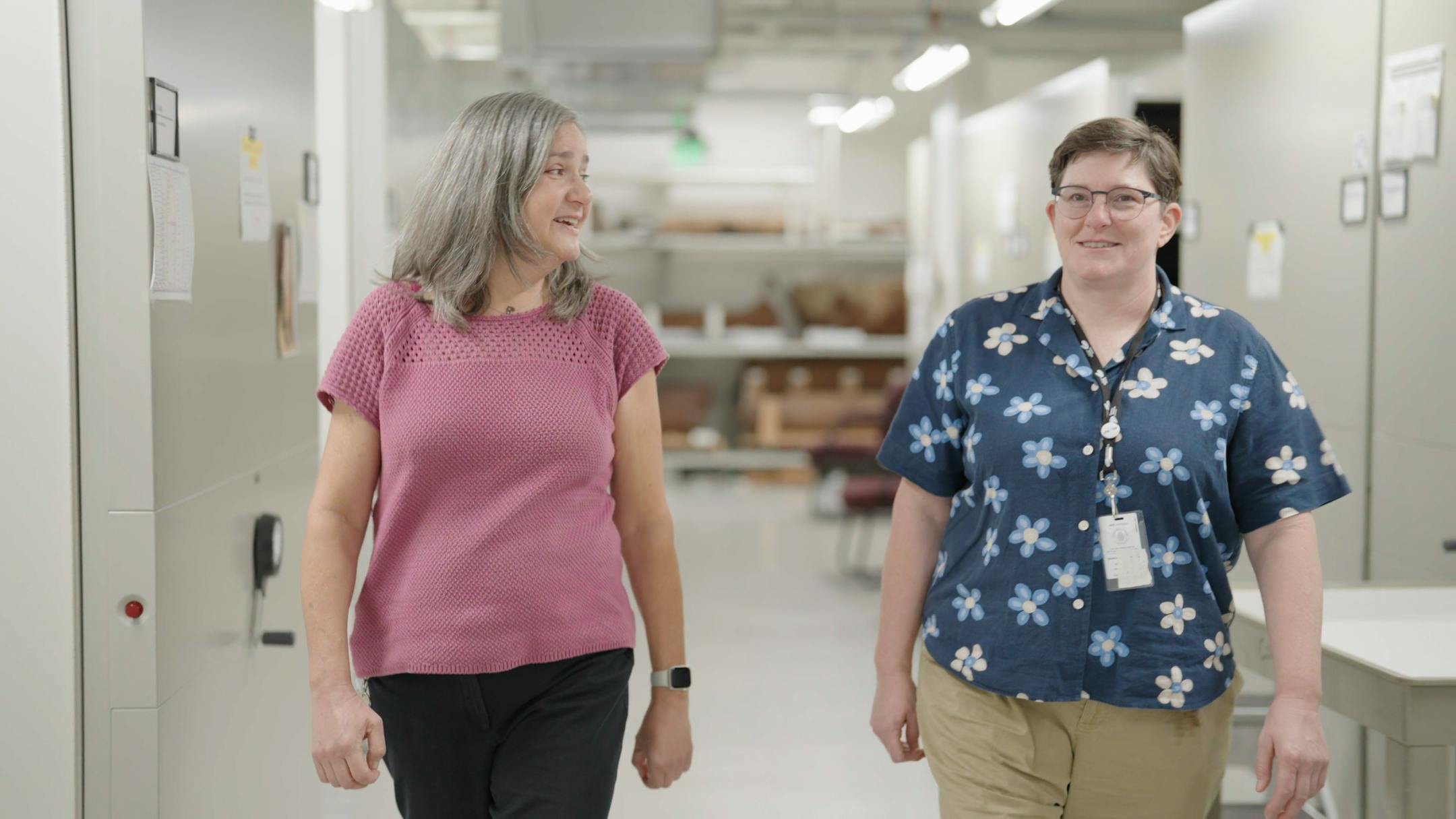
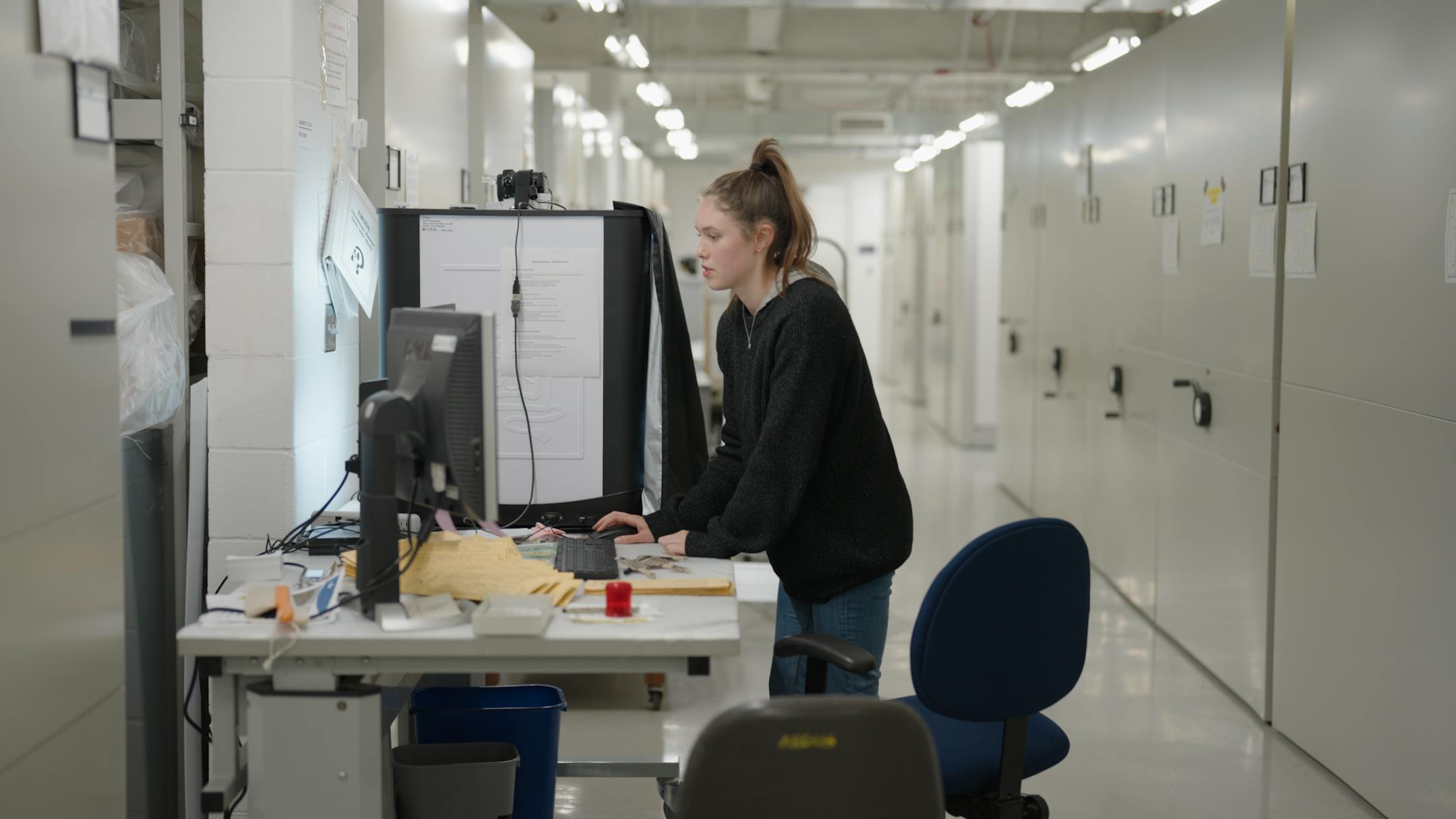
Tucked behind the museum galleries sits a large, climate-controlled collections facility. With over 2 million items spanning Earth’s history, the collections hold questions (and answers) about the past and present in Minnesota and beyond.
What’s inside the vault
Most items in the collections are kept in a behind-the-scenes storage area lovingly and appropriately nicknamed “the vault.”
Items in the vault can be extremely delicate, like animal skeletons dating back millions of years and artifacts from ancient civilizations.
These items require proper care and conditions to ensure they’ll be available for scientists to study for years to come. That means keeping the vault at a precise temperature and humidity level.
“We really don’t know what the questions of tomorrow will be or what the technologies will be,” said Dr. Laurie Fink, senior director for the museum’s Center for Research and Collections. “So it’s important that we can keep these items forever.”