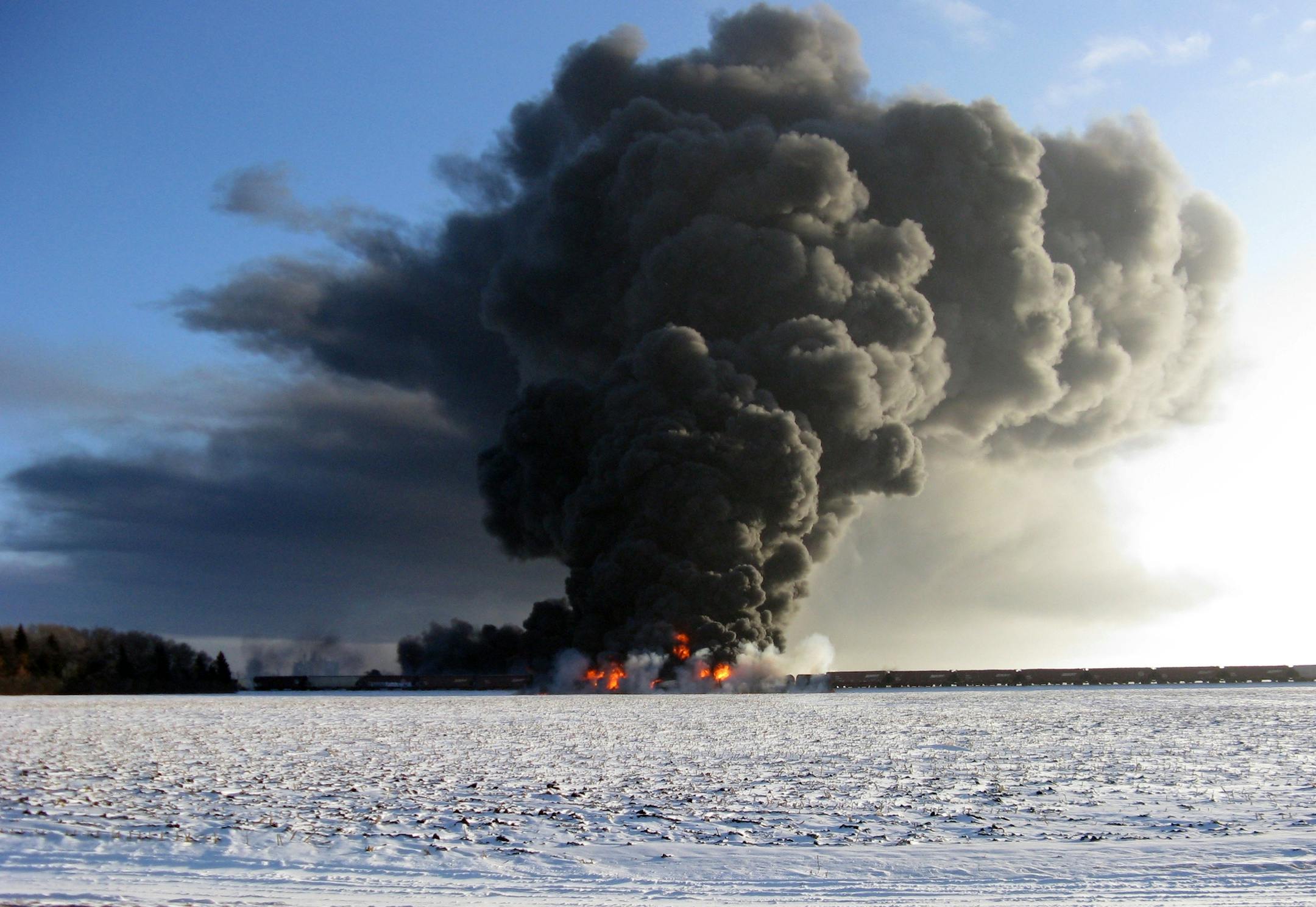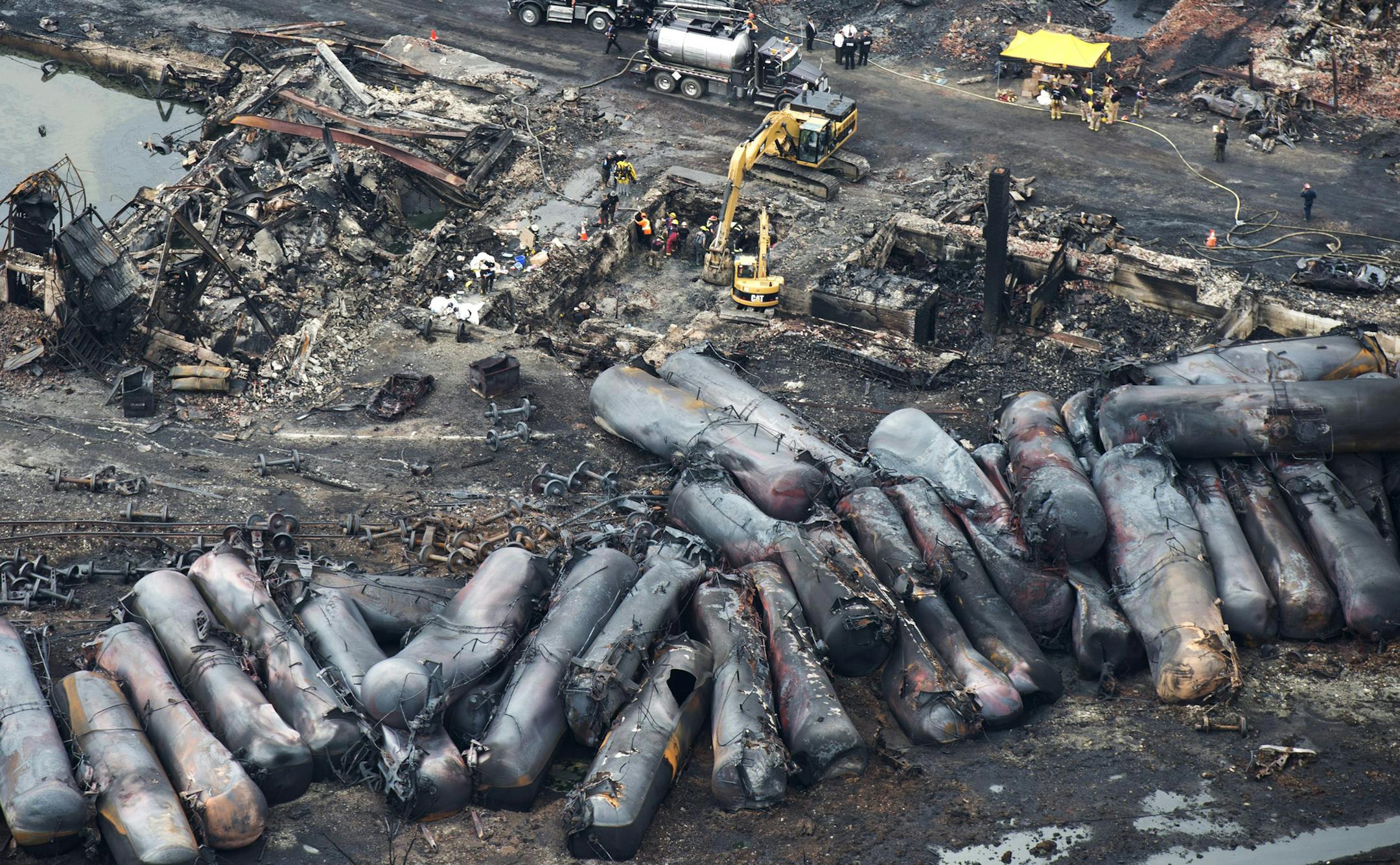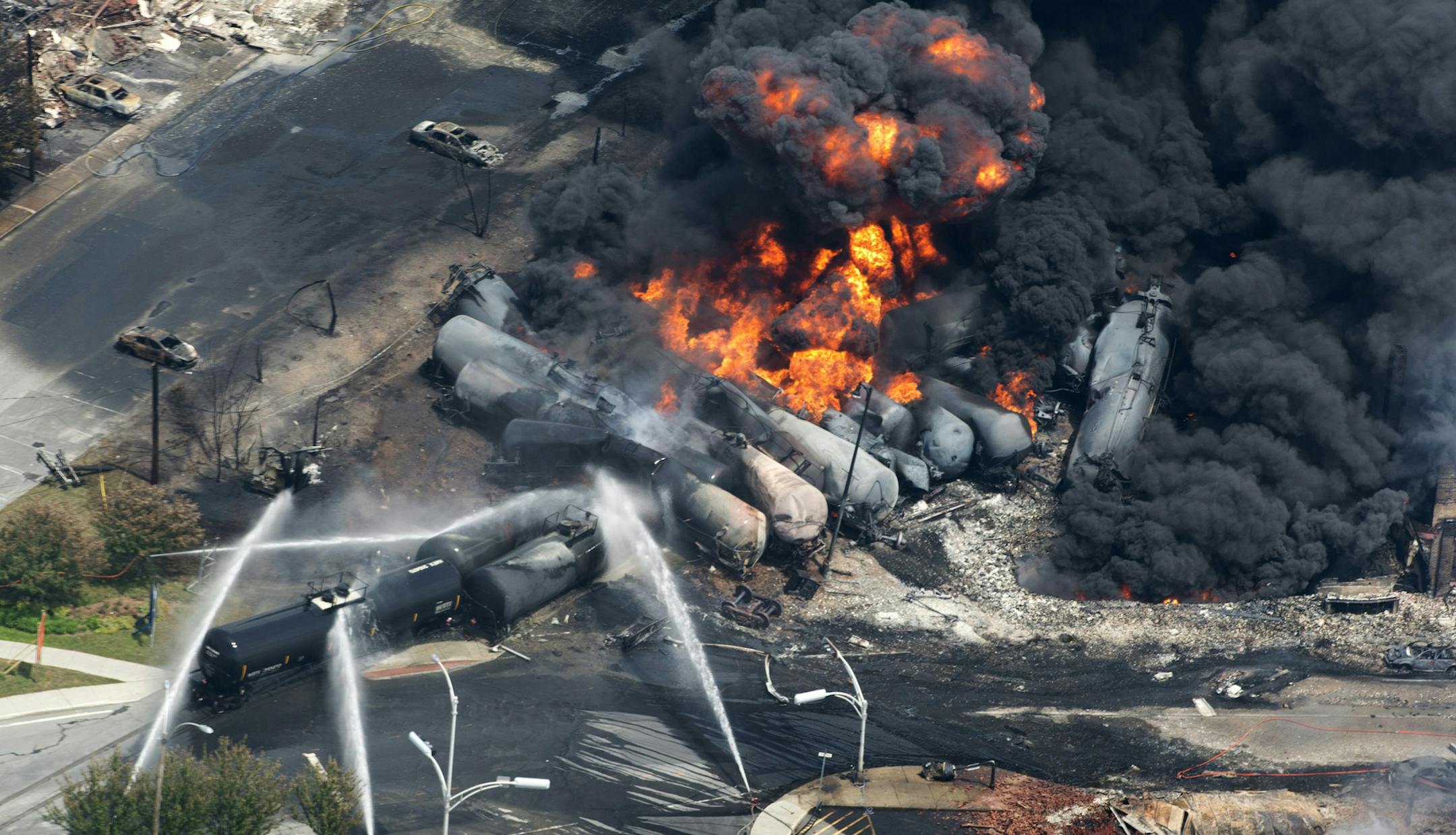
Oil train explosions like the one last week near Casselton, N.D., have revived long-standing worries that older railroad tank cars need to be strengthened to better withstand accidents.
Three disasters in the past six months in the United States and Canada have demonstrated the risks of carrying crude oil by rail. Oil tankers now carry more than 10 percent of U.S. oil, up 40-fold in five years, according to the Association of American Railroads.
"There is an increased interest … to look at tank cars and whether we can do more to remove the risk," said Thomas Simpson, president of the Railway Supply Institute, a trade group for tank car builders and owners.
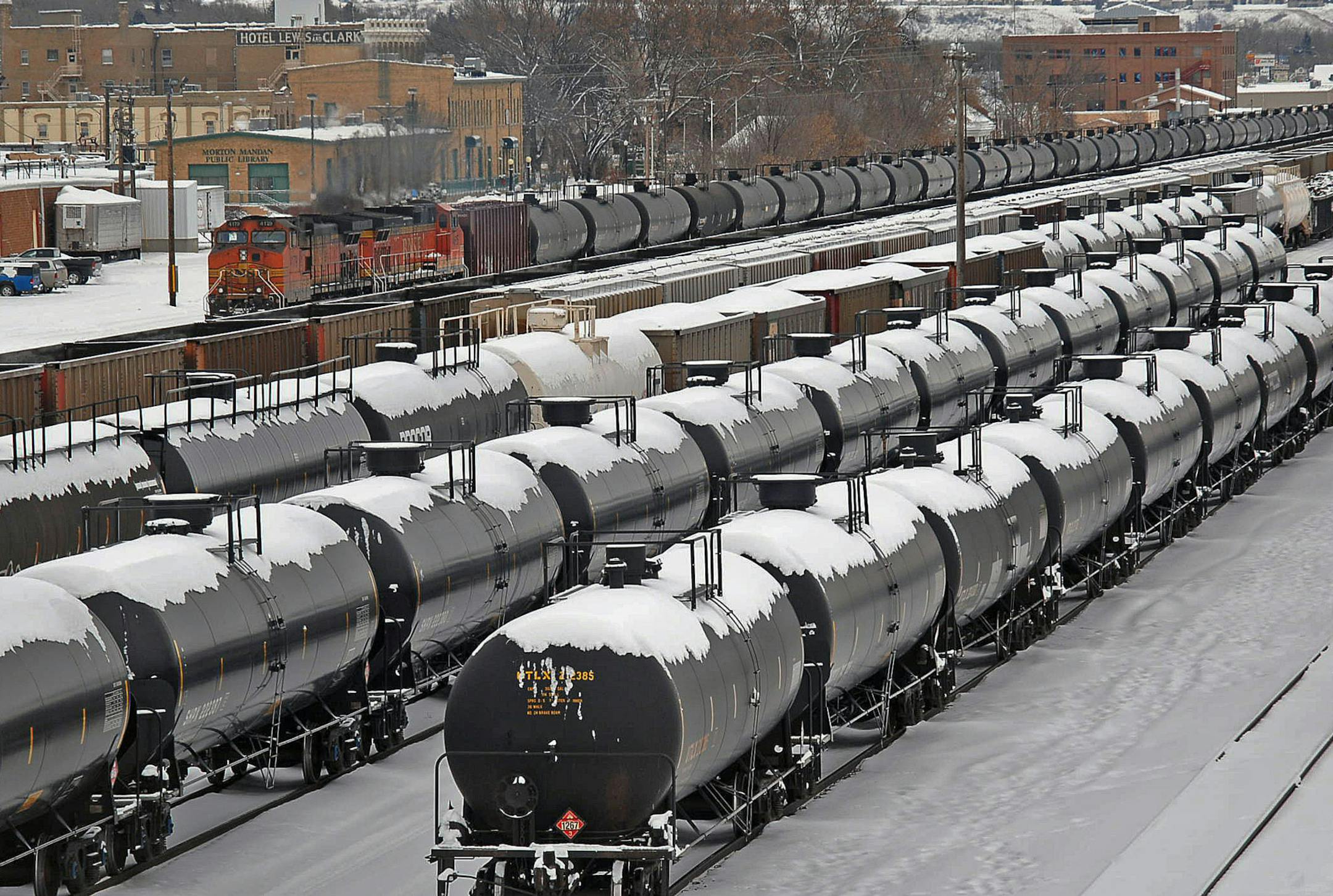
North Dakota, lacking sufficient pipelines, sends more than two-thirds of the crude from its Bakken oil region down the tracks, typically on 100-car-long trains. Many travel on BNSF Railway Co. and Canadian Pacific tracks through Minnesota, including the Twin Cities. Minnesota's 20 ethanol plants also rely heavily on tank cars because current pipelines are unsuitable for that fuel.
Yet most of the nation's 94,000 rail tankers carrying oil, ethanol and other flammable liquids don't meet puncture-resistance and other standards that apply to new tank cars. Rail car and shipping industry officials say it could take a decade and cost billions to retrofit up to 65,000 older tankers that carry flammable liquids.
Federal regulators are now considering whether to require it.
"It is a challenge, but it is doable," said Larry Mann, a Washington, D.C.-based rail safety attorney.
In 2011, railroads and shippers voluntarily established tougher standards for new tank cars, and more than 14,000 of them are on the rails today. That's about 15 percent of the tankers carrying oil, ethanol and other flammable liquids. Most of the remainder are older models with a record of tank failures in accidents since 1991, according to the National Transportation Safety Board (NTSB).