

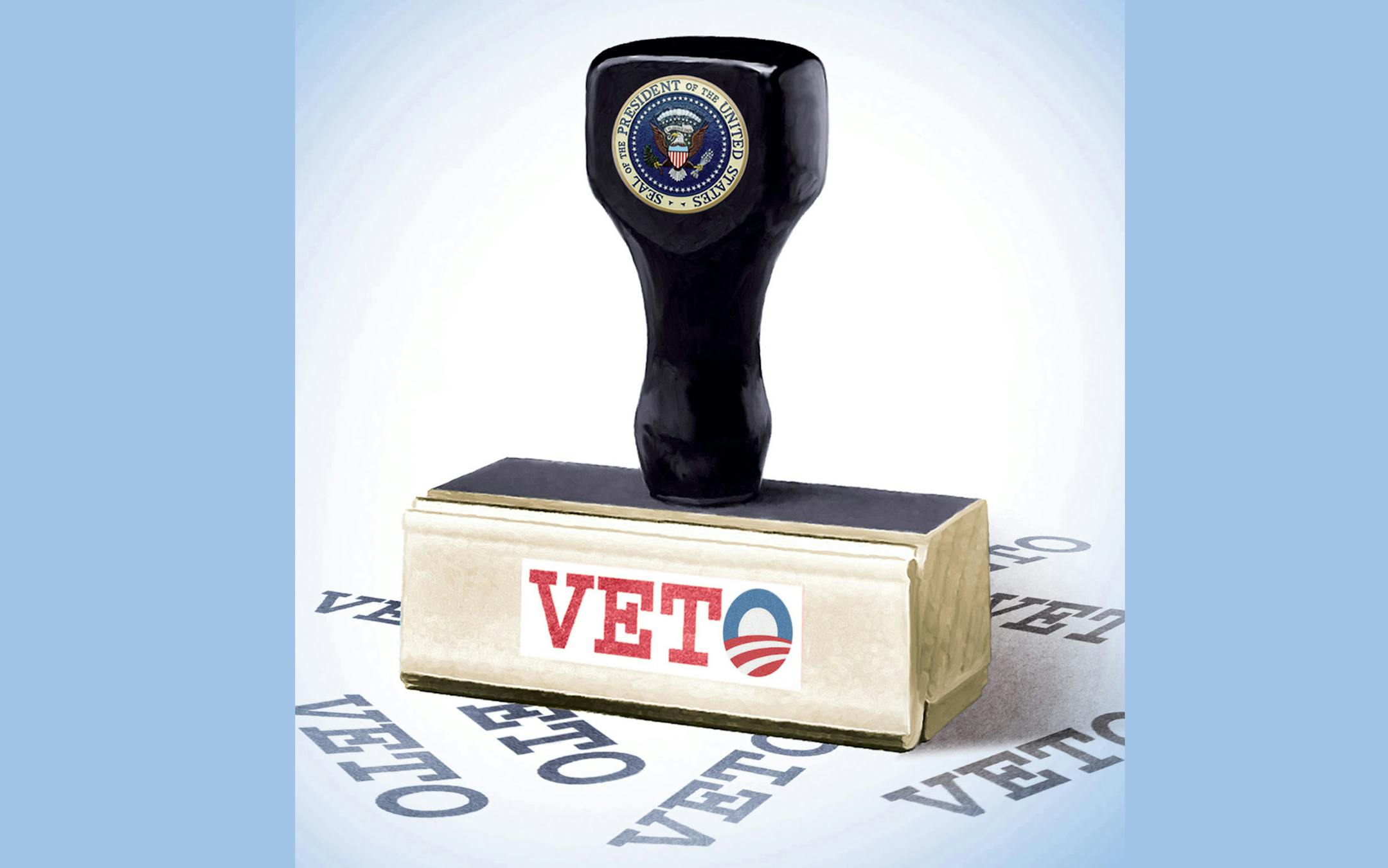
Congress' expected final passage of the controversial Keystone XL pipeline bill sets up the first square veto confrontation between President Obama and the new Republican-controlled Congress, marking the first time in his presidency when significant measures he opposes are likely to land on his desk instead of dying in the formerly Democratic-controlled Senate.
Even with the help of Democratic-led filibusters in the Senate, this will probably be the first of many such confrontations, marking a significant change in Obama's legislative strategy. After all, in his first six years, Obama vetoed only two bills, both relatively minor. Now, however, he faces the prospect of acquiring the moniker "President No," given a Congress under full control by the opposing party. How will this change in strategy bode for his presidency and his legacy?
The answer proves to be more complicated than punditry suggests.
Today, the presidential veto is viewed as simply granting the power to say "no." But the founding fathers knew better. To them, the presidential veto was the "revisionary power." Early drafts of the Constitution referenced "revision" in describing the veto process, but the phrasing wasn't in the document's final version. James Madison referred to the veto and Congress' subsequent consideration as "separate revision." To them, the veto was more than the power to say "no" — it was a final chance for constructive improvement of legislation by both branches.
Americans want their presidents to be leaders, even when they disagree with the paths the presidents are taking. Presidents can use the veto power prolifically and effectively. Historically, presidential vetoes are sustained — that is, not overridden by Congress — about 93 percent of the time; for major legislation, more than 80 percent of vetoes stick.
The most prolific user of the veto by total numbers was Franklin D. Roosevelt. The key to his success? He continued to advance a positive agenda, even as he ginned up political veto melodrama, as in 1935 when he announced with great fanfare that he would deliver his veto of a veterans' bonus bill personally to a joint session of Congress. He also read his veto message on national radio.
However, a veto strategy can either fortify or cripple a presidency. Presidents cannot govern effectively by veto alone. Those who have tried, from Andrew Johnson to Gerald Ford, have fared poorly, garnering both congressional ire and the country's scorn, precisely because they advanced no positive policy alternatives. In Ford's case, his 66 vetoes were his main legislative accomplishment; his rapid ascension to the presidency provided no opportunity to formulate his own agenda. As one Ford aide said, his many vetoes "eroded the president's already limited base of support."
In Obama's case, his opposition to Keystone stands athwart both public approval and bipartisan congressional support, seeming to presage Obama's first step down the road to President No. Yet Obama's State of the Union address, with its multiple veto threats, suggests a different path.


