
Nurse practitioners step in as geriatrician ranks shrink

Few young doctors are joining the field of caring for elders, but the number of nurse practitioners specializing in geriatrics is growing.

KFF Health News
August 3, 2025 at 5:30PM
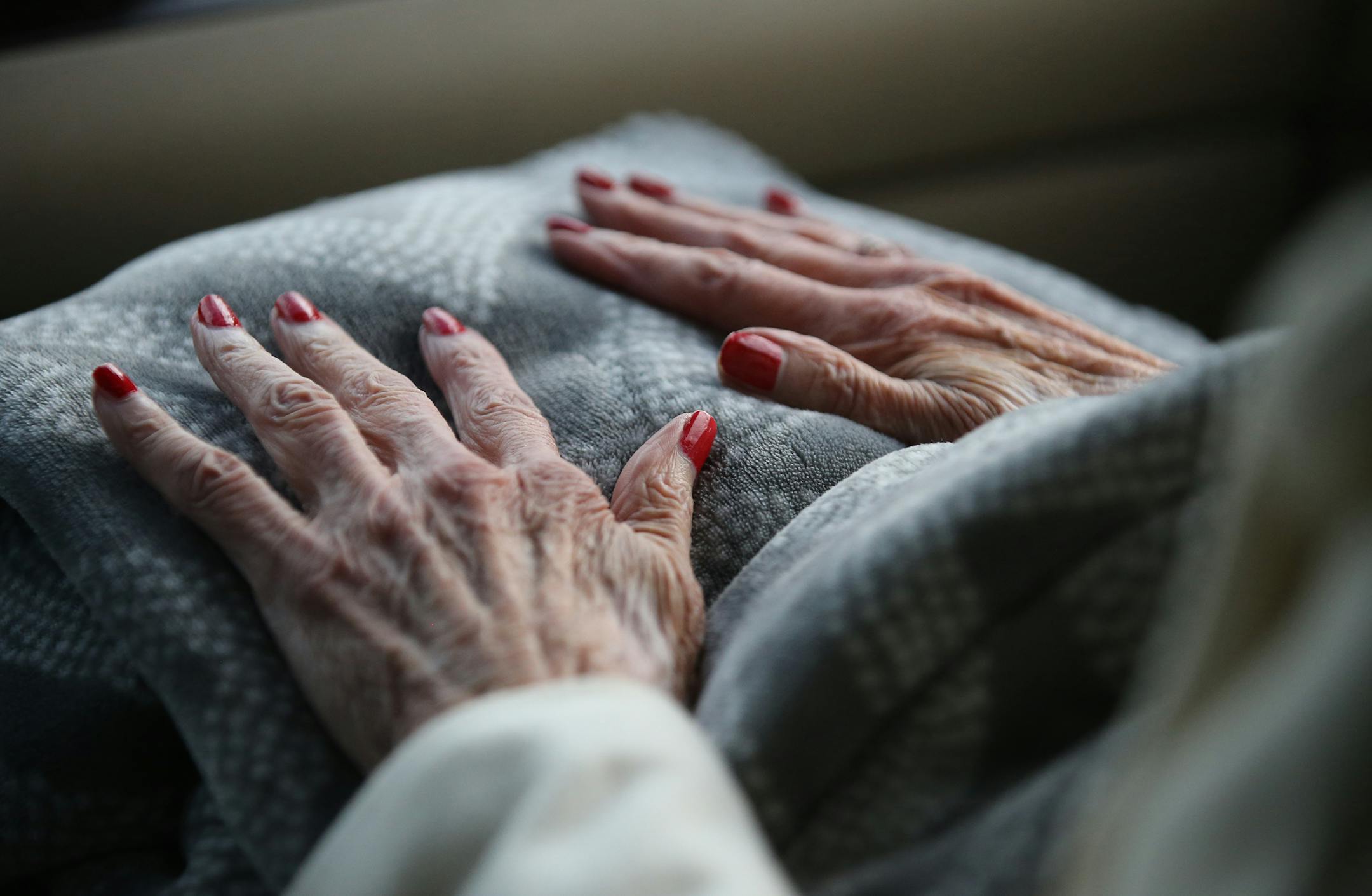
Alice Tolzmann's nails are freshly painted as she rides with her daughter Elizabeth Radichel to watch her grand daughter Christina Radichel in a tennis match Thursday, Sept. 29, 2017, in Golden Valley, MN.
Nurse practitioners are increasingly filling a gap that is expected to widen as the senior population explodes nationwide. (David Joles/The Minnesota Star Tribune)

On Fridays, Stephanie Johnson has a busy schedule, driving her navy blue Jeep from one patient’s home to the next, seeing eight people in all. Pregnant with her second child, she schleps a backpack instead of a traditional black bag to carry a laptop and essential medical supplies — stethoscope, blood pressure cuff and pulse oximeter.

Forget a lunch break — Johnson, a nurse practitioner who treats older adults, often eats a sandwich or some nuts as she heads to her next patient visit. “Our patient isn’t just the older adult,” Johnson said. “It’s also often the family member or the person helping to manage them.”

Johnson isn’t alone. Today, nurse practitioners are increasingly filling a gap that is expected to widen as the senior population explodes and the number of geriatricians declines.

The Health Resources and Services Administration projects a 50% increase in demand for geriatricians from 2018 to 2030, when the entire baby boom generation will be older than 65. By then, hundreds of geriatricians are expected to retire or leave the specialty, reducing their number to fewer than 7,600, with relatively few young doctors joining the field.

That means many older adults will be relying on other primary care physicians, who already can’t keep up with demand, and nurse practitioners, whose ranks are booming. The number of nurse practitioners specializing in geriatrics has more than tripled since 2010, increasing the availability of care to the current population of seniors, a recent study in JAMA Network Open found.

According to a 2024 survey, of the roughly 431,000 licensed nurse practitioners, 15% are, like Johnson, certified to treat older adults.

Johnson and her husband, Dustin, operate a nurse practitioner-led private practice in greater Seattle, in a state where she can practice independently. She and her team, which includes five additional nurse practitioners, each try to see about 10 patients a day, visiting each one every five to six weeks. Visits typically last 30 minutes to an hour.

“There are so many housebound older adults, and we’re barely reaching them,” Johnson said. “For those still in their private homes, there’s such a huge need.”

Laura Wagner, a professor of nursing and community health systems at the University of California at San Francisco, said nurse practitioners are not trying to replace doctors. Instead, they’re trying to meet patients’ needs, wherever they may be.

“One of the things I’m most proud of is the role of nurse practitioners,” Wagner said. “We step into places where other providers may not, and geriatrics is a prime example of that.”

Practice limits

Nurse practitioners are registered nurses with advanced training that enables them to diagnose diseases, analyze diagnostic tests and prescribe medicine. Their growth has bolstered primary care, and, like doctors, they can specialize in particular branches of medicine. Johnson, for example, has advanced training in gerontology.

“If we have a geriatrician shortage, then hiring more nurse practitioners trained in geriatrics is an ideal solution,” Wagner said, “but there are a lot of barriers in place.”

In 27 states, including Minnesota, and Washington, D.C., nurse practitioners can practice independently. But in other states, they need to have a collaborative agreement with or be under the supervision of another health care provider to see older adults. Medicare generally reimburses for nurse practitioner services at 85% of the amount it pays physicians.

Last year, in more than 40 states, the American Medical Association and its partners lobbied against what they see as “scope creep” in the expanded roles of nurse practitioners and other health workers. The AMA noted that doctors must have more schooling and significantly more clinical experience than nurse practitioners.

While the AMA says physician-led teams keep costs lower, a study published in 2020 in Health Services Research found similar patient outcomes and lower costs for nurse practitioner patients. Other studies, including one published in 2023 in the journal Medical Care Research and Review, have found health care models including nurse practitioners had better outcomes for patients with multiple chronic conditions than teams without a nurse practitioner.

Care coordination will become even more critical as Americans age. Today, about 18% of the U.S. population is 65 or older. In the next 30 years, the share of seniors is expected to reach 23%, as medical and technological advances enable people to live longer.

Patient and family

On a gloomy Friday in January, Johnson had a hospice consult with a patient in her 90s in declining health.

The patient had been diagnosed with vascular dementia, peripheral vascular disease and Type 2 diabetes. Last fall, doctors made the difficult decision to operate on her foot. Lately, the woman’s enthusiasm for meals and socializing had waned.

Johnson got down to eye level with her patient to examine her, assessing her joints and range of motion, checking her blood pressure and listening to her heart and lungs.

Carefully, Johnson removed the bandage to examine the woman’s toes. Her lower legs were red but cold to the touch, which indicated her condition wasn’t improving. Now, Johnson thought it was time to have a difficult conversation with the woman’s sisters — who had power of attorney for her — about the elderly woman’s prognosis and to recommend her for hospice.

After the exam, Johnson called the woman’s younger sister, Margaret Watt, to recommend that her sister enter hospice care. Johnson said the older woman had developed pneumonia and her body wasn’t coping.

Watt appreciated that Johnson had kept the family apprised of her sister’s condition for several years, saying she was a good communicator.

“She was accurate,” Watt said. “What she said would happen, happened.”

A month after the consult, the woman died peacefully in her sleep.

“I do feel sadness,” Johnson said, “but there’s also a sense of relief that I’ve been with her through her suffering to try to alleviate it, and I’ve helped her meet her and her family’s priorities in that time.”

KFF Health News is a national newsroom that produces in-depth journalism about health issues.

about the writer

about the writer

Jariel Arvin

More from The Good Life

See More
card image
Scott McIntyre/The New York Times

WalletHub study puts Midwestern states in the top 5 based on health, safety, cost of living.

card image
FILE - This Wednesday, May 30, 2007, file photo shows a cable box on top of a television in Philadelphia. Cable boxes may not be very exciting, but theyíre emerging as a new battleground over the future of TV. Technology companies and the government want to open up the boxes to new services and programming. Cable companies want to keep control in their own hands. The outcome could affect what you pay for television and whether youíll still need to clutter your entertainment center with