

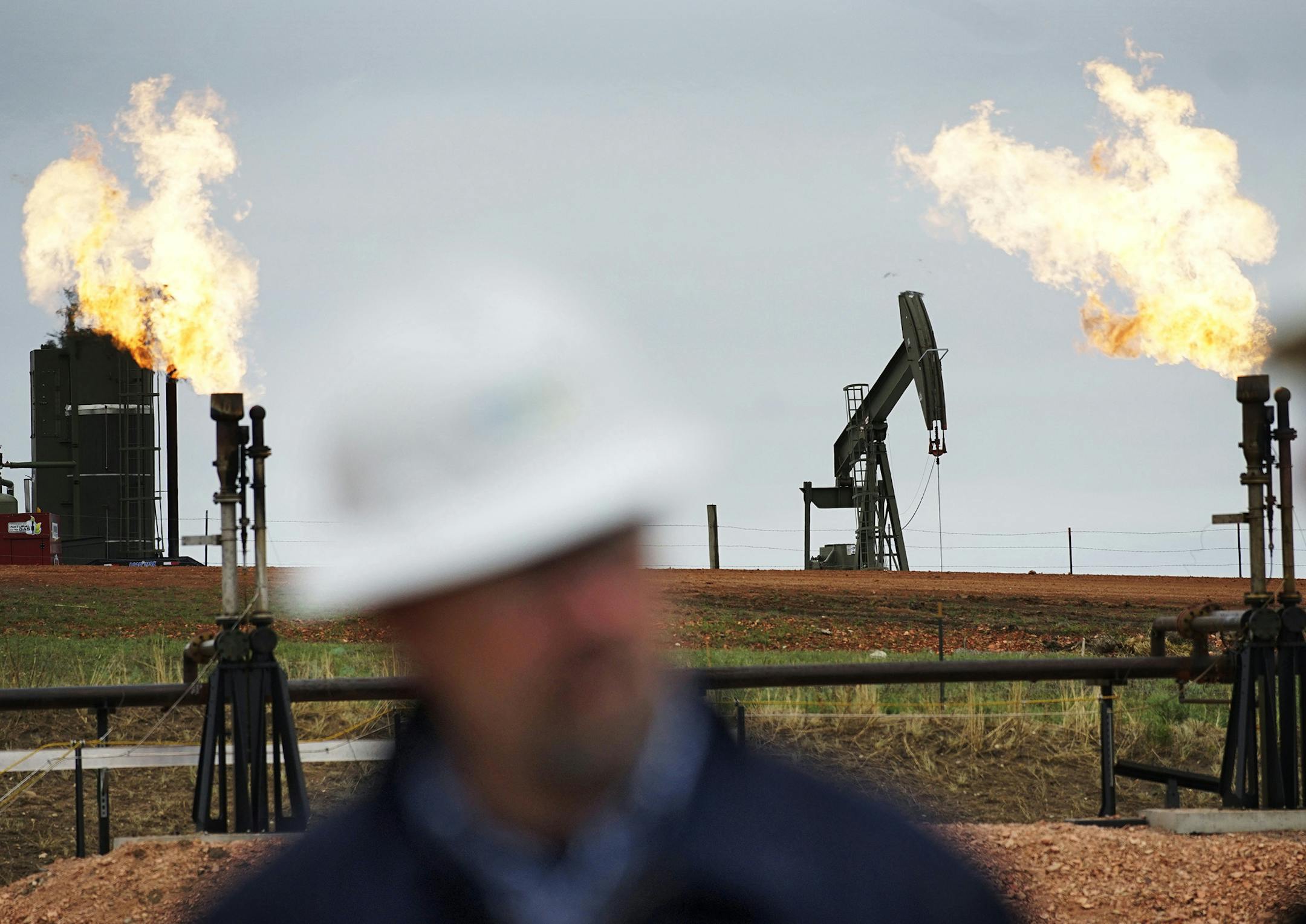
North Dakota's oil production was down a tad in January, but was better than anticipated and the state's top oil official remains optimistic for 2018.
North Dakota, the nation's second-largest oil-producing state, pumped out 1.18 million barrels per day in January, down less than 1 percent from the previous month, according to data released Tuesday by the North Dakota Department of Mineral Resources.
"There was not a lot of change, but we expected a much bigger production drop than we saw," said Lynn Helms, director of North Dakota's Department of Mineral Resources.
A power outage early in January was expected to lower production from conventional oil wells in North Dakota, and it did: 70 wells went offline, Helms told reporters on a conference call. However, production from fracked wells was higher than anticipated.
Conventional wells, which use more electricity, make up about 13 percent of North Dakota's producing oil wells. Fracking — which involves horizontal drilling and big blasts of water, sand and chemicals — comprises the bulk of production.
The number of drilling rigs in North Dakota continues to rise this winter, an indication that operators are creating new oil wells. Currently, there are 59 rigs in North Dakota, up from 57 in February and 52 in December.
Helms reiterated Tuesday that he expects North Dakota to hit an oil-production record by midyear, surpassing the current peak of 1.23 million barrels per day in December 2014. By the end of 2018, North Dakota should hit 1.3 million barrels per day, he said.
The upgrade in the oil industry's health over the past year has come as oil prices have risen. West Texas Intermediate, used as the pricing benchmark for U.S. crude oil, is currently trading at just over $60 a barrel. WTI has traded at over $60 per barrel since the beginning of the year, hitting a high of around $65 in early February.



