

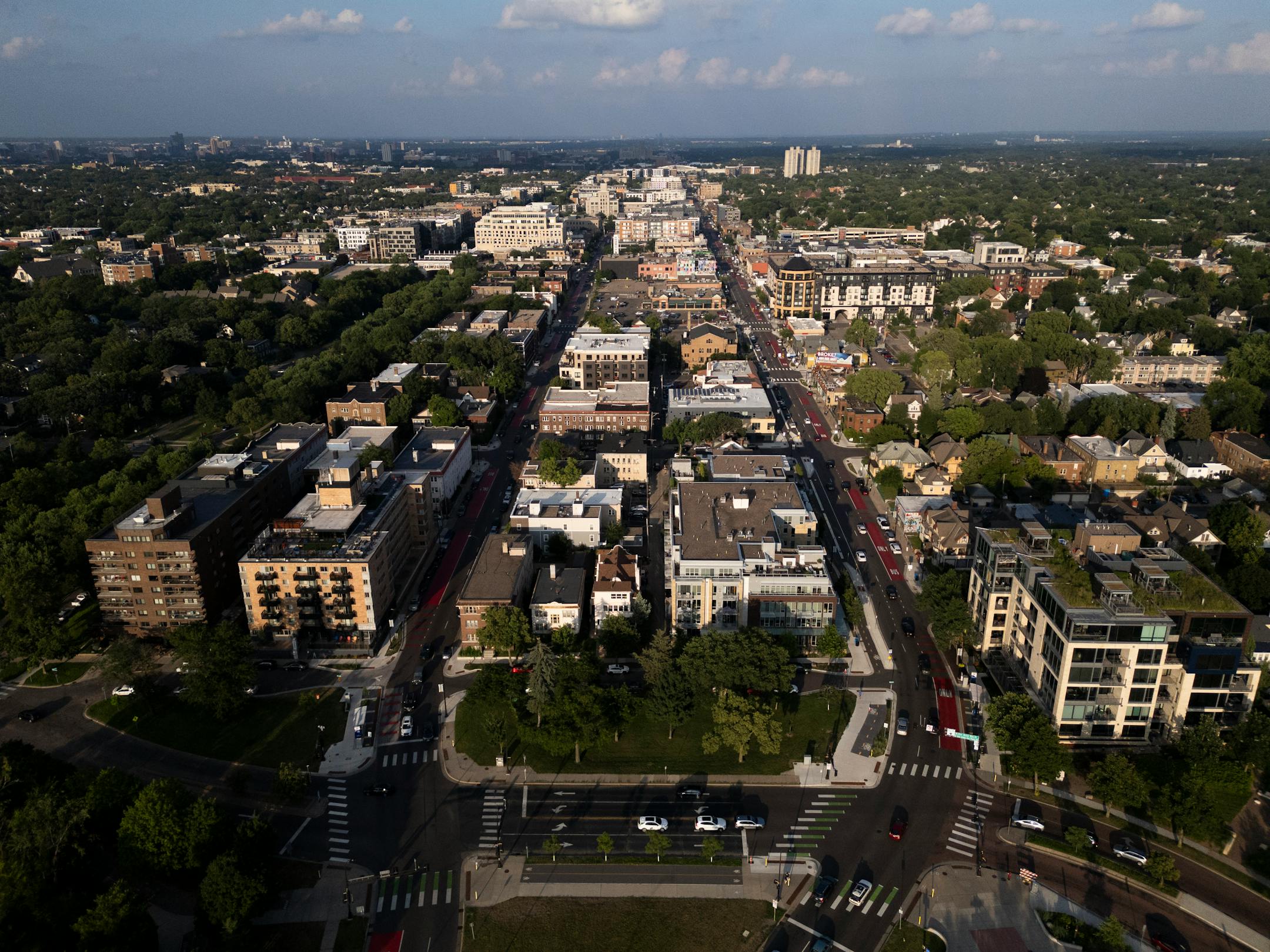
Uptown, Minneapolis. The oft-debated area at Hennepin Avenue and W. Lake Street popularized by Prince is known for shops, nightlife and its proximity to the Chain of Lakes.
The area has also been the focus of an endless amount of hand-wringing about its evolution over the years. From local residents to visitors, everyone has an opinion on what the future could hold for a part of Minneapolis that has faced recent safety and livability concerns, as well as disruptive, but needed, construction.
Uptown business owners seem to recognize that the neighborhood needs more revitalization. They’re hoping that a new business improvement district and other initiatives like rent breaks could help attract 30 to 40 additional businesses to the commercial area.
But where is Uptown, anyway? Where exactly is everyone talking about when they speak of the area’s challenges and potential? And does it include Lyn-Lake or areas farther north or south of Hennepin Avenue and W. Lake Street?
Asking Minneapolitans to define Uptown can elicit a wide variety of opinions. To some, Uptown, Lyn-Lake and surrounding areas are basically the same. Others see them as distinct commercial zones.
The city of Minneapolis maintains no adopted policy that defines the area of Uptown. In 1958, the City Comprehensive Plan established communities and neighborhoods as sub-areas for planning purposes.
Uptown was not defined as an official neighborhood as part of that process, according to a city spokesperson.
Without an official voice, it’s easy for the definition to shift based on the need for motive or marketing. You’ll find business names referencing “Uptown” across south Minneapolis, even in areas distinctly claimed as Lyn-Lake or on the other side of the Chain of Lakes.


