
Opinion | Military’s new shaving rule punishes men like me

Men across the nation are growing mustaches or beards for Movember. Meanwhile, a health issue becomes a barrier to service and equality.

November 19, 2025 at 6:50PM
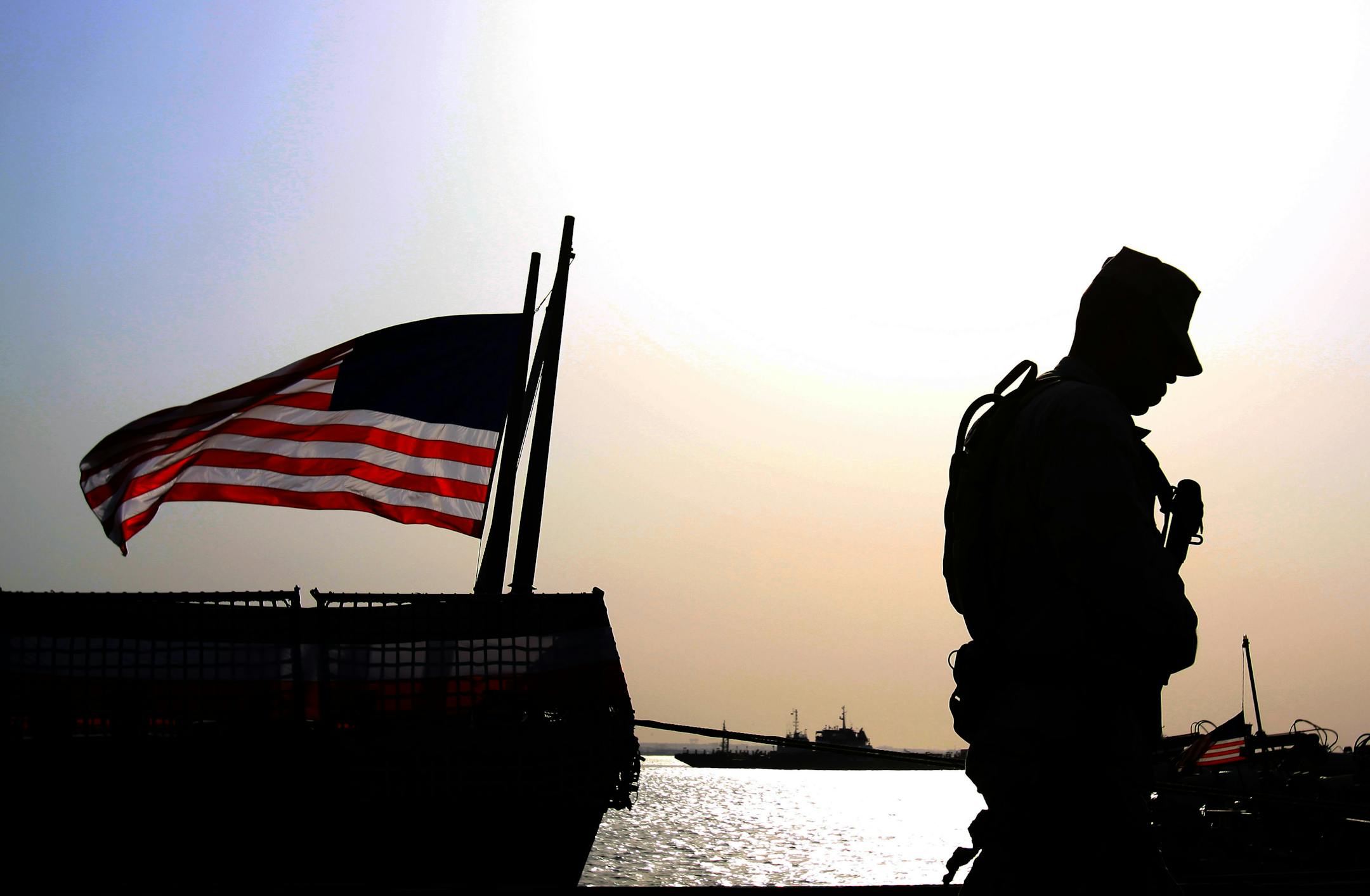
The government's policy change regarding shaving is a method of policing who belongs, Dudley Deshommes writes. "Let’s really call it what it is: It’s systemic discrimination dressed in a grooming policy." (Hasan Jamali/The Associated Press)

Opinion editor’s note: Strib Voices publishes a mix of guest commentaries online and in print each day. To contribute, click here.

•••

I grew up dreading the feel of a razor. While society made shaving look like a rite of passage, I soon learned as a young Black teen that it was problematic. The moment the blade glided across my face, my skin retaliated. Shaving for me meant painful, ingrown hairs that burrowed deep under the surface. It meant countless moments of having to pull long curled hairs out of my skin with tweezers, only to leave me scarred, irritated and feeling ashamed.

The irritation is a skin condition known medically as pseudofolliculitis barbae, or PFB. You may know it as razor bumps.

PFB overwhelmingly affects Black men and other men with coarse, tightly coiled facial hair. It’s not cosmetic. It’s inflammatory. It scars. It disfigures. And for many of us, it never goes away.

Every November, men grow out their mustaches and beards for “no shave November” or Movember. Movember is a movement that encourages men to put the razor down to raise awareness for men’s health issues, including prostate cancer, testicular cancer and mental health. This November, we should also recognize PFB.

The attention on PFB is even more important this year. In August, the Department of Defense, now renamed the Department of War, issued a new directive that states troops must present a “clean-shaven and neat” appearance. It goes further, saying that any service member with a medical condition like PFB may receive only a temporary exemption that doesn’t exceed one year. After that, the memo directs commanders to begin administrative “separation” if a service member still cannot shave.

As a registered nurse and a Black, Jewish man with PFB, reading those words felt like a punch to the chest.

Service members with PFB have a year to shave without breaking out, or risk losing their careers, their benefits, their housing and education assistance, and everything they’ve worked toward.

Some Jewish and Muslim men, along with others whose faith prohibits shaving, are also now at risk. The rule doesn’t explicitly remove religious accommodations, but these men may one day be forced to choose between their service and their faith practice.

When I was younger, I considered joining the military. But after seeing what daily shaving did to the faces of Black men, I decided against it. I didn’t want a career that required me to injure myself every morning just to meet a standard designed around someone else’s hair texture.

The military eventually came to understand this. Medical waivers recognized that PFB is lifelong, not temporary and not cured by simply “trying harder.” Waivers would allow service members to keep well-groomed beards. It was humane. It was medically sound. It meant service didn’t come at the cost of one’s dignity, skin, race or even religion.

The government’s latest policy change in this area is not a small administrative update. It is a step backward into a past where “uniformity” was used to police who belongs. Let’s really call it what it is: It’s systemic discrimination dressed in a grooming policy.

People will say to some, “Well, if you don’t want to shave, don’t enlist.” But that ignores how military service opens the door to the VA, the GI Bill, home loans, health care and disability benefits. These are lifelines that have historically helped families build generational stability, including lifting many Black families out of poverty.

So, this Movember:

Grow your beard for the men who can’t.

Grow it for the soldier with PFB who risks losing his career.

Grow it for the Jewish and Muslim servicemen who may be asked to shave their identity away.

Grow it because the military should not require men to harm their own skin to prove their loyalty to this country.

Shaving shouldn’t be a barrier to serving. And it should never be a barrier to equality.

Dudley Deshommes is a registered nurse and a member of the Adath’s Antiracism Committee at Adath Jeshurun Congregation in Minnetonka.

about the writer

about the writer

Dudley Deshommes

More from Commentaries

See More
card image
Alex Kormann/The Minnesota Star Tribune

To me, the run of stories in 2025 has an uncomfortably familiar sound, yet each episode has come and gone with barely a flicker of concern.

card image
card image