

There's no shortage of awards and prizes out there for diplomacy, peacemaking and humanitarian achievement. But the one that will be handed out Friday, bestowed by a committee selected by the Norwegian parliament in honor of the man who invented dynamite, is considered the most important and most deserving of media attention.
The Norwegian Nobel Committee has made some bad calls in the past (Yasser Arafat, Henry Kissinger and Teddy Roosevelt come to mind), and little evidence suggests that the prize does anything to promote peace. At its best, though, the Nobel Prize's media spotlight gives the committee the opportunity to highlight important issues: climate change in 2007, women's rights in 2011 and the elimination of chemical weapons last year.
This year the prize committee could best serve its mission by giving the prize to the person who most deserves it: nobody. Such a move would highlight that this has been a particularly violent year around the world. More important, it would serve as an acknowledgment that the most notable eruptions of violence have been so grimly predictable, the result of years of individual and collective failures by governments and international institutions.
While the emergence of the Islamic State in Iraq and the Levant and the disintegration of Iraq and Syria have taken place at alarming speed, these were less sudden explosions than the climaxes of crises that have been worsening for years. There's a lot of blame to go around here, to the governments involved and those that intervened from the outside. But it shouldn't be surprising that an unchecked civil war in Syria and years of shortsighted sectarian governance in Iraq would lead to a situation like this.
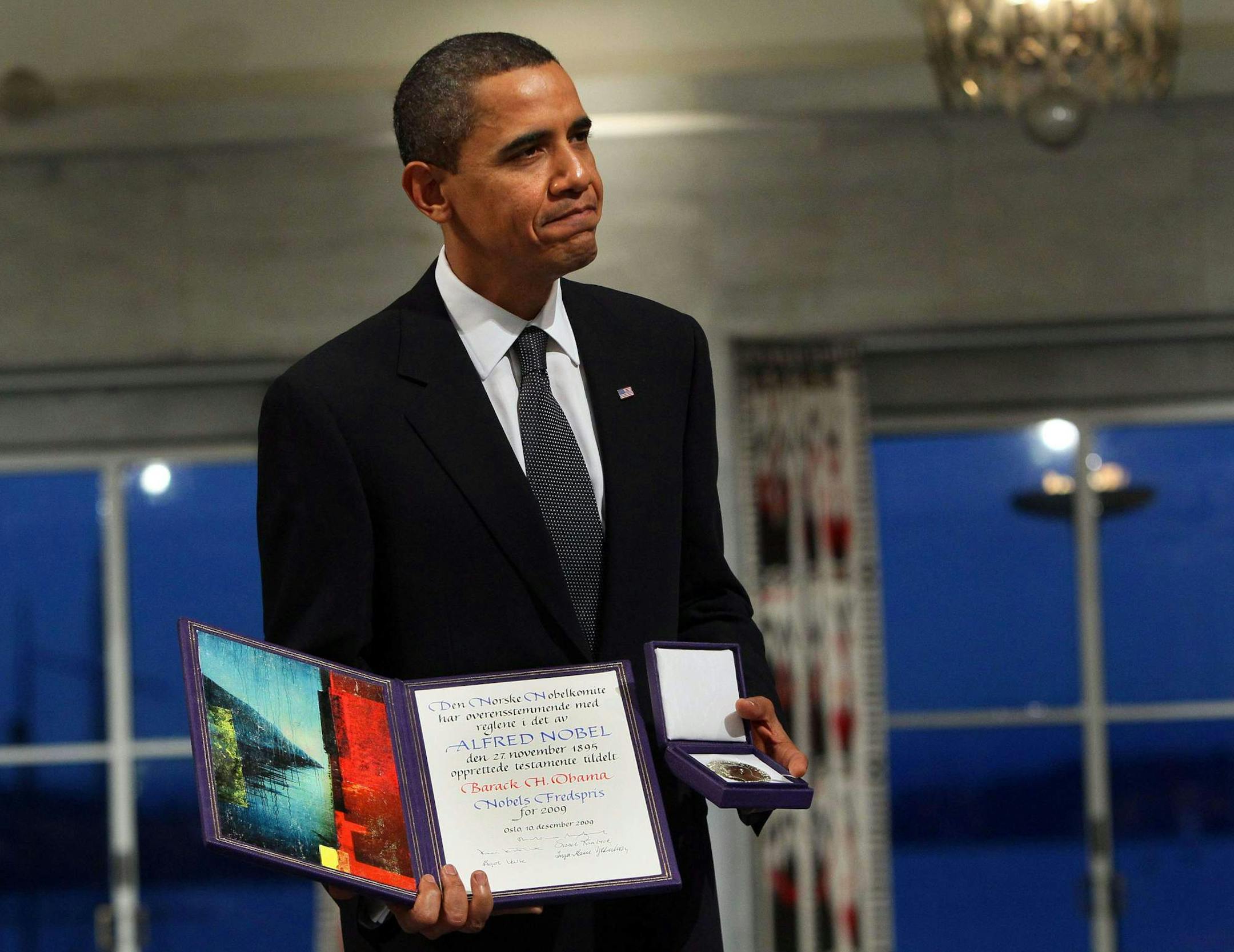
The United States, and former Nobel Peace Prize winner Barack Obama, will not win any awards for peace promotion this year. In 2009, President Obama raised eyebrows in Oslo by using his Nobel acceptance speech to make the argument that there are times when the use of force by governments in the name of preserving overall peace and stability is "not only necessary but morally justified." Five years later it's harder to make the case that the world has become more peaceful as a result of the judicious deployment of American violence. A global drone war may have decimated Al-Qaida, but its local franchises and splinter groups are as potent as ever. NATO air power ousted a tyrant in Libya but left a chaotic power vacuum in his place.
The breakup of the Soviet Union is justifiably seen today as a major advance for the cause of peace and human freedom. Mikhail Gorbachev deservedly received the Peace Prize during the final days of the Soviet empire in 1990. But this year's crisis in Ukraine showed that everything is not hunky-dory in the former USSR. For the first time in decades, a European border was redrawn by force, and the international community was exposed as utterly unable to stop it from happening. Ukraine has been invaded by Russia without Moscow admitting anything of the sort, though Ukraine's own government doesn't have entirely clean hands, either.
More than 2,000 people, most of them civilians, died in Gaza and Israel over the summer, the latest in a recurring cycle of violence in which both sides seem increasingly indifferent to casualties and fail to recognize their own long-term interests. (Nobel Prizes have been awarded for that peace process, too.)
This was the year that the international media finally, if briefly, started paying attention to Boko Haram's campaign of terror in northern Nigeria. (Nigeria led the world in terrorism fatalities in the first half of 2014.) But that conflict's been developing for a long while as well. The world's newest country, South Sudan — a darling of the international aid community, not to mention George Clooney — also collapsed into a civil war that seemed inevitable since its founding.


