

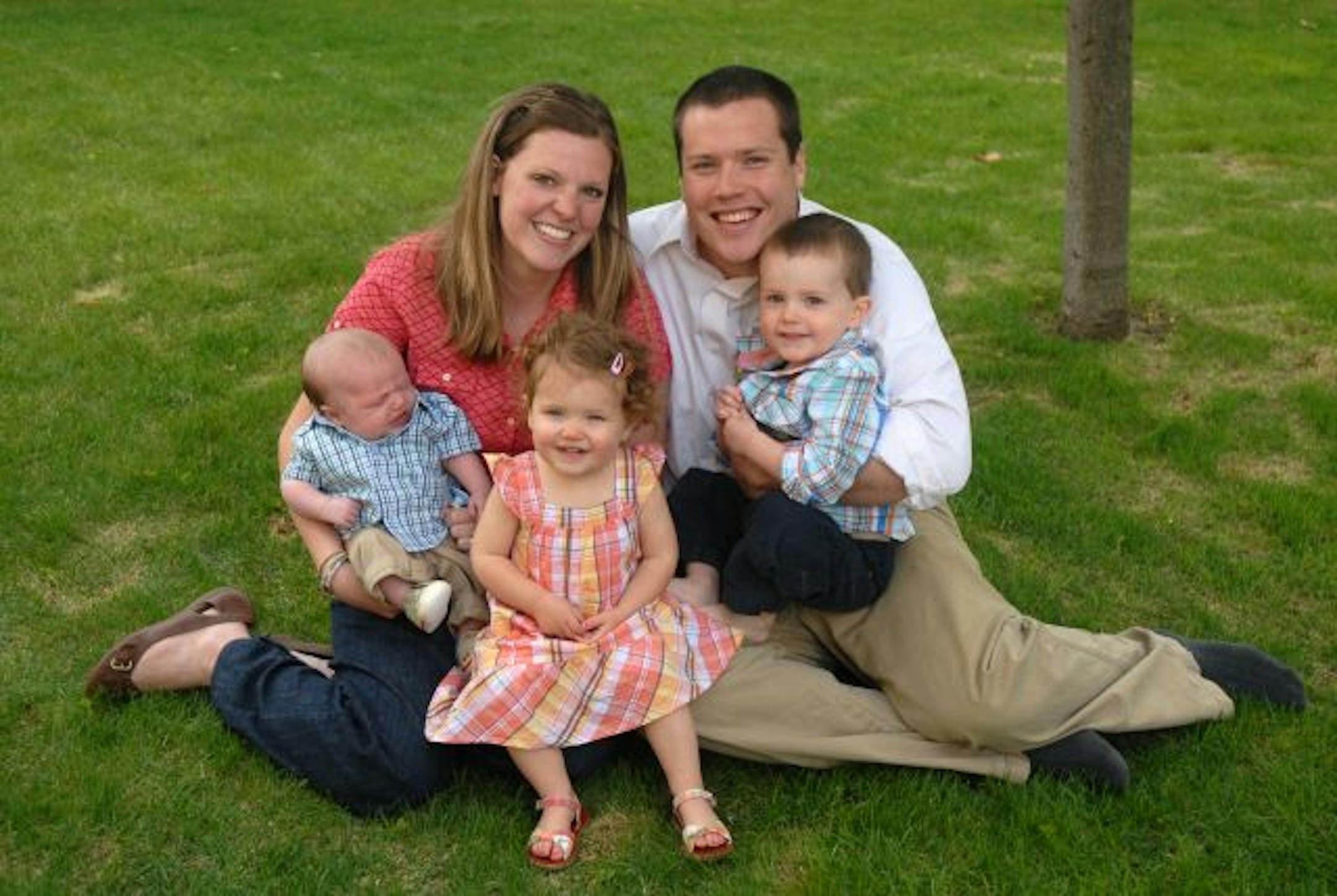
It's not that Andrew and Claire Langseth didn't want to buy life insurance. What parents wouldn't want to protect their children in case the unthinkable happened? But they started their family when Andrew was in college.
"We didn't really have a steady income. [Life insurance] wasn't something we were going to add to our financial commitments," Andrew, 26, said. Today, for the associate pastor from Stewartville, Minn., with four young kids, the money for life insurance still isn't there.
The economic downturn pushed life insurance down the list of financial priorities for many American families. Ownership of individual life insurance has hit a 50-year low, according to a 2010 study by Limra, an insurance industry-funded research group based in Windsor, Conn. Today, nearly a third of U.S. households, nearly 35 million, have no life insurance.
Sadly, 11 million of those households have minor children. Four in 10 of those families with kids say they'd immediately have trouble paying the bills if the primary breadwinner died. Another three in 10 said trouble would set in after several months.
You can't fault a family for forgoing insurance when living on unemployment or struggling to pay the mortgage. My issue is with the perception that life insurance is unaffordable. A healthy young parent can buy a term insurance policy for the cost of a couple of pizzas per month.
A $250,000, 10-year term policy for a non-smoking, healthy, 35-year-old male would cost about $140 per year, according to figures provided by Jeff Tegeler, a part owner of Garrity, Tegeler and Varley Wealth Strategies in Minneapolis. For $350, that father could buy $1 million of coverage -- less than the cost of a year's worth of cable TV. Put in those terms, can you honestly say you can't afford life insurance? Of course, cable is more fun than life insurance, but I've heard the stories of too many young widows to subscribe to the philosophy that "it can't happen to me." The prices for women tend to be slightly less. Term insurance offers protection for a set period of time. Twenty- and 30-year term policies, which make sense if your children are younger, cost more. Whole life insurance has cash value and is designed to last for life.
What to buy
Some cash-strapped families may like the sound of whole life insurance because it has an investment component and policyholders can borrow against the cash value of the policy if needed.



