
No justice for U.S. female farm workers

U.S. agriculture employs 560,000 women on U.S. farms. Crimes against them get little attention.

July 22, 2013 at 6:05PM
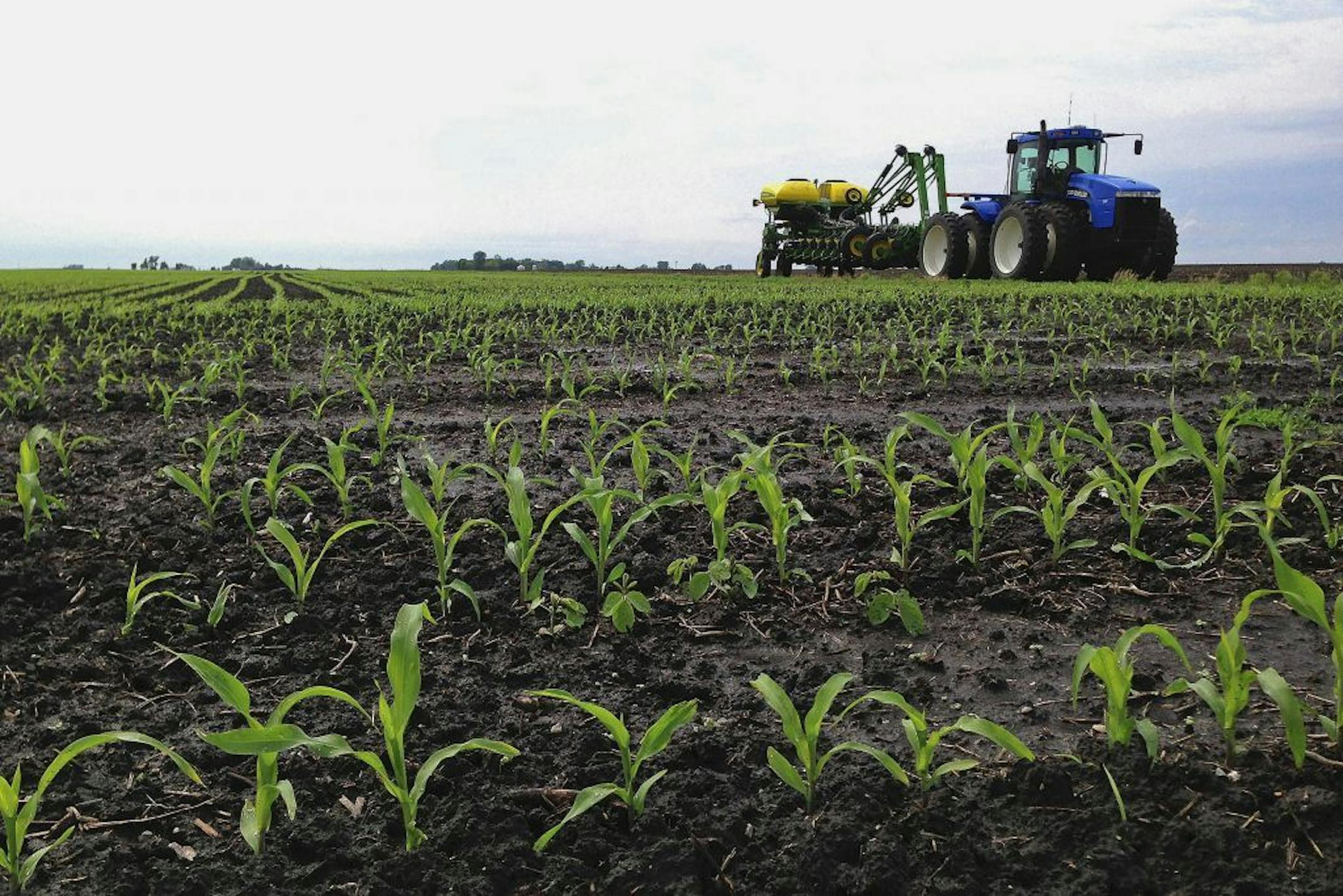
In this May 25, 2013 photo, a tractor and planter are seen in the background as recently planted corn grows on a central Illinois farm near Chandlerville, Ill. Corn growers across Illinois and the rest of the nation's midsection appear to have finally gotten their crops in the ground after an uncooperative, storm-prone spring left them weeks behind schedule. The U.S. Department of Agriculture's weekly crop progress report shows 95 percent of the nation's corn crop had been sown as of Sunday, Jun
In this May 25, 2013 photo, a tractor and planter are seen in the background as recently planted corn grows on a central Illinois farm near Chandlerville, Ill. Corn growers across Illinois and the rest of the nation's midsection appear to have finally gotten their crops in the ground after an uncooperative, storm-prone spring left them weeks behind schedule. The U.S. Department of Agriculture's weekly crop progress report shows 95 percent of the nation's corn crop had been sown as of Sunday, June 9, 2013. (Associated Press/The Minnesota Star Tribune)

The enduring legacy of a recent PBS "Frontline" documentary will be the light shed on a subject deep in the shadows: sexual assault in the U.S. agricultural industry.

From the nation's largest apple-growing operation, northwest of Yakima, to the citrus groves of Florida, women have been assaulted for generations.

"Rape in the Fields" details the human, legal and economic issues at play and, most important, sends the message the behavior will no longer occur with anonymous impunity.

The documentary is the work of the Center for Investigative Reporting in Berkeley, Calif., and the Investigative Reporting Program at the UC Berkeley Graduate School of Journalism.

U.S. agriculture employs 560,000 women on U.S. farms. As the report notes, their vulnerability is compounded by their immigration status, poverty and the abject terror of losing a paycheck. Personal shame also deters reporting the assaults.

One of the stark revelations of the documentary is the near absence of criminal prosecutions. Even the willingness to investigate is compromised by a lack of physical evidence, few witnesses and, in some cases, a lack of training for local law enforcement and prosecutors.

The assaults can quickly devolve into he-said/she-said disputes. Overall, the effect is to create an environment where women who have been raped and abused remain silent. The federal government puts the estimate at 65 percent, according to the report.

This past spring a federal jury in Yakima rejected all the sexual-harassment claims against Evans Fruit Co. The jury concluded that despite what might have happened, the company did not create a sexually hostile work environment.

Between 2005 and 2012, nearly 100 cases of alleged sexual harassment across Washington were reported by farm laborers to the state Human Rights Commission. Two-thirds were dismissed, and two dozen cases remain open.

Attorney Joe Morrison, in the Wenatchee office of Columbia Legal Services, credits the U.S. Equal Employment Opportunity Commission with stepping up enforcement and awareness of sexual-harassment cases in the food industry.

Putting companies on notice that attention is being paid is a big step.

"Rape in the Fields" is an extraordinary piece of journalism that sheds light on vulnerable women who are put in harm's way by a willingness to do hard work to support themselves and their families.

about the writer

about the writer

Seattle Times Editorial

More from Commentaries

See More
card image
Richard Tsong-Taatarii/The Minnesota Star Tribune

Calls for de-escalation and toning down the rhetoric in recent days is exactly what was needed, even if it might have felt like capitulation.

card image

Opinion | What happens after our shock fades?

card image